
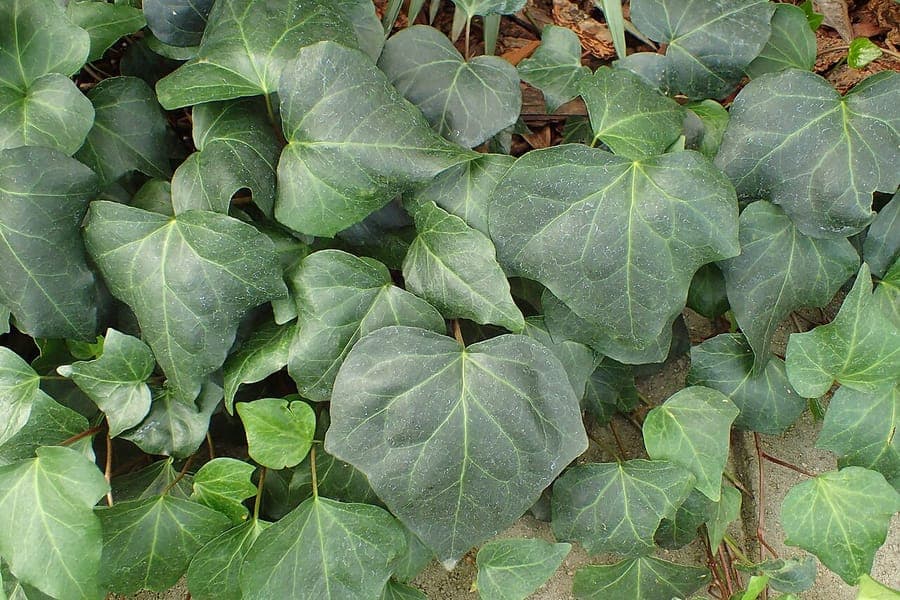
Krzysztof Ziarnek, Kenraiz / CC BY-SA 4.0, via Wikimedia Commons
Algerian ivy: complete guide
Hedera algeriensis
Want to see Algerian ivy: complete guide in your garden?
1 minute, no credit card
Overview
Hedera algeriensis, commonly known as Algerian ivy, is a vigorous evergreen climber native to the woodlands of Algeria and Tunisia. Unlike its more aggressive cousin Hedera helix, this species behaves more civilly in garden settings, making it a favourite among gardeners looking for a bold yet manageable groundcover or wall climber. It's particularly well-suited to vertical gardening and shaded areas where few other plants thrive. With large, glossy leaves and a steady growth rate, it adds texture and year-round interest to any landscape.
On gardenworld.app, you can design a garden layout that incorporates Algerian ivy into shady corners or vertical spaces, ensuring it gets the right support and room to climb.
Appearance & bloom cycle
Algerian ivy stands out with its large, five-lobed leaves, typically 10–20 cm wide. The foliage is dark green with a shiny upper surface and slightly paler underside. New growth often has a bronze or purple tint, adding visual interest in spring. While mature plants can produce small, greenish flowers, this is rare in temperate climates like the UK or northern Europe, where plants rarely reach full maturity due to cooler temperatures and shorter growing seasons. When flowering does occur, it's usually between October and December, attracting late-season pollinators like bees and hoverflies.
Growth is moderate to fast-expect 30 to 50 cm per year in ideal conditions. The plant climbs using aerial rootlets that cling firmly to walls, fences, and tree trunks, making it excellent for covering unsightly structures or creating a green backdrop.
Ideal location
Algerian ivy thrives in partial to full shade. It dislikes hot, direct afternoon sun, especially on south-facing walls, which can scorch the leaves. North- or east-facing walls are perfect. It also grows well under trees, as long as the root competition isn't too intense. In containers, it makes a graceful spill-over plant for shady patios or balconies.
Because it's less cold-hardy than common ivy, it's best planted in sheltered spots-near buildings or hedges that offer wind protection. Avoid exposed, open areas where winter winds can dry out the foliage.
Soil requirements
This ivy isn't fussy about soil type, as long as it's well-drained. Heavy clay soils should be improved with grit or compost to prevent waterlogging. A pH range of 5.5 to 7.5 is ideal. It grows well in loamy or sandy soils, though sandy types need consistent moisture to prevent drought stress.
Plant in spring (April–May) or early autumn (September–October) to give roots time to establish before winter. Space plants 60–80 cm apart for full coverage within two to three years.
Free design
Want to see Algerian ivy: complete guide in your garden? Make a free design now.
Watering
During the first growing season, water regularly-about once a week unless it rains. Keep the soil consistently moist but never soggy. After the first year, the plant becomes fairly drought-tolerant, though it benefits from occasional watering during dry spells, especially when climbing sun-exposed walls.
Avoid wetting the foliage too much to reduce the risk of fungal diseases. Don't mulch right up to the stem; use bark or gravel instead to allow airflow and prevent rot.
Pruning
Prune twice a year to keep growth in check: once in June and again in September. Use sharp shears to trim back long runners and encourage bushiness. Algerian ivy responds well to pruning, so don't hesitate to cut it back hard if it gets too leggy.
If using as ground cover, trim vertical shoots that try to climb too high. For wall coverage, guide new growth with ties and remove any sections that stray into gutters or windows. Take cuttings from prunings between May and August-these root easily in moist compost.
Maintenance calendar
- Jan: Check for winter damage
- Feb: Secure loose stems; prepare for spring
- Mar: Light trim after winter exposure
- Apr: Plant or transplant; begin regular watering
- May: Watch for pests; keep soil moist
- Jun: First prune; check climbing support
- Jul: Water during dry periods
- Aug: Second prune; take cuttings
- Sep: Final trim; inspect attachment points
- Oct: Leaves remain green; minimal care
- Nov: Foliage may darken; no action needed
- Dec: Check for frost protection; wrap young plants if needed
Winter hardiness
Algerian ivy is hardy to around -10°C (USDA zone 8b). In colder regions (zone 8a and below), young plants may suffer dieback, though the roots often survive. Protect the base with horticultural fleece or a layer of compost in December if hard frosts are forecast. In severe winters, top growth may die, but regrowth usually occurs from the base in spring.
Companion plants
Pair Algerian ivy with shade-loving perennials like Hosta, Hellebores, and Ferns. Under trees, try Anemone nemorosa or Bergenias. For mixed climbers, combine with Climbing Hydrangea (Hydrangea petiolaris) on a trellis, using Algerian ivy as a base cover. Avoid planting near aggressive species like English ivy, which can outcompete it.
On gardenworld.app, you can visualise how Algerian ivy works with other shade-tolerant plants in a layered garden design.
Closing
Algerian ivy is a stylish, reliable option for shaded areas where you want lush, evergreen coverage without the invasiveness of common ivy. With proper support, regular pruning, and a little winter care, it will thrive for years. Buy healthy young plants from garden centres in spring-look for stock at trusted retailers like local garden centres in April and May. With thoughtful placement and a well-planned design, Hedera algeriensis becomes a quiet but powerful presence in your garden.
Want to see Algerian ivy: complete guide in your garden? Make a free design now.
Upload a photo, pick a style, and get a photorealistic design with plant list in under a minute.
No credit card required


Similar plants
American marsh pennywort: complete guide
Hydrocotyle americana
Everything about Hydrocotyle americana: location, soil, moisture and winter care. A delicate groundcover for shaded pond edges and boggy garden borders.
Devil's club: complete guide
Oplopanax horridus
Full guide to growing Oplopanax horridus: ideal site, soil, watering, and care for this dramatic spiny woodland shrub.
Water pennywort: complete guide
Hydrocotyle umbellata
Everything about Hydrocotyle umbellata: ideal location, soil, watering, winter care and pond planting. A versatile aquatic plant for garden ponds and boggy spots.