
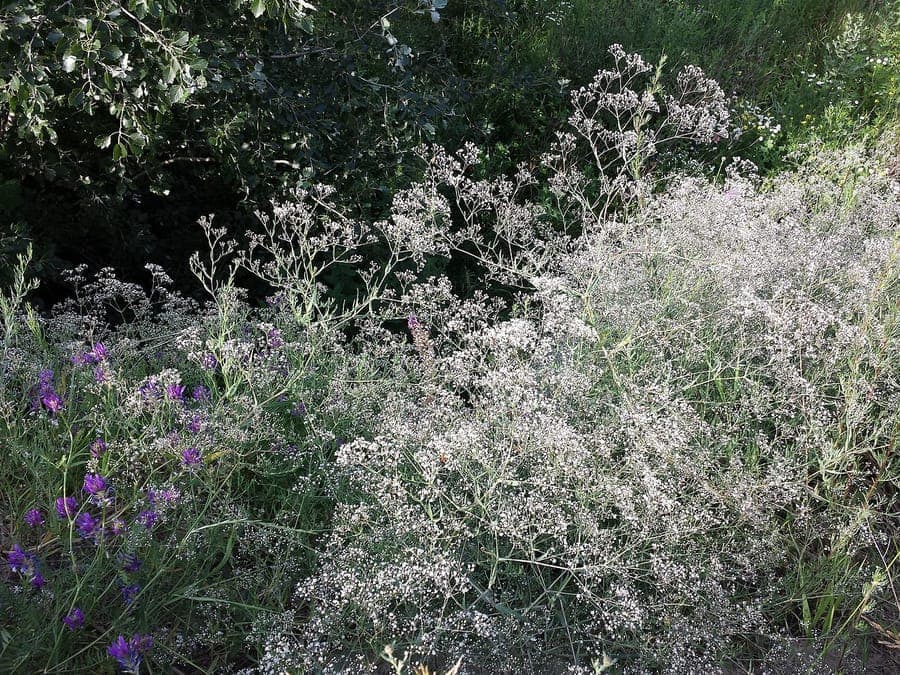
Stefan.lefnaer / CC BY-SA 4.0, via Wikimedia Commons
Baby's-breath: complete guide
Gypsophila paniculata
Want to see Baby's-breath: complete guide in your garden?
1 minute, no credit card
Overview
Baby's-breath (Gypsophila paniculata) is a timeless garden favourite, prized for its delicate, misty blooms that float above borders like soft cotton puffs. A herbaceous perennial in the Caryophyllaceae family, it's native to regions across Central and Eastern Europe - including Austria, Hungary, Belarus and the Altay Mountains. In the UK and US, it's most often seen in cottage gardens, gravel beds and wedding bouquets, but its real strength lies in the garden where it adds movement and lightness. On gardenworld.app, you can design a planting scheme that highlights Baby's-breath alongside airy perennials like verbena or nepeta for a dynamic, natural look.
Appearance & bloom cycle
Baby's-breath grows into bushy clumps reaching 60–100 cm tall, with a spread of 40–60 cm. The narrow, lance-shaped leaves are a pale green with a fine, downy coating, giving the foliage a soft, silvery cast. From June through August, hundreds of tiny star-shaped flowers - usually white, sometimes pale pink - appear in open, branching panicles. Blooming is staggered, so the plant stays in flower for up to ten weeks. Deadheading spent stems encourages a longer bloom season and prevents excessive self-seeding, though it rarely becomes invasive in cooler climates.
Ideal location
Full sun is essential - aim for at least 6–8 hours of direct sunlight daily. The plant tolerates light shade, but growth becomes leggy and stems may flop. Avoid deep shade or enclosed, humid corners where airflow is poor. Good air movement helps prevent fungal issues. While Baby's-breath handles heat well, it doesn't like being crowded. Give each plant enough space to breathe. If you're unsure whether your garden layout suits this plant, use gardenworld.app to visualise spacing and sun exposure for optimal results.
Soil requirements
This plant thrives in well-drained, alkaline soils. It prefers sandy or loamy textures with a pH between 6.5 and 8.0. Being calcicole, it does best in chalky or limestone-rich ground - hence the 'gypsum' in its name. Heavy clay soils are a problem unless improved with grit and compost. Poor drainage leads to root rot, especially in winter. When planting, avoid water-retentive composts. Raised beds or slopes are ideal if your garden has compacted soil.
Watering
Once established, Baby's-breath is highly drought-tolerant. During the first growing season, water weekly with about 1 litre per plant during dry spells. After that, supplemental watering is rarely needed, except during prolonged heatwaves. Overwatering is a bigger threat than drought. Always water at the base - never wet the foliage or flowers - to reduce the risk of powdery mildew. Drip irrigation or a soaker hose works best.
Free design
Want to see Baby's-breath: complete guide in your garden? Make a free design now.
Pruning
Pruning isn't mandatory, but it improves shape and longevity. In early spring, cut back last year's growth to 10–15 cm above ground level. This promotes bushier growth and prevents the centre from becoming bare. After flowering, remove spent stems to maintain a tidy appearance and limit self-seeding. Use sharp, clean secateurs to avoid spreading disease. Avoid cutting into old wood, as regrowth may be slow.
Maintenance calendar
- Jan: inspect for heaving or frost damage
- Feb: prepare tools for spring pruning
- Mar: cut back old stems to 10–15 cm
- Apr: check for aphids; treat with soapy water if needed
- May: water young plants during dry periods
- Jun: flowering begins; stake floppy stems if necessary
- Jul: light watering during extreme heat
- Aug: deadhead to prolong bloom
- Sep: stop feeding; allow seed heads to form for birds
- Oct: leave some stems for winter interest
- Nov: apply a light mulch if soil is sandy
- Dec: no action required; monitor for pests
Winter hardiness
Baby's-breath is hardy in USDA zones 3–9. In zone 8 and above, it reliably survives winter without protection. The top growth dies back in autumn, but the root system remains alive. Leave the old stems standing through winter - they catch frost and snow beautifully and provide shelter for beneficial insects. Avoid thick mulching, which can trap moisture and lead to crown rot.
Companion plants
Pair Baby's-breath with sun-loving, drought-tolerant perennials. Excellent companions include lavender, Russian sage (Perovskia), yarrow (Achillea), coneflowers (Echinacea) and black-eyed Susan (Rudbeckia). Its airy texture softens bold flower forms and adds rhythm to planting schemes. Avoid moisture-loving plants like hostas or astilbes. You'll often find Baby's-breath in garden centres alongside ornamental grasses and other low-care perennials.
Closing
Baby's-breath is a low-effort, high-reward plant that brings elegance and movement to the garden. It's not flashy, but its subtle beauty shines in naturalistic designs. With well-drained soil and full sun, it will thrive for years with minimal attention. It also makes excellent dried flowers - harvest in late summer when most blooms are open. If you're designing a low-maintenance border, this plant deserves a spot. Just remember: it likes it lean, not fussy.
Want to see Baby's-breath: complete guide in your garden? Make a free design now.
Upload a photo, pick a style, and get a photorealistic design with plant list in under a minute.
No credit card required


Similar plants
Dianthus karami: complete guide
Dianthus karami
Dianthus karami is a rare Lebanese mountain pink with fringed pink blooms on limestone cliffs, ideal for rock gardens and troughs.
Sicilian pink: complete guide
Dianthus siculus
Discover Dianthus siculus, an elegant purple bloomer from Sicily. Cultivation, June-September flowering and garden combinations.
Alpine mouse-ear chickweed: complete guide
Cerastium pedunculatum
Full growing guide for Cerastium pedunculatum: ideal location, soil, watering, winter hardiness, and companion plants for rock gardens.