
Ivar Leidus / CC BY-SA 4.0, via Wikimedia Commons
Wohlriechende hndelwurz: complete guide
Gymnadenia odoratissima
Want to see Wohlriechende hndelwurz: complete guide in your garden?
1 minute, no credit card
Overview
Gymnadenia odoratissima, commonly known as Wohlriechende hndelwurz, is a delicate, fragrant orchid native to much of Central and Eastern Europe, including Austria, Germany, France and parts of the Baltics. It thrives in moist meadows and open grasslands, where its sweet, vanilla-like scent draws in pollinators after dusk. Though it may look unassuming at first, this orchid brings a quiet elegance to naturalistic gardens and wildflower meadows.
This species is rare in the wild but can be responsibly cultivated from nurseries. For gardeners looking to integrate native, ecologically valuable plants into their landscape, Gymnadenia odoratissima is a rewarding choice. On gardenworld.app, you can design a garden layout that highlights this orchid's seasonal rhythm and light needs.
Appearance & bloom cycle
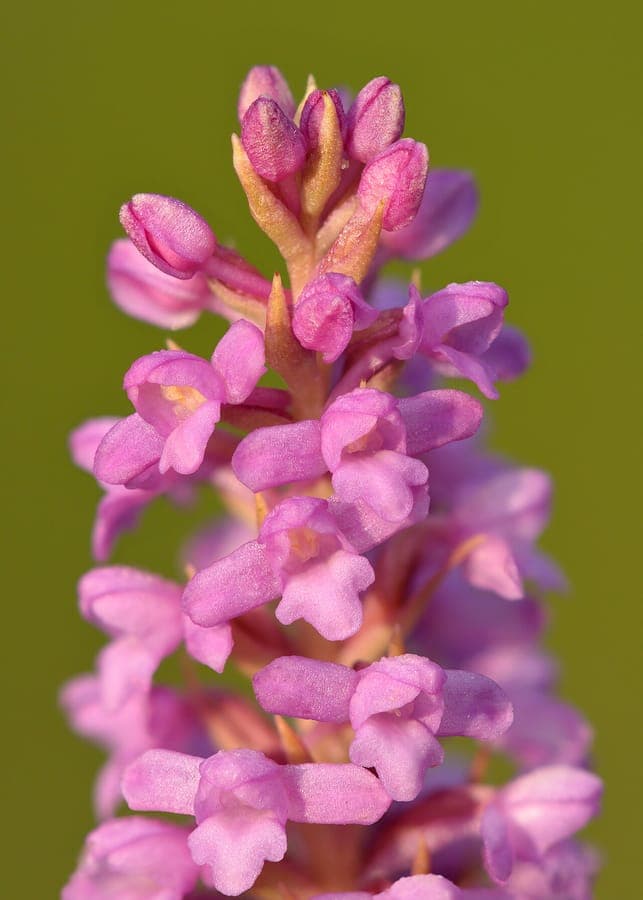
Wohlriechende hndelwurz grows between 20 and 60 cm tall, with narrow, lance-shaped leaves forming a basal rosette. The stem rises vertically, topped by a dense, cylindrical spike of small, purple flowers. Each bloom is only 5–7 mm across but packed with fragrance. The colour ranges from deep rosy purple to soft lilac, arranged in a spiral pattern along the spike.
Flowering occurs from May through August, depending on local climate. In southern regions, blooms start as early as May; in cooler areas, they may not appear until late June. The scent intensifies in the evening, attracting moths and nocturnal pollinators. The bloom lasts four to six weeks, giving you ample time to enjoy its presence.
Ideal location
This orchid prefers full sun to light shade, with a light requirement of 7 out of 10. It performs best in open areas with at least 5–6 hours of direct sunlight daily. Ideal spots include meadow edges, open woodland clearings, or the front of a naturalistic border.
Avoid heavily shaded or densely wooded areas. Also steer clear of spots with reflected heat from walls or paving, as the plant dislikes drying out. When planning your layout, use gardenworld.app to simulate sun exposure across seasons and ensure your orchid is placed where light conditions remain stable.
Soil requirements
Gymnadenia odoratissima requires moist, well-draining soil with a neutral to slightly alkaline pH (6.5–7.5). It thrives in loamy or clay-loam soils rich in organic matter but low in nutrients. Avoid peat-heavy or highly acidic soils.
The root system is sensitive to waterlogging, so good drainage is essential. Do not use standard potting mixes or garden composts high in nitrogen. Instead, amend native soil with leaf mold or well-rotted manure in moderation. Steer clear of synthetic fertilizers – this orchid evolved in low-fertility environments.
Free design
Want to see Wohlriechende hndelwurz: complete guide in your garden? Make a free design now.
Watering
Keep the soil consistently moist during the growing season (March to August). During dry spells, water deeply once or twice a week, depending on rainfall. Avoid overhead watering if possible; use a soaker hose or water at the base to prevent crown rot.
In winter, the plant goes dormant. Reduce watering, as natural precipitation is usually sufficient. Overwatering in cold months can lead to fungal issues or root decay. Ensure the site does not become waterlogged after heavy rain.
Pruning
No pruning is required for Wohlriechende hndelwurz. After flowering, allow the flower spike and leaves to die back naturally. This process allows the plant to reabsorb nutrients into the tuber for next year's growth.
Only remove dead foliage in late autumn or early spring, once it has turned fully brown. Use clean, sharp shears to avoid introducing pathogens. Do not cut green growth, as it's still photosynthesizing.
Maintenance calendar
- March–April: Clear competing weeds. Check soil moisture and loosen compacted areas.
- May–July: Peak bloom season. Monitor for drought and water as needed.
- August: Flowers fade. Let spikes wither naturally.
- September–October: No fertilizing. Remove only dead material.
- November–February: Dormant period. No action required.
Winter hardiness
This orchid is hardy in USDA zones 5 to 8. In colder zones, it survives temperatures down to -29°C when planted in well-drained soil. The tuber overwinters underground, resprouting in spring.
No mulch is typically needed, but in areas with prolonged wet winters, a thin layer of straw or leaf litter can help prevent rot. Avoid heavy mulch that blocks air circulation.
Companion plants
Pair with other moisture-loving perennials such as meadow cranesbill (Geranium pratense), tufted hairgrass (Deschampsia cespitosa), or purple loosestrife (Lythrum salicaria). Avoid invasive or aggressive spreaders like mint or bindweed.
For a cohesive natural garden, include native sedges, violets, and wild thyme. These companions share similar soil and light needs, creating a balanced, low-maintenance planting.
Closing
Wohlriechende hndelwurz is not a beginner's plant, but with the right conditions, it can thrive for years. It rewards patience and an appreciation for subtle beauty. Avoid formal garden styles; instead, plant it where it can blend into a looser, meadow-like setting.
Always purchase nursery-propagated specimens – never wild-dug. In the UK and US, orchids like this are available through specialty garden centres. For design ideas and planting layouts, visit gardenworld.app.
Want to see Wohlriechende hndelwurz: complete guide in your garden? Make a free design now.
Upload a photo, pick a style, and get a photorealistic design with plant list in under a minute.
10,000+ gardens designed already
No credit card required


Similar plants
Ram's-head lady's slipper: complete guide
Cypripedium arietinum
Everything you need to know about growing Cypripedium arietinum, a rare woodland orchid for cool, moist garden settings. Soil, care and planting tips.
Sparrow's-egg lady's slipper: complete guide
Cypripedium passerinum
Everything about growing Cypripedium passerinum, a cold-hardy subarctic orchid suited to cool, moist, shaded garden spots. Soil, care and companion plants.
Algerian Butterfly-orchid: complete guide
Platanthera algeriensis
Everything about Platanthera algeriensis, the rare Mediterranean orchid with greenish flowers native to Algeria, Morocco, Corsica and Spain.