
Gideon Pisanty (Gidip) / CC BY 3.0, via Wikimedia Commons
Gundelia tournefortii: complete guide
Gundelia tournefortii
Want to see Gundelia tournefortii: complete guide in your garden?
1 minute, no credit card
Overview
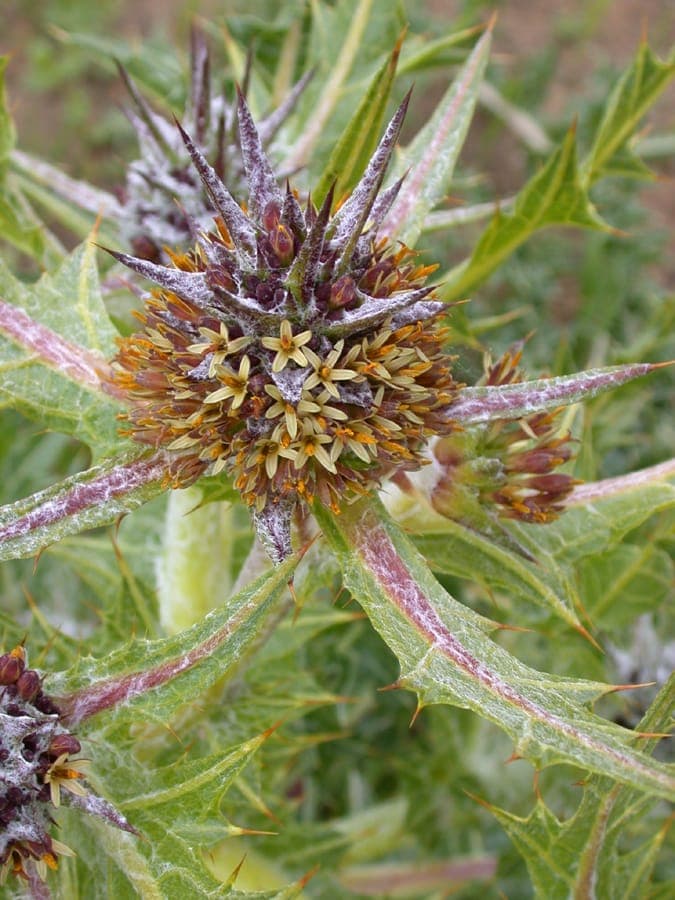
Gundelia tournefortii is a remarkably resilient herb that thrives in the dry, rocky landscapes of the Mediterranean region. This plant is known by many local names, including Akub in Arabic. It's a fascinating specimen for gardeners who dare experiment with unusual, nutrient-efficient plant species. The plant grows low and compact, with gray, densely hairy leaves that add warmth and textural interest to rocky gardens. Flowers are small and numerous, packed into dense clusters displaying a yellow-purple shimmer.
Appearance & Bloom
Gundelia tournefortii is a compact herbaceous plant measuring approximately 30-50 centimeters wide and only 20-40 centimeters tall-perfect for front borders and space-limited gardens. Leaves are deeply lobed, almost compound, and covered with coarse hairs giving the plant a gray-green appearance. The compound flower heads are spherical or nearly so-here lies the unique characteristic: many small florets crowded together, each yellow to orange-yellow, collectively forming a pinchable, candle-like ball.
The flowering period runs from April through May in average Mediterranean climate, extending to July in cooler zones. This timing precisely matches when many other plants are establishing.
Ideal Location
Gundelia tournefortii demands full sun. At least 8 hours of direct sunlight daily is essential for healthy growth and flowering. This is a plant that absolutely thrives in warm, hot garden corners-indeed, this is exactly where this Mediterranean plant belongs. Shade results in weak, less compact growth and considerably fewer blooms.
The plant loves warm microclimates, such as against light stonework or dark tiles radiating warmth. This supports spring flowering and provides additional heat to plants.
Soil
Perhaps even more important than sun is well-draining soil. Gundelia tournefortii shows a clear preference for poor, rocky soils like those found in Mediterranean regions. Rich, moist garden soils result in weak growth and rapid root rot. Therefore plant in a mixture of garden soil with 50% sand and small stones or gravel. Neutral to alkaline pH (7.0-8.0) is ideal.
Be cautious adding compost or fertilizer-this plant actually thrives under poor conditions.
Free design
Want to see Gundelia tournefortii: complete guide in your garden? Make a free design now.
Watering
Once established, excellent drainage is essential, but actual watering needs are minimal. During the growing season (spring) you may occasionally water after long dry periods, but once established, the plant tolerates extended drought without harm. In fact, overwatering can be more damaging than underwatering.
Water must be delivered carefully-at the roots, never over foliage, which can lead to mold in humid conditions. Especially in autumn and winter, err toward underwatering. Ensure water drains well.
Pruning
Pruning is not really necessary for this compact plant. After flowering, spent flower heads can be removed for better appearance, but this is optional. If the plant becomes too large (rare), you can cut it back in early spring to desired size.
This plant has a natural, rounded form best left as is.
Maintenance Calendar
March-April: Check overwintering, begin careful watering April-May: Flowering period May-June: Reduce watering Summer: Minimal watering, full drought tolerance Autumn: No watering needed, plant preparation Winter: Keep dry, minimal care
Winter Hardiness
Gundelia tournefortii has variable hardiness depending on exact variety and winter severity. In temperate climates with mild winters (zone 8-9), the plant can remain outdoors. In harsher areas (zone 7 and colder), grow in a container moved to frost-free location. Heavy snow cover with wood or straw provides extra protection, though snow itself provides good insulation.
Companion Plants
The gray, texture-rich Gundelia tournefortii looks wonderful paired with other Mediterranean adaptations:
- Lavender (Lavandula angustifolia) for fragrance and color
- Fountain grass (Pennisetum) for vertical texture
- Wild rosemary (Rosmarinus officinalis) for growth structure
- Stonecrop (Sedum) for moisture specialization
- Gaura (Gaura lindheimeri) for summery lightness
In rock gardens, it works perfectly with gravel and small stones. At gardenworld.app, find inspiration creating both warm sunny corners and drought-tolerant gardens. Visit gardenworld.app for more inspiration designing drought-tolerant garden spaces.
Closing Thoughts
Gundelia tournefortii is a special choice for anyone wanting a true drought-tolerant plant with character and texture. Because it thrives on poor soils and tolerates drought, it fits perfectly in modern, low-maintenance stone gardens. Plant in small groups of 3-5 plants for maximum visual impact. Give this unique Mediterranean accent the right location and you'll enjoy years of its compact beauty.
Want to see Gundelia tournefortii: complete guide in your garden? Make a free design now.
Upload a photo, pick a style, and get a photorealistic design with plant list in under a minute.
No credit card required


Similar plants
Calendula stellata: complete guide
Calendula stellata
Complete guide to Calendula stellata, the star-flowered marigold from Sicily: location, soil, watering and companion planting tips.
Korean chrysanthemum: complete guide
Chrysanthemum x rubellum
Chrysanthemum x rubellum is a hardy autumn perennial with single pink to copper flowers from August to November. Care and combinations.
Helianthus divaricatus: complete guide
Helianthus divaricatus
Helianthus divaricatus is a North American woodland sunflower with yellow summer blooms, ideal for naturalistic borders and shady edges.