
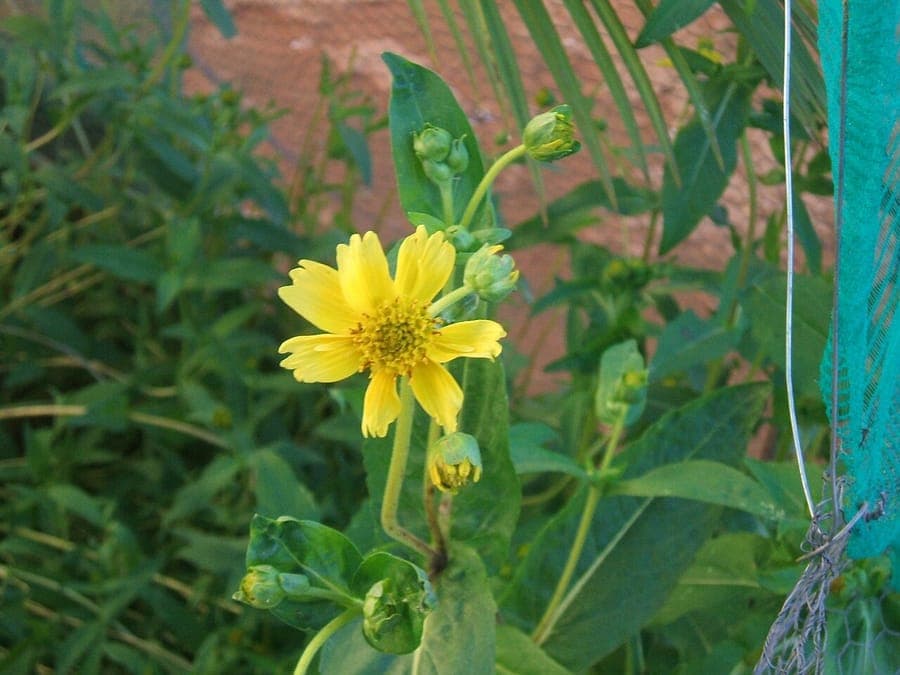
Silvestresbrasileiros / Public domain, via Wikimedia Commons
Niger: complete guide
Guizotia abyssinica
Want to see Niger: complete guide in your garden?
1 minute, no credit card
Overview
Niger, or Guizotia abyssinica, is a striking annual herb native to the highlands of Ethiopia and Eritrea. While still uncommon in Western gardens, it's a hidden gem for gardeners seeking low-maintenance, pollinator-friendly plants. Reaching heights of 60 to 120 cm, Niger produces cheerful yellow daisy-like flowers from July to August and yields oil-rich seeds prized in African agriculture. In the garden, it thrives in full sun and well-drained soil, making it ideal for wildflower meadows, cottage borders, or drought-tolerant plantings.
On gardenworld.app, you can design a garden layout that highlights Niger's bold structure and long bloom time, especially when paired with other sun-loving perennials. Its upright form works well in the middle to back of borders, adding vertical interest without overwhelming smaller plants.
Appearance & bloom cycle
Niger develops a sturdy, branching stem with lance-shaped, slightly toothed leaves that are dark green and rough to the touch. The plant begins flowering in early summer, with peak bloom from July through August. Each flower head is 2–3 cm wide, with bright yellow ray florets surrounding a central disc - classic of the Asteraceae family.
After pollination, the flowers mature into small, dark, oil-rich seeds that are highly attractive to finches and other seed-eating birds. If you want to support winter wildlife, leave the seed heads standing through autumn and into early spring. Avoid cutting back until new growth appears in March or April.
Ideal location
Niger needs full sun - a solid 8 out of 10 on the light scale. Choose a spot with at least 6–8 hours of direct sunlight daily. It performs best in open areas with good air circulation, such as south-facing borders, gravel gardens, or along sunny pathways. Avoid shaded areas or locations crowded by taller plants, as this can lead to weak stems and poor flowering.
In cooler climates, a warm microclimate - like against a stone wall or near a paved surface - can help the plant reach its full potential. It's well-suited to USDA hardiness zones 2–11 when grown as an annual.
Soil requirements
Niger prefers a neutral to slightly acidic soil, with a pH between 6.5 and 7.0. It's adaptable to various soil types but thrives in well-drained, loamy or sandy soils. Heavy clay should be amended with grit or compost to improve drainage. Rich, heavily fertilized soils can cause excessive leafy growth at the expense of flowers.
Avoid manure-heavy beds. A light top dressing of compost in spring is sufficient. On gardenworld.app, you can upload a soil test to determine if your garden bed meets Niger's needs before planting.
Free design
Want to see Niger: complete guide in your garden? Make a free design now.
Watering
Once established, Niger is fairly drought-tolerant. During the first 3–4 weeks after sowing or transplanting, water regularly to encourage strong root development. After that, deep watering every 7–10 days in dry periods is enough, especially during flowering.
Overwatering leads to root rot and weak stems. Water at the base to keep foliage dry and prevent fungal diseases. In average UK or US summer conditions, rainfall is often sufficient once the plant is mature.
Pruning
Pruning isn't usually necessary. As an annual, Niger completes its life cycle in one season. However, pinching back young plants in late spring can promote bushier growth and more flowering stems. Do this before bud formation, around May or early June.
Deadheading isn't required and won't extend blooming, but removing spent flower heads can prevent excessive self-seeding if you want to control spread. Otherwise, let them mature for the birds.
Maintenance calendar
- March–April: Start seeds indoors at 15–20°C. Use a light seed compost and surface-sow with minimal covering.
- May–June: Harden off and transplant outdoors after last frost. Space plants 30–40 cm apart.
- July–August: Peak bloom. Monitor for pests and avoid overhead watering.
- September–October: Seeds ripen. Leave heads for birds or collect for next year.
- November–February: Plant dies back. Cut stems to ground level in early spring if not self-seeding.
Winter hardiness
Niger is not winter-hardy and dies after the first frost. It's grown as an annual in temperate climates. No protection is needed. In milder zones, self-sown seedlings may appear in spring if seed heads are left intact over winter.
It's suitable for USDA zones 2–11 as a warm-season annual. In colder zones, start indoors 4–6 weeks before last frost date.
Companion plants
Niger pairs well with other sun-loving, drought-tolerant species. Good companions include Echinacea, Black-eyed Susan (Rudbeckia), Coreopsis, and Salvia. For texture, mix in ornamental grasses like Pennisetum or Stipa.
It also complements Mediterranean herbs such as lavender, thyme, and rosemary, which share similar soil and moisture needs. Avoid aggressive spreaders like mint or bindweed that could outcompete it.
Closing
Niger is an underrated addition to the modern garden. It's easy to grow, supports wildlife, and adds vibrant color with minimal care. Whether you're designing a pollinator garden or a low-water landscape, it's a practical and beautiful choice.
Seeds are available at garden centres in the UK and US, often sold as birdseed. Look for untreated, hulled-free varieties for planting. With gardenworld.app, you can plan where Niger fits best in your garden design - from colour balance to seasonal interest.
Want to see Niger: complete guide in your garden? Make a free design now.
Upload a photo, pick a style, and get a photorealistic design with plant list in under a minute.
No credit card required


Similar plants
Calendula stellata: complete guide
Calendula stellata
Complete guide to Calendula stellata, the star-flowered marigold from Sicily: location, soil, watering and companion planting tips.
Korean chrysanthemum: complete guide
Chrysanthemum x rubellum
Chrysanthemum x rubellum is a hardy autumn perennial with single pink to copper flowers from August to November. Care and combinations.
Helianthus divaricatus: complete guide
Helianthus divaricatus
Helianthus divaricatus is a North American woodland sunflower with yellow summer blooms, ideal for naturalistic borders and shady edges.