
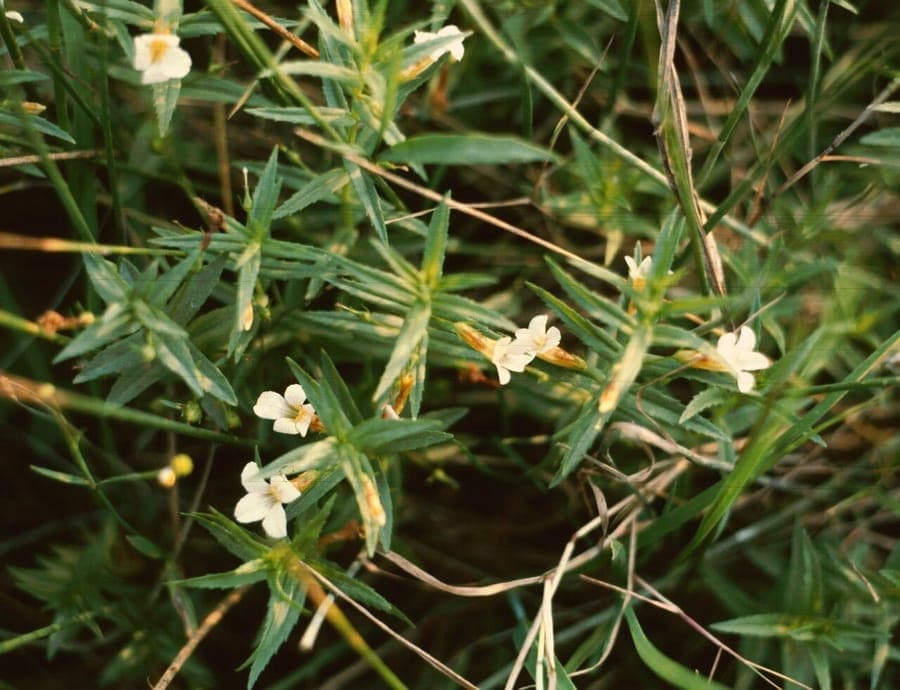
Franz Xaver / CC BY-SA 3.0, via Wikimedia Commons
Hedge-hyssop: complete guide
Gratiola officinalis
Want to see Hedge-hyssop: complete guide in your garden?
1 minute, no credit card
Overview
Hedge-hyssop, or Gratiola officinalis, is a creeping perennial native to damp woodlands, stream banks, and wet meadows across central and eastern Europe. While not widely known in mainstream gardening, it's gaining traction among ecologically minded gardeners for its quiet charm and adaptability to difficult, soggy spots. A member of the Plantaginaceae family, it was once used in traditional herbal medicine, but today it's valued more for its ornamental role in naturalistic planting schemes.
This plant isn't flashy, but it has a subtle appeal - soft green foliage, delicate white flowers, and a relaxed growth habit that fits perfectly in informal gardens. It spreads slowly via stolons, forming loose mats without becoming invasive. If you're designing a bog garden or damp border, hedge-hyssop is a reliable performer. On gardenworld.app, you can create a custom planting plan that includes hedge-hyssop alongside other moisture-loving perennials to maximize visual interest and ecological function.
Appearance & bloom cycle
Hedge-hyssop grows 15–25 cm tall and spreads 20–30 cm wide. The stems are square and carry small, oval-shaped leaves in opposite pairs. The foliage is bright green and slightly succulent, giving it a fresh, lively look even in low-light conditions. From June through September, it produces tiny white, two-lipped flowers with pale yellow markings in the throat. Each bloom is about 1 cm across and appears in the leaf axils along the stems.
Flowering peaks in July and August, and while individual flowers are short-lived, the plant produces them continuously, ensuring a long display. The blooms attract small pollinators like hoverflies and tiny bees, adding subtle wildlife value. It's not a showstopper, but when planted in groups, the collective effect is charming - like a carpet of miniature stars in a shady corner.
Ideal location
With a light requirement of 8/10, hedge-hyssop prefers partial shade to light shade. It does best where it gets morning sun or dappled light all day - think beneath open-canopy trees like birch or alder, or on the north side of a fence with indirect light. It's perfect for zone 3 of a pond (shallow water margin), bog gardens, or any consistently damp spot in the garden. Avoid full sun in hot climates, as the leaves will scorch and the soil will dry out too quickly. Use the sunlight mapping tool on gardenworld.app to identify ideal microclimates in your garden before planting.
Soil requirements
This plant demands constantly moist to wet soil. The ideal mix is humus-rich, loamy, or clay-based with plenty of organic matter. A pH between 6.5 and 7 is optimal - neutral to slightly acidic. Avoid sandy or chalky soils unless heavily amended with compost or leaf mould to improve water retention. When planting, work in well-rotted compost but skip synthetic fertilisers, which can burn the delicate roots.
Free design
Want to see Hedge-hyssop: complete guide in your garden? Make a free design now.
Watering
Never let the soil dry out. During dry spells, water at least twice a week, preferably with collected rainwater. If planted near a pond, ensure the water table stays within 10 cm of the surface. It tolerates occasional flooding but won't survive prolonged drought. Mulch with leaf litter or compost in spring to lock in moisture and suppress weeds.
Pruning
Minimal pruning is needed. After flowering ends in September, cut back the spent stems to about 5 cm above ground level. This keeps the plant tidy and encourages fresh growth next spring. Remove any diseased or yellowing leaves during the growing season to prevent fungal issues. Use clean, sharp shears to avoid spreading pathogens.
Maintenance calendar
- Jan: Check for winter damage
- Feb: Prepare planting areas; amend soil if needed
- Mar: Divide or transplant if desired; watch for new shoots
- Apr: Monitor soil moisture; no feeding required
- May: Increase watering if dry; watch for slugs
- Jun: Bloom period begins; inspect for pests
- Jul: Peak flowering; maintain consistent moisture
- Aug: Continue blooming; check for leggy growth
- Sep: Finish blooming; cut back after flowering
- Oct: Leave foliage for winter protection
- Nov: Inspect for rot or fungal spots
- Dec: Dormant period; minimal care needed
Winter hardiness
Hedge-hyssop is hardy in USDA zones 5 to 8. In the UK and most of the northern US, it survives winter well when planted in a sheltered, moist location. Leave old growth intact over winter - it provides insulation. In areas with harsh, dry winters, a light mulch of straw or leaf litter helps protect the crown. Avoid heavy mulching, which can trap moisture and cause rot.
Companion plants
Pair hedge-hyssop with other moisture-loving plants like marsh marigold (Caltha palustris), queen of the prairie (Filipendula rubra), tussock sedge (Carex elata 'Aurea'), and lizard's tail (Saururus cernuus). For contrast, add dark-leaved plants like bugleweed (Ajuga reptans 'Atropurpurea') or ferns such as Athyrium filix-femina. Avoid aggressive spreaders like mint or goldenrod that can overwhelm it.
Closing
Hedge-hyssop is a quiet achiever in the damp garden - low maintenance, long-blooming, and wildlife-friendly. Plant in groups of five or more for best effect. You'll find it at garden centres like B&Q, Wyevale, or specialist nurseries, often in the waterside or bog plant section. If you're unsure whether your garden conditions are suitable, use gardenworld.app to simulate plant performance based on your soil type, sunlight, and moisture levels. It's a smart way to ensure success before you buy.
Want to see Hedge-hyssop: complete guide in your garden? Make a free design now.
Upload a photo, pick a style, and get a photorealistic design with plant list in under a minute.
No credit card required


Similar plants
White Beardtongue: complete guide
Penstemon albidus
Discover white beardtongue (Penstemon albidus) - elegant perennial with white to cream flowers. Drought-resistant, perfect for prairie and dry gardens.
Longsepal Beardtongue: complete guide
Penstemon calycosus
Discover longsepal beardtongue (Penstemon calycosus) - beautiful perennial with lilac-blue flowers. For partial shade and moist soil. Ideal for naturalized.
Penstemon cusickii: complete guide
Penstemon cusickii
Discover Cusick's beardtongue, a compact alpine flowering plant with violet-pink blooms. Perfect choice for rock gardens and water-wise landscaping.