
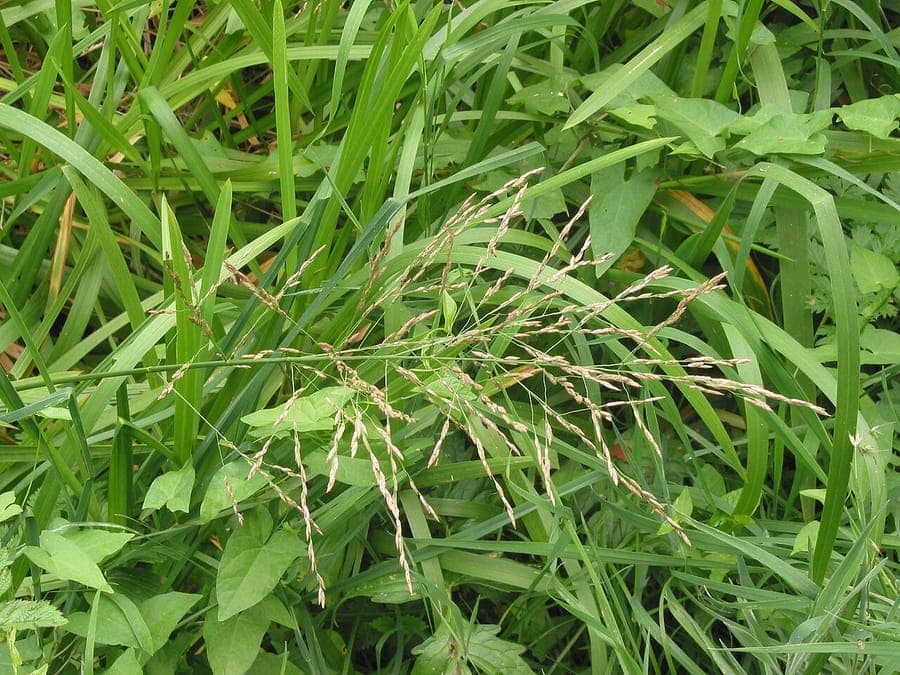
Rasbak / CC BY-SA 3.0, via Wikimedia Commons
Reed sweet grass: complete guide
Glyceria maxima
Want to see Reed sweet grass: complete guide in your garden?
1 minute, no credit card
Overview
Reed sweet grass (Glyceria maxima) is a standout among aquatic grasses for its height, elegance, and ease of care. If you've got a pond, rain garden, or any damp corner in your yard, this plant deserves a spot. Native to central and eastern Europe, it thrives in wet soils and shallow water, making it a go-to choice for pond edges and naturalistic water features. As a seasoned gardener, I've seen it transform sluggish corners into dynamic, swaying landscapes with minimal effort.
This graminoid grows best in full sun-rate it an 8 out of 10 for light needs-and reaches heights between 150 and 200 cm. In rich, moist conditions, it can even push past 2 meters. It's not aggressive like some invasive reeds, but it does spread via rhizomes, so give it space or use a root barrier. If you're designing around water, gardenworld.app offers visual planning tools that help you map out spacing and growth zones for Glyceria maxima.
Appearance & bloom cycle
Reed sweet grass has long, narrow, bright green leaves that arch gracefully outward. In summer-specifically June, July, and August-it sends up airy, open panicles in a soft green hue. The flowers aren't showy, but they add subtle texture and movement, especially when backlit by afternoon sun. No fragrance, but plenty of visual rhythm.
The bloom cycle starts in early summer and lasts through August. Flower spikes emerge as loose, nodding clusters that rise just above the foliage. As they dry in late summer, they take on a straw-like appearance, adding autumn interest. Unlike flashy perennials, this grass works quietly in the background, yet it draws the eye with its vertical lines and gentle sway.
Ideal location
Plant reed sweet grass where moisture is consistent. It excels in full sun but tolerates partial shade if soil stays wet. For pond planting, set it in water up to 20 cm deep-ideal for marginal zones. In damp garden beds, keep the soil consistently moist. If you're in a drier climate or dealing with sandy soil, consider sinking a liner or using a water-retentive bed.
This grass spreads, so in smaller gardens, contain it with a root barrier or grow it in a submerged pot. Left unchecked, it can dominate a wet area. Think carefully about placement-especially near natural water bodies, where it might outcompete native species. On gardenworld.app, you can preview how this plant integrates into different yard layouts before planting.
Soil requirements
Glyceria maxima isn't fussy about soil type, but it prefers fertile, loamy, or clay soils rich in organic matter. The ideal pH is between 7.5 and 8-slightly alkaline. Avoid highly acidic or sandy soils unless amended. Mix in compost or well-rotted manure at planting time to boost fertility and water retention.
In container planting-common in garden centres for aquatic displays-use a heavy soil mix that won't float. A blend of garden soil, clay, and compost works well. Steer clear of peat-heavy mixes, which dry out too fast and lack nutrients.
Free design
Want to see Reed sweet grass: complete guide in your garden? Make a free design now.
Watering
As an aquatic or marginal plant, reed sweet grass needs constant moisture. In a pond, this isn't an issue. But in damp beds or rain gardens, you'll need to monitor during dry spells. Young plants are especially vulnerable in their first summer-keep them well-watered.
If you're not using a pond system, consider drip irrigation or a soaker hose to maintain even moisture. Rainwater is ideal-both for plant health and sustainability. Avoid letting the roots dry out; that's the fastest way to weaken or kill this grass.
Pruning
Pruning is minimal. In late winter or early spring (February to March), cut back old foliage to about 15 cm above the ground. This clears space for new growth and keeps the plant looking tidy. Use sharp shears-this grass can be tough on hands-and wear gloves; the leaf edges are slightly abrasive.
If growing in a pot, divide the clump during pruning every 2–3 years to prevent overcrowding. Discard the woody center and repot the outer, vigorous sections. This rejuvenates the plant and gives you extras to share or plant elsewhere.
Maintenance calendar
- Jan: Dormant, no action needed
- Feb: Begin cleanup, cut back old growth
- Mar: Final pruning, check for pests
- Apr: Monitor emergence, ensure moisture
- May: Active growth, maintain water levels
- Jun: Bloom begins, no feeding required
- Jul: Peak bloom, enjoy the movement
- Aug: Flowers dry, continue care
- Sep: Let dry stems stand for visual interest
- Oct: Reduce watering if in containers
- Nov: Leave standing for winter habitat
- Dec: Dormant, protect from drying winds
Winter hardiness
Reed sweet grass is fully hardy in USDA zones 5 through 9. It dies back in winter but returns vigorously in spring. No mulch or protection is needed, even in colder zones, as long as the root zone stays moist. Avoid letting the soil freeze while dry-this can damage rhizomes.
In containers, move pots to a sheltered spot or sink them into the ground to insulate roots. In colder regions, a thick layer of straw around the base can help, but it's rarely necessary.
Companion plants
Pair reed sweet grass with other moisture-loving plants for a lush, layered look. Try pairing it with Iris ensata, Carex elata 'Aureolus', Lythrum salicaria, or Pontederia cordata. These add color, contrast, and pollinator appeal. Avoid overly aggressive spreaders like Phalaris arundinacea, which can overwhelm it.
For a natural pond edge, combine with rushes and sedges. In mixed borders with damp soil, it works well behind shorter perennials like Astilbe or Ligularia. Just ensure it doesn't shade out sun-hungry neighbors.
Closing
Reed sweet grass is a low-maintenance winner for wet areas. It brings height, movement, and seasonal texture with little fuss. Once established, it asks for almost nothing beyond consistent moisture. Buy it from garden centres like those at local nurseries or big-box stores-many carry Glyceria maxima in spring. Plant it right, give it room, and you'll enjoy its graceful presence for years. For layout ideas, check gardenworld.app's pond planting templates-they make planning a breeze.
Want to see Reed sweet grass: complete guide in your garden? Make a free design now.
Upload a photo, pick a style, and get a photorealistic design with plant list in under a minute.
No credit card required


Similar plants
Sporobolus pungens: complete guide
Sporobolus pungens
Sporobolus pungens is a stoloniferous Mediterranean coastal grass with outstanding salt and drought tolerance, perfect for seaside and dry gardens.
Mediterranean aegilops: complete guide
Aegilops biuncialis
Everything about Aegilops biuncialis, a Mediterranean annual grass with ornamental spikes and outstanding drought tolerance for dry gardens.
Silver bluestem: complete guide
Bothriochloa saccharoides
Full guide to Bothriochloa saccharoides (silver bluestem): site, soil, watering, winter hardiness, pruning, and garden companions.