
Wikimedia Commons / CC BY-SA 3.0, via Wikimedia Commons
Common globularia: complete guide
Globularia vulgaris
Want to see Common globularia: complete guide in your garden?
1 minute, no credit card
Overview
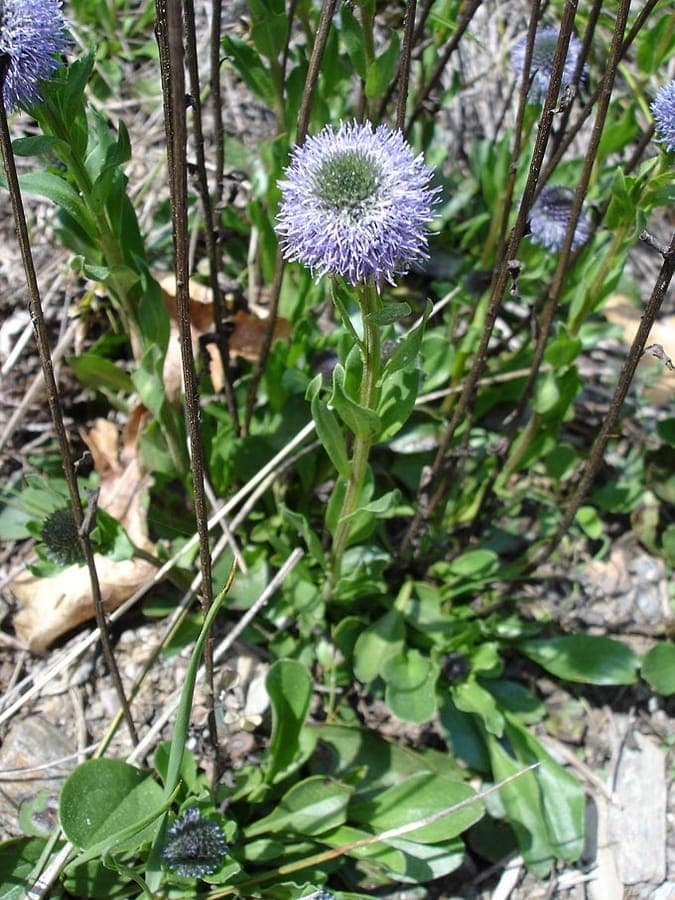
Globularia vulgaris, commonly called common globularia or blue globe, is a compact alpine plant from the Mediterranean mountain regions of Europe, particularly from Scandinavia through the Alps. This diminutive plant is treasured for its intense blue flower heads and exceptionally dwarf growth habit.
This plant is a favorite among alpine gardeners and rock garden specialists. Once established, this plant provides decades of value with absolutely minimal maintenance.
Appearance and bloom
Common globularia grows as a tightly clustered, mat-forming dwarf shrub barely 5-10 cm tall with 15-30 cm spread. The foliage is small, linear, light green, and forms dense rosette mounds.
The flower heads are characteristic and unforgettable: perfect globes approximately 1-2 cm across, bright to deep blue-purple from April through June. Each head contains hundreds of minute flowers densely packed together.
Bloom is very extended, sometimes repeating in July-August in moister climates. The flower heads rise only 15-20 cm above the foliage, making them extremely prominent against stone backgrounds.
Ideal location
Common globularia grows best in full sun, receiving 6-8 hours of direct daily sunlight. The plant tolerates light shade but blooms less prolifically.
This species naturally grows on limestone rocks and alpine meadows at elevations of 200-2000 meters. Plant it on stone walls, scree slopes, green roofs, and alpine troughs. Exceptional drainage is essential.
The plant fails in low, wet areas or regions with poor drainage.
Soil
Common globularia prefers limestone-derived, well-draining soil. Optimal pH is 7.0-8.0 (neutral to alkaline). The plant grows much less vigorously in acidic soils.
Mineral-rich, spare nutrient substrate is preferred. The plant tolerates poor soil remarkably well. Add rock chips or lime-based gravel to further enhance drainage.
Free design
Want to see Common globularia: complete guide in your garden? Make a free design now.
Watering
Once established, common globularia is exceptionally drought-tolerant. Water regularly during the first growing season (6-8 weeks), keeping the top 2 cm of soil moist.
Once the plant establishes roots, supplemental watering is virtually unnecessary. Only during exceptional dry periods (more than 4-5 weeks without rain) may irrigation be needed.
Do not overwater - this plant prefers dry to moderately moist conditions. In persistently wet conditions, root rot develops.
Pruning
Pruning needs are minimal. Remove spent flower heads after bloom to encourage seed set. Trim very gently if shape adjustment is needed.
This is an extremely slow-growing plant - aggressive pruning is unnecessary and potentially harmful.
Maintenance calendar
January-February: Minimal activity March-April: Begin regular watering for young plants May-June: Enjoy the blue flower balls July-August: Possible repeat bloom September-October: Fading, seed dispersal November-December: Dormancy, no watering
Winter hardiness
Common globularia is exceptionally hardy (USDA zones 3-7). The plant grows straight through snow and frost.
The species tolerates frosts to -20 degrees Celsius without difficulty. Snow cover protects the plant in severe climates.
Companion plants
Common globularia combines beautifully with other alpine plants:
Saxifraga aizoon (saxifrage) Armeria maritima (sea thrift) Silene acaulis (moss campion) Dianthus alpinus (alpine carnation) Sedum montanum (alpine stonecrop)
Together these create diminutive alpine rock gardens with minimal maintenance.
Closing
Common globularia is an unforgettable plant for alpine gardeners. It requires no fertilizer, virtually no watering once established, and no disease or pest management. Plant this beauty on rock walls and green roofs for years of blue flower balls.
Want to see Common globularia: complete guide in your garden? Make a free design now.
Upload a photo, pick a style, and get a photorealistic design with plant list in under a minute.
No credit card required


Similar plants
White Beardtongue: complete guide
Penstemon albidus
Discover white beardtongue (Penstemon albidus) - elegant perennial with white to cream flowers. Drought-resistant, perfect for prairie and dry gardens.
Longsepal Beardtongue: complete guide
Penstemon calycosus
Discover longsepal beardtongue (Penstemon calycosus) - beautiful perennial with lilac-blue flowers. For partial shade and moist soil. Ideal for naturalized.
Penstemon cusickii: complete guide
Penstemon cusickii
Discover Cusick's beardtongue, a compact alpine flowering plant with violet-pink blooms. Perfect choice for rock gardens and water-wise landscaping.