
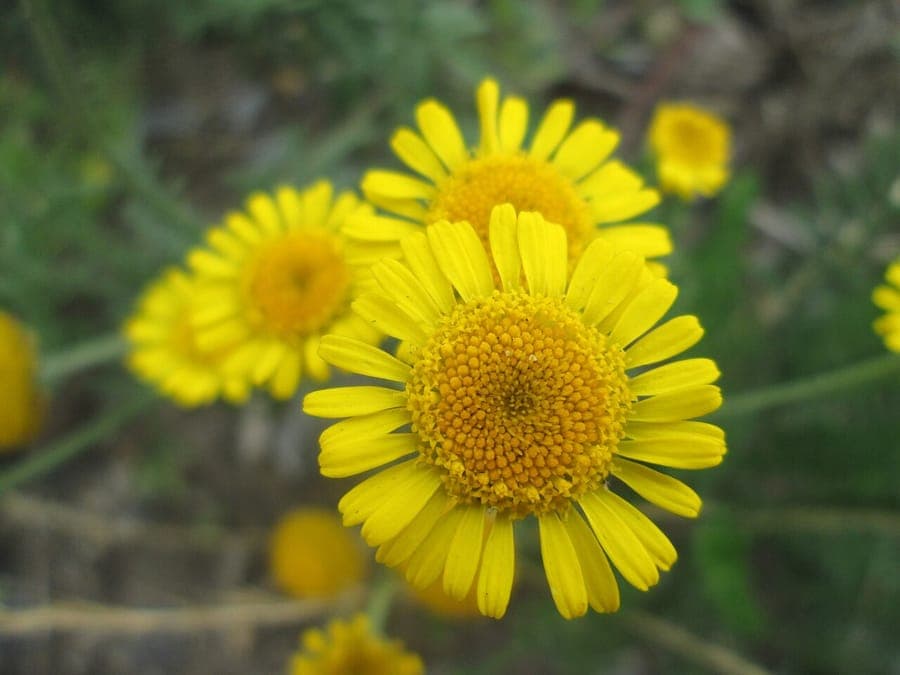
AnRo0002 / CC0, via Wikimedia Commons
Corn chrysanthemum: complete guide
Glebionis segetum
Want to see Corn chrysanthemum: complete guide in your garden?
1 minute, no credit card
Overview
The Corn chrysanthemum (Glebionis segetum) is a cheerful, daisy-like annual or short-lived perennial native to southern Europe but now naturalised across much of Western and Central Europe. Once a common sight in cereal fields-hence the name-it's now a popular choice for cottage gardens, wildflower meadows, and informal borders. Standing 40 to 80 cm tall, this herbaceous forb brings a burst of warm yellow from early summer through late August.
Classified under the Asteraceae family, it shares traits with daisies, chamomile, and ox-eye daisies. Though once grouped under Chrysanthemum, it's now correctly known as Glebionis segetum. In home gardens, it's prized for its hardiness, low upkeep, and ability to self-seed gently without becoming invasive.
On gardenworld.app, you can design a seasonal planting plan that features Corn chrysanthemum as a mid-height summer bloomer, perfectly timed with companion plants.
Appearance & bloom cycle
The plant forms upright, branching stems with finely divided, slightly downy green leaves. The flowers are classic daisy-shaped: a central yellow disc surrounded by long, radiant ray florets, each bloom measuring 4 to 6 cm across. The bright yellow hue stands out even in hazy summer light.
Flowering runs from June to August, peaking in July. In mild autumns, self-sown seedlings may appear and overwinter, blooming earlier the next year. Deadheading spent blooms encourages a longer flowering season, often stretching into early September. Without pruning, the plant sets seed freely and dies back after frost.
Each flower opens fully in sunlight and may close during overcast or rainy spells-a natural phototropic response. This makes them dynamic additions to a sun-drenched garden.
Ideal location
Corn chrysanthemum thrives in full sun-aim for 7 or more hours of direct light daily. It performs best in open, airy spots with good air circulation, reducing fungal risks. Plant it in borders, wild corners, or gravel gardens where it can sway in the breeze without obstruction.
Avoid heavy shade; plants become leggy, with weak stems and sparse flowering. While it tolerates light wind, shelter it from strong gusts, especially when in full bloom. Pair it with grasses or airy perennials to create movement and texture.
Use gardenworld.app to simulate sun exposure in your garden and pick the best spot for Corn chrysanthemum based on light maps and seasonal changes.
Soil requirements
This plant isn't fussy about soil type. It grows well in sandy, loamy, or clay soils as long as drainage is adequate. The ideal pH range is 5.0 to 5.5-slightly acidic to neutral. It prefers moderate fertility; overly rich soils promote leafy growth at the expense of flowers.
Before planting, loosen the soil to 15 cm and mix in a light compost or well-rotted manure. Avoid high-nitrogen fertilisers, which lead to floppy stems and reduced blooming. A single application of balanced granular feed in spring is usually sufficient.
Free design
Want to see Corn chrysanthemum: complete guide in your garden? Make a free design now.
Watering
Once established, Corn chrysanthemum is drought-tolerant. Young seedlings need consistent moisture-water once a week if rainfall is scarce. After rooting in, natural rainfall is often enough.
During extended dry spells in summer, deep watering every 10 to 14 days helps maintain flower production. Water at the base to prevent mildew on foliage. Early morning is the best time to water, reducing evaporation and fungal risk.
Pruning
Pruning isn't essential, but deadheading improves appearance and extends bloom time. Snip off spent flowers just above a leaf node to encourage branching and new buds. If you want self-seeding, leave a few stems to mature and drop seed in late summer.
Cut back any leggy growth in midsummer to promote bushier plants. Avoid shearing too hard, as this can delay flowering.
Maintenance calendar
- February–March: Plan your sowing strategy. Order seeds online or from garden centres.
- April: Sow seeds indoors or directly outdoors when soil reaches 10°C. Keep seed trays moist.
- May: Harden off and transplant seedlings 30 cm apart. Mulch lightly to suppress weeds.
- June–August: Deadhead weekly. Monitor for slugs on young plants.
- September: Allow a few plants to set seed for next year, or remove entirely.
- October–January: No care needed. Annual plants die after seeding.
Winter hardiness
Corn chrysanthemum is typically grown as an annual but can behave as a biennial in milder climates (USDA zones 7–9). It tolerates light frosts, but top growth dies back in winter. Seeds survive in soil and germinate the following spring when temperatures rise.
No winter protection is required. The plant fits naturally into a seasonal cycle of growth, bloom, and seed drop.
Companion plants
Combine with other sun-loving annuals like cornflowers (Centaurea cyanus), pot marigolds (Calendula officinalis), or poppies (Papaver rhoeas). For structure, pair with ornamental grasses such as Stipa tenuissima or Deschampsia cespitosa.
Avoid aggressive spreaders like mint or yarrow that may outcompete it. Low-growers like thyme or aubretia make good ground-level companions.
Closing
Corn chrysanthemum is a reliable, low-effort plant that delivers high visual impact. It supports pollinators, adds a cottage-garden charm, and adapts well to different garden styles. Whether sown in drifts or used as accents, it brings warmth and life to summer borders.
Buy seeds or young plants from trusted garden centres or online suppliers. Look for organic seed options to support biodiversity. With minimal care and proper placement, you'll enjoy its golden blooms year after year.
On gardenworld.app, you can visualise how Corn chrysanthemum fits into your garden's colour scheme and bloom timeline.
Want to see Corn chrysanthemum: complete guide in your garden? Make a free design now.
Upload a photo, pick a style, and get a photorealistic design with plant list in under a minute.
No credit card required


Similar plants
Calendula stellata: complete guide
Calendula stellata
Complete guide to Calendula stellata, the star-flowered marigold from Sicily: location, soil, watering and companion planting tips.
Korean chrysanthemum: complete guide
Chrysanthemum x rubellum
Chrysanthemum x rubellum is a hardy autumn perennial with single pink to copper flowers from August to November. Care and combinations.
Helianthus divaricatus: complete guide
Helianthus divaricatus
Helianthus divaricatus is a North American woodland sunflower with yellow summer blooms, ideal for naturalistic borders and shady edges.