
Alvesgaspar / CC BY-SA 3.0, via Wikimedia Commons
Chop-suey-green: complete guide
Glebionis coronaria
Want to see Chop-suey-green: complete guide in your garden?
1 minute, no credit card
Overview
Glebionis coronaria, commonly known as Chop-suey-green, is a fast-growing annual that brings both beauty and utility to the garden. Native to the Mediterranean basin, this plant thrives in sunny, well-drained spots and adapts surprisingly well to temperate climates, including USDA zones 8 and above. Reaching 40 to 60 cm in height, it forms bushy clumps with aromatic, deeply lobed leaves and cheerful yellow daisy-like flowers that bloom from July through September.
While its flowers add visual charm, the real value lies in its edible foliage. Young leaves and tender shoots have a peppery, slightly bitter taste, perfect for stir-fries, soups, or raw in salads. The name 'chop-suey-green' isn't just a marketing gimmick - it reflects genuine culinary use in East Asian kitchens. Gardeners in the UK and US are increasingly turning to this plant as a dual-purpose ornamental and edible. On gardenworld.app you can design a mixed border that integrates Chop-suey-green with other cut-and-come-again greens for continuous harvests.
Appearance & bloom cycle
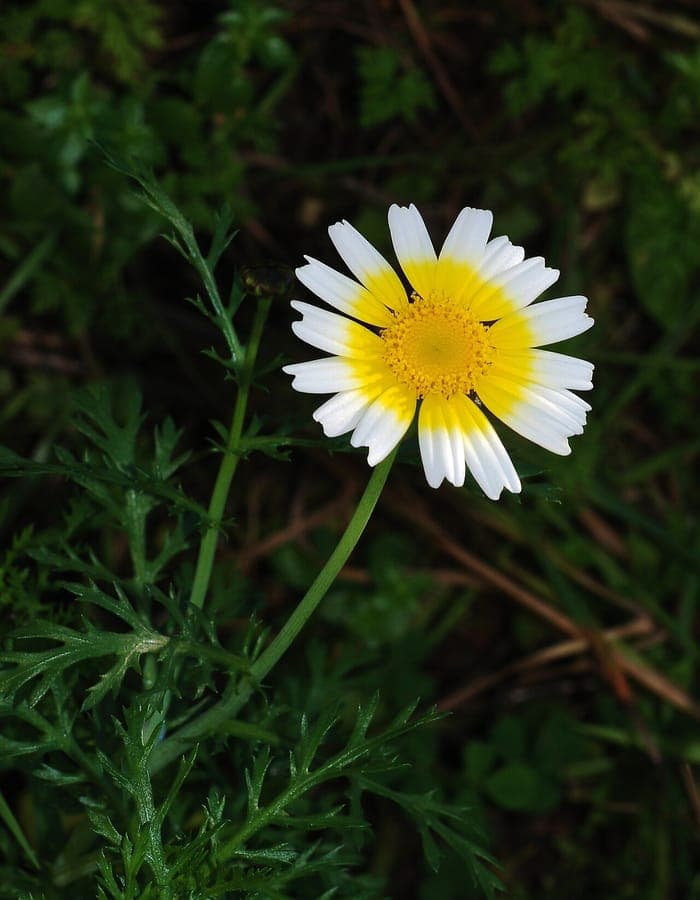
The plant features finely divided, dark green leaves that emit a subtle herbaceous scent when brushed. The foliage forms a lush mound before flowering begins. From midsummer, multiple stems rise, each topped with a 5 to 8 cm wide flower. These golden-yellow blooms resemble small chrysanthemums, with tightly packed ray florets forming a crown-like disc - hence the species name 'coronaria'.
Flowering starts in early July if sown early, peaking in August. Each bloom lasts 7 to 10 days, and deadheading encourages more flowers. By late September, seed heads form, and if left uncut, the plant will self-seed modestly in loose, sunny soil. To track bloom timing and plan succession planting, check the interactive calendar on gardenworld.app.
Ideal location
Chop-suey-green demands full sun - aim for 8 out of 10 on the light scale, meaning at least 6 to 8 hours of direct sunlight daily. Choose a south- or west-facing spot in your garden or on a balcony. In partial shade, the plant becomes leggy, produces fewer flowers, and the leaves lose their vibrant flavour.
It works well in cottage garden borders, herb gardens, or containers as small as 30 cm in diameter. When planting in beds, space individuals 30 to 40 cm apart to allow airflow and prevent mildew. Avoid overcrowding, especially in humid summers.
Soil requirements
This plant prefers alkaline soils with a pH between 7.5 and 8.0. It struggles in acidic conditions, so avoid pine mulch or peat-based compost. The soil must be well-draining yet moisture-retentive - a loamy mix enriched with compost works best. Heavy clay should be amended with grit or coarse sand to improve drainage.
Prepare planting holes with a blend of garden soil, well-rotted compost, and a handful of horticultural sand. Avoid high-nitrogen fertilisers, which promote leafy growth at the expense of flavour and flowering. A light application of balanced organic fertiliser at planting time is sufficient.
Free design
Want to see Chop-suey-green: complete guide in your garden? Make a free design now.
Watering
Once established, Chop-suey-green is moderately drought-tolerant, but consistent moisture boosts leaf quality and delays flowering. Water deeply when the top 2–3 cm of soil feels dry, preferably in the morning. Potted plants dry out faster and may need watering every other day in hot weather.
Avoid overhead watering if possible, as wet foliage increases the risk of powdery mildew. Use a soaker hose or water at the base. Ensure containers have drainage holes and never let pots sit in standing water.
Pruning
Regular harvesting is a form of pruning that benefits the plant. Pick outer leaves when they're 10–15 cm long, leaving the central rosette to continue growing. This cut-and-come-again method extends harvests from late spring to early autumn.
Deadhead spent flowers to prolong blooming and prevent excessive self-seeding. If the plant starts to look tired in late summer, cut it back hard to 15 cm above soil level. With adequate moisture and warmth, it will often regrow and produce a second flush of tender leaves.
Maintenance calendar
- March–April: Start seeds indoors or in a greenhouse at 15–18°C. Keep soil moist but not soggy.
- May: Harden off seedlings for a week. Plant out after last frost, spacing 30–40 cm apart.
- June: Begin harvesting young leaves. Monitor for aphids on new growth.
- July–August: Peak flowering. Deadhead regularly. Water during dry spells.
- September: Allow a few flowers to set seed for next year. Make final leaf harvests.
- October: Remove plants after flowering. Compost healthy material.
Winter hardiness
As a true annual, Chop-suey-green does not survive winter in temperate zones. It's not frost-tolerant and will die back after the first hard freeze. While some seed may overwinter and germinate in spring, don't rely on this for consistent results. Collect and store ripe seed in a cool, dry place for reliable germination next season.
Companion plants
Pair Chop-suey-green with herbs like thyme, oregano, or dill - all share similar sun and soil needs. In the vegetable garden, it grows well alongside lettuce, carrots, and onions. Visually, it complements yellow-flowering plants like coreopsis or rudbeckia. Avoid planting near moisture-loving species such as astilbe or ligularia, which prefer richer, wetter soils.
Closing
Chop-suey-green is a smart choice for gardeners who want both beauty and bounty. It's easy to grow from seed, thrives in sun, and offers a long harvest window. Whether you're growing it in a raised bed or a patio container from garden centres like those in the UK, this plant earns its place. With minimal care and the right conditions, it delivers flavour, flowers, and flexibility. Use gardenworld.app to plan a seasonal layout that maximises sun exposure and companion planting for this versatile green.
Want to see Chop-suey-green: complete guide in your garden? Make a free design now.
Upload a photo, pick a style, and get a photorealistic design with plant list in under a minute.
No credit card required


Similar plants
Calendula stellata: complete guide
Calendula stellata
Complete guide to Calendula stellata, the star-flowered marigold from Sicily: location, soil, watering and companion planting tips.
Korean chrysanthemum: complete guide
Chrysanthemum x rubellum
Chrysanthemum x rubellum is a hardy autumn perennial with single pink to copper flowers from August to November. Care and combinations.
Helianthus divaricatus: complete guide
Helianthus divaricatus
Helianthus divaricatus is a North American woodland sunflower with yellow summer blooms, ideal for naturalistic borders and shady edges.