
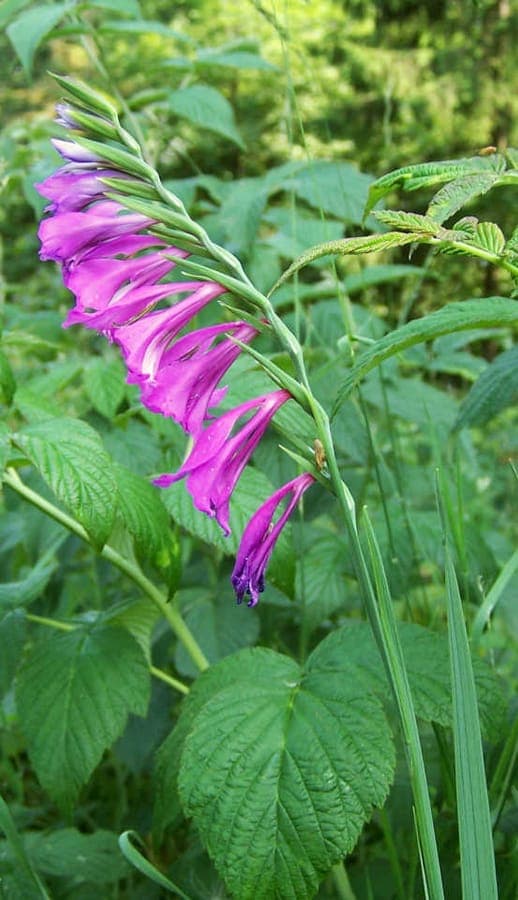
Opioła Jerzy / CC BY 2.5, via Wikimedia Commons
Gladiolus imbricatus: complete guide
Gladiolus imbricatus
Want to see Gladiolus imbricatus: complete guide in your garden?
1 minute, no credit card
Overview
Gladiolus imbricatus is a striking yet understated corm-flowering plant native to grasslands across Central and Eastern Europe. Unlike the flashy hybrids commonly seen in gardens, this species offers a more natural, wild appeal - perfect for gardeners aiming for a meadow-style or ecological planting scheme. It grows 60–90 cm tall, producing a single upright spike with rich purple flowers arranged in a neat row along one side of the stem. As a perennial, it can return year after year when planted in the right conditions.
This species thrives in open, sunny areas with well-drained soil, making it ideal for borders, cottage gardens, or naturalised meadows. On gardenworld.app, you can design a planting layout that highlights its vertical form among low-growing perennials and grasses. Its unassuming elegance and ecological value make it a smart choice for sustainable gardening.
Appearance & bloom cycle
The plant features narrow, sword-shaped leaves that sheath the lower part of the stem. The flower spike emerges in mid-summer, bearing 6 to 12 individual blooms, each about 4–5 cm across. The flowers are a deep, velvety purple with darker veining, giving them a refined, almost regal look. They open sequentially from the bottom up, ensuring a bloom period that lasts 3–4 weeks between July and mid-August.
After flowering, seed capsules form and mature by late summer. While propagation by seed is possible, it's slow - seedlings may take 3–4 years to flower. Most gardeners prefer to grow it from corms, which are readily available from specialist nurseries.
Ideal location
Gladiolus imbricatus needs full sun - aim for a light level of 8 out of 10, meaning at least 6 hours of direct sunlight daily. A south- or southwest-facing spot works best. It performs poorly in shade, producing weak, floppy stems and few flowers.
Choose a location with good air circulation to prevent fungal issues. Avoid placing it under trees or near dense shrubs that compete for light and moisture. The plant suits the middle to back of a border, where its height can be showcased. For optimal placement, use gardenworld.app to visualise sun exposure and plant height relationships in your garden.
Soil requirements
This species prefers alkaline soil with a pH between 7.5 and 8.0. It grows well in sandy or loamy soils that drain quickly. Heavy clay or waterlogged ground is a problem - it increases the risk of corm rot, especially in winter.
If your soil is acidic or compacted, amend it with grit or horticultural sand to improve drainage. A light dressing of compost in early spring can help, but avoid high-nitrogen fertilisers, which promote leafy growth at the expense of flowers.
Free design
Want to see Gladiolus imbricatus: complete guide in your garden? Make a free design now.
Watering
Once established, Gladiolus imbricatus is fairly drought-tolerant. However, during active growth (May to July), it benefits from regular watering, especially in dry spells. Water at the base to keep foliage dry and reduce the risk of fungal diseases like botrytis.
Reduce watering as the foliage begins to die back in late summer. Overwatering in autumn can be fatal, so ensure the soil dries out between rains. In wetter regions, consider lifting corms for winter storage - more on that below.
Pruning
No pruning is required. After flowering, cut the flower spike down to the base to prevent seed formation if you don't want self-seeding. However, leave the leaves intact until they turn yellow or brown - they continue to feed the corm for next year's growth.
If you're collecting seeds, allow the capsules to dry fully on the plant before harvesting. Store them in a cool, dry place until sowing in autumn.
Maintenance calendar
- January: Dormant. No action needed.
- February: Check stored corms for rot.
- March: Plant corms outdoors from late March, once soil begins to warm.
- April: Watch for emerging shoots; keep weeds under control.
- May: Water regularly; monitor for aphids.
- June: Stake tall stems if needed; ensure good airflow.
- July: Peak bloom. Take photos and log growth on gardenworld.app.
- August: Flowering ends. Begin reducing water.
- September: Foliage yellows. Stop watering.
- October: Lift corms in wet areas; store in dry sand.
- November: Store corms at 5–10°C in a dark, ventilated space.
- December: Dormant. Check storage conditions monthly.
Winter hardiness
Gladiolus imbricatus is hardy in USDA zones 6–8. In milder, drier parts of the UK and western Europe, it can overwinter in the ground if drainage is excellent. However, in regions with heavy clay or persistent winter wet, it's safer to lift the corms in October.
Store them in a frost-free shed or garage, buried in dry sand or peat-free compost. Replant in spring after the last frost. Use the hardiness zone map on gardenworld.app to assess your local risk.
Companion plants
Pair Gladiolus imbricatus with other sun-loving, drought-tolerant perennials. Good companions include Salvia x sylvestris, Echinacea purpurea, Stachys byzantina, and ornamental grasses like Deschampsia cespitosa. These share similar soil and light needs and create a harmonious, low-maintenance planting.
Avoid moisture-loving plants like hostas or astilbes, which require richer, wetter soil and may clash in cultural requirements.
Closing
Gladiolus imbricatus is not your typical gladiolus. It's quieter, more refined, and in tune with nature. With minimal care and the right spot, it delivers bold purple spikes every summer, supporting pollinators and adding vertical interest to your garden.
Buy corms from reputable suppliers at garden centres or online nurseries - avoid generic mixes, as many contain hybrids. If you're unsure about spacing or design, gardenworld.app offers visual planning tools to help you create a balanced, thriving garden around this elegant species.
Want to see Gladiolus imbricatus: complete guide in your garden? Make a free design now.
Upload a photo, pick a style, and get a photorealistic design with plant list in under a minute.
No credit card required


Similar plants
Iris tingitana: complete guide
Iris tingitana
Iris tingitana, the Morocco iris, is the bulb species behind the Dutch iris: early blue-violet blooms that need a sunny, well-drained position.
Iris hookeri: complete guide
Iris hookeri
Hooker's Iris is a compact North American native plant with blue flowers. Low-growing and moisture-loving water plant.
Siskiyou iris: complete guide
Iris bracteata
Complete guide to Iris bracteata, the Siskiyou iris: location, soil, bloom cycle, watering, pruning and companion plants for this rare Pacific Coast iris.