
A. Barra / CC BY-SA 4.0, via Wikimedia Commons
Eastern gladiolus: complete guide
Gladiolus communis
Want to see Eastern gladiolus: complete guide in your garden?
1 minute, no credit card
Overview
Gladiolus communis, commonly known as the Eastern gladiolus, is a striking yet understated bulbous perennial from the Iridaceae family. Unlike the flashy hybrid gladioli bred for cut flowers, this species offers a more natural elegance, with slender stems and soft purple blooms that sway gently in the summer breeze. Native to southern Europe and North Africa-from Corsica and southern France to Morocco and the Crimea-this plant thrives in dry, rocky, sun-drenched habitats. It's well-suited for cottage gardens, Mediterranean-style borders, and gravel gardens across USDA zones 7 to 9.
In the UK and similar climates, it adapts well when given sharp drainage and full sun. It's not a high-maintenance plant, but it does have specific needs. On gardenworld.app, you can design a planting scheme that highlights its bloom time alongside companion plants like lavender and catmint.
Appearance & bloom cycle
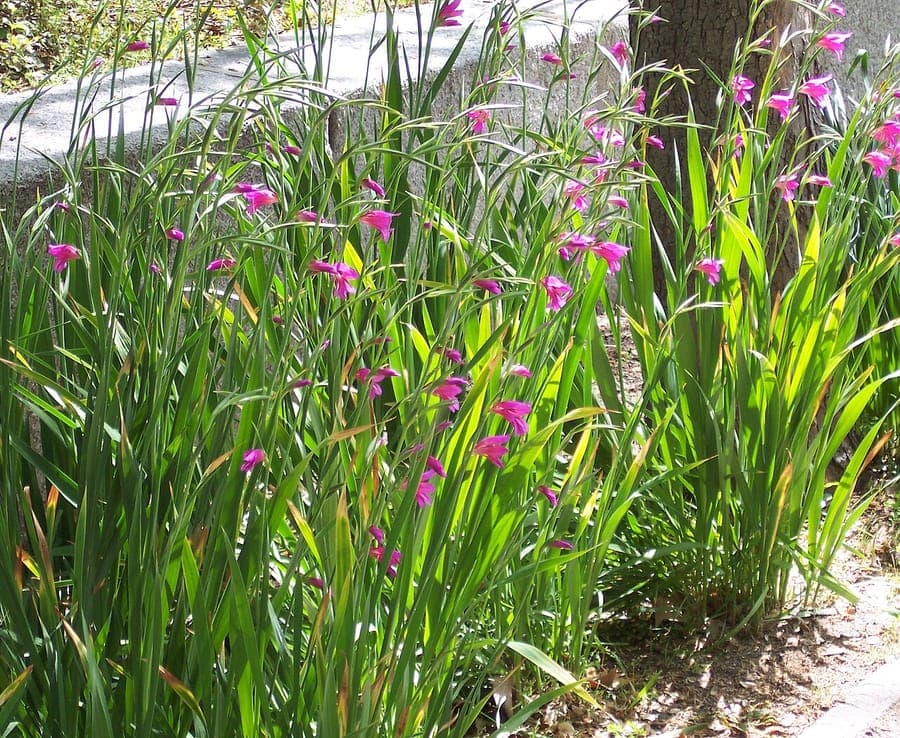
Eastern gladiolus grows 40 to 70 cm tall, with narrow, sword-shaped leaves that form a neat fan at the base. The flower spike emerges in late spring, typically from May through June, and carries 5 to 12 softly nodding, funnel-shaped flowers. Each bloom is a delicate shade of purple, often with dark veining and a pale yellow or white central streak that guides pollinators to the nectar.
The flowering sequence starts from the bottom of the spike and progresses upward over two to three weeks. Individual plants bloom for about 20 days, but staggering bulb planting every two weeks from mid-spring extends the display. The flowers are lightly fragrant and attract bees, hoverflies, and small butterflies, making this a valuable addition to wildlife gardens.
Ideal location
Full sun is essential-aim for a minimum of 8 on the light scale. A south- or southwest-facing spot works best. The plant needs at least 6 hours of direct sunlight daily to produce strong stems and reliable blooms. Avoid shaded areas or sites with heavy competition from tree roots.
It also benefits from some wind protection. Tall, slender spikes can bend or snap in exposed, blustery gardens. Plant near low walls, shrubs, or use discreet supports if needed. Raised beds, rock gardens, or dry borders are ideal. Avoid wet, shaded corners or north-facing walls.
Soil requirements
This gladiolus demands well-drained, alkaline soil. The ideal pH range is 7.5 to 8.0. Heavy clay soils are unsuitable unless amended with grit, sharp sand, or fine gravel to improve drainage. A mix of loam, sand, and crushed limestone works well in containers or poor native soils.
Avoid rich, moisture-retentive composts-these encourage rot. Plant bulbs 10–15 cm deep and 10 cm apart. In wet climates, consider growing in terracotta pots with drainage holes and storing them over winter.
Free design
Want to see Eastern gladiolus: complete guide in your garden? Make a free design now.
Watering
Once established, Eastern gladiolus is drought-tolerant. Water only during prolonged dry spells in spring and early summer, particularly when flower spikes are forming. Always water at soil level to prevent fungal issues on leaves and buds. Overhead watering should be avoided.
After flowering, reduce watering gradually. By late summer, allow the soil to dry out completely. This mimics the plant's natural Mediterranean cycle of wet winters and dry summers.
Pruning
No pruning is needed beyond deadheading the flower spike after bloom. Cut the stem just above the top leaf node to maintain tidy foliage. Leave the leaves intact until they yellow and wither naturally-this allows the bulb to store energy for next year.
Remove any damaged or diseased leaves promptly. In autumn, once the foliage dies back, you can tidy up the area, but avoid disturbing the bulbs unless you're lifting them for storage.
Maintenance calendar
- Jan: Check stored bulbs for rot or mould. Keep dry and cool (5–10°C).
- Feb: No action required.
- Mar: Prepare planting beds. Improve drainage if needed.
- Apr: Plant bulbs 10–15 cm deep in well-drained soil or containers.
- May: Growth appears. Watch for slugs. Begin light watering in dry spells.
- Jun: Peak bloom. Support tall spikes if necessary.
- Jul: Flowers fade. Cut back flower spikes. Stop watering.
- Aug: Foliage begins to die back. Keep soil dry.
- Sep: Leaves fully withered. Lift bulbs in wet areas.
- Oct: Store lifted bulbs in dry sand or peat. Label varieties.
- Nov: Ensure storage area remains dry and frost-free.
- Dec: Monitor storage conditions.
Winter hardiness
Gladiolus communis is hardy in USDA zones 7–9. In zone 7, it can overwinter in the ground if soil is free-draining. In heavier or wetter soils, lift bulbs in autumn and store them indoors. Replant in spring after the last frost.
In colder zones (below 7), it's best treated as a tender perennial and grown in containers that can be moved to shelter.
Companion plants
Pair Eastern gladiolus with drought-tolerant perennials like Lavandula angustifolia, Nepeta faassenii, Eryngium, or Santolina. Its vertical form contrasts beautifully with mounding or spreading plants. It also works well with early-flowering alliums or late tulips for extended interest.
Avoid aggressive spreaders or plants that create dense shade. On gardenworld.app, you can experiment with digital garden layouts to see how this gladiolus integrates with other summer bloomers.
Closing
Gladiolus communis brings a quiet charm to the garden. It's not loud or garish, but its graceful form and soft purple blooms add rhythm and texture. It's low-maintenance, pollinator-friendly, and resilient once established.
Plant in groups of five or more for impact, and choose a sunny, dry spot with excellent drainage. You can find bulbs at garden centres across the UK in spring, or order online. With the right care, this elegant gladiolus will return year after year, lighting up your summer garden with subtle beauty.
Want to see Eastern gladiolus: complete guide in your garden? Make a free design now.
Upload a photo, pick a style, and get a photorealistic design with plant list in under a minute.
No credit card required


Similar plants
Iris tingitana: complete guide
Iris tingitana
Iris tingitana, the Morocco iris, is the bulb species behind the Dutch iris: early blue-violet blooms that need a sunny, well-drained position.
Iris hookeri: complete guide
Iris hookeri
Hooker's Iris is a compact North American native plant with blue flowers. Low-growing and moisture-loving water plant.
Siskiyou iris: complete guide
Iris bracteata
Complete guide to Iris bracteata, the Siskiyou iris: location, soil, bloom cycle, watering, pruning and companion plants for this rare Pacific Coast iris.