
Abu Shawka / CC0, via Wikimedia Commons
Gladiolus alatus: complete guide
Gladiolus alatus
Want to see Gladiolus alatus: complete guide in your garden?
1 minute, no credit card
Overview
Gladiolus alatus, commonly known as Turkey-chick or winged gladiolus, is a unique dwarf gladiolus from the Iridaceae family. This plant grows wild in the Cape region of South Africa and is recognized for its characteristic winged flowers.
The name alatus refers to the wings or appendages of the flowers, which distinguishes this species from other gladiolus varieties. This is not a full-size gladiolus but a charming miniature version, perfect for rock gardens and containers.
This South African gem is lesser known in Europe than many other gladiolus species, yet deserves greater attention. The plant blooms in autumn and winter, an unexpected flowering period for most gardeners.
Appearance & Blooming
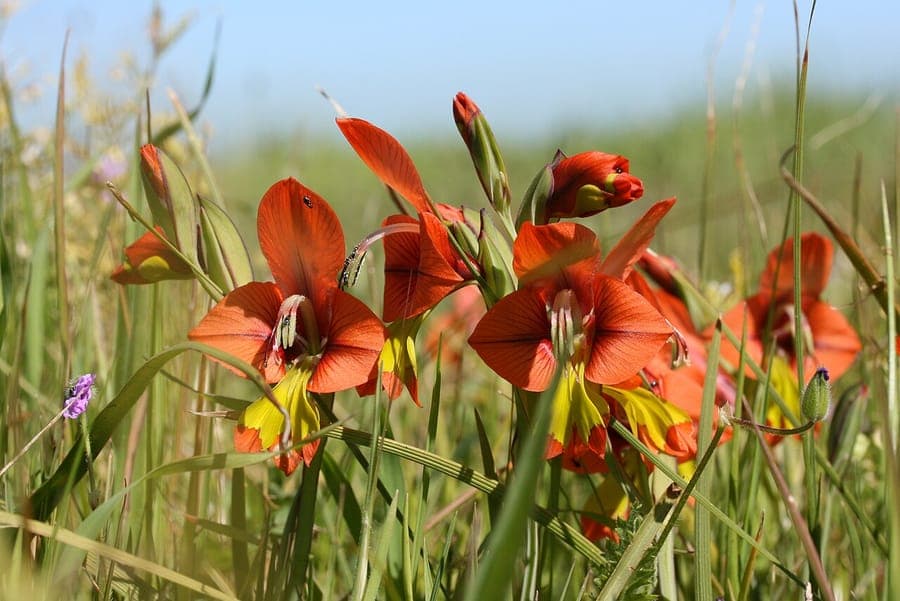
Gladiolus alatus grows to 30-40 cm in height with narrow, grass-like foliage. The plant is considerably more compact than standard gladiolus varieties. The flowers are small yet striking, with characteristic wings or flaps at the base of petals.
Flowers are typically reddish to orange-red in color, sometimes with yellow accents. Each flower appears along a short spike, with only a few blooms opening simultaneously. This makes Gladiolus alatus more refined and less massive than large gladiolus types.
Blooming period is autumn through early winter (September through December in the Southern Hemisphere, August through October in Europe after pre-chilling). This makes the plant interesting for winter gardens and late-season flowers.
Ideal Location
Gladiolus alatus thrives in full sun. A location receiving at least 6-8 hours of direct sunlight daily is ideal. The plant thrives in open, sunny positions.
Select a location with good ventilation and without wind gusts that might damage fragile stems. A sheltered south-facing exposure or against a warm wall is ideal.
In containers or rock gardens, position this plant visibly where small but striking flowers display effectively.
Soil
Gladiolus alatus thrives in well-draining, sandy soil. The plant thrives in poor to average soils. A mixture of sand, gravel and potting soil in 1:1:1 ratio works well.
The plant tolerates acidic to neutral soil pH (6.0-7.0) well. For container cultivation, use alpine soil mix or add coarse grit to standard potting compost.
Waterlogging is fatal, so ensure excellent drainage. This plant performs better in poor soil than rich soils.
Free design
Want to see Gladiolus alatus: complete guide in your garden? Make a free design now.
Watering
Water requirements vary with growth phase. After autumn planting, water cautiously until visible growth appears. During bloom, water regularly ensuring soil remains moist but not waterlogged.
During growing season (autumn-winter), provide water when the top 2 cm feels dry to the touch. After blooming and foliage senescence, drastically reduce watering.
In containers, drainage and moisture management are critical. Ensure rainwater drains away and does not accumulate.
Maintenance
Gladiolus alatus is low-maintenance. After flowering, you can remove spent flowers. As foliage yellows, remove leaves to make room for new growth.
The plant is often "summer-dormant," entering rest after blooming. Leave corms in the ground during dry summers without water.
In temperate climates, you can excavate corms in autumn, dry them and store in a cool, dry location over summer.
Maintenance Calendar
July-August: Plant is dormant. Corms in storage. No water or maintenance.
August-September: Plant begins growth. Foliage appears. Water cautiously.
October-November: Growth accelerates. Bloom initiates. Water regularly. Feeding optional.
December: Bloom reaches peak. Remove spent flowers. Water cautiously.
January-February: Bloom diminishes. Foliage yellows. Reduce watering.
March-June: Plant declines. Allow foliage to dry and remove. No watering.
Winter Hardiness
Gladiolus alatus is not cold-hardy and does not tolerate frost. In regions with frost, excavate corms in autumn and store them. In mild temperate climates, corms can remain in ground under protective mulch.
In South Africa, the plant flowers best as winter blooming since growth occurs during cool season. Experiment with late-summer planting in temperate zones to achieve winter bloom.
Companion Plantings
Combine Gladiolus alatus effectively with:
- Other South African bulbs
- Summer-dormant bloomers for seasonal interest
- Tuberous begonias for texture
- Heuchera for contrasting foliage
- Silver grasses for background
Plant in clusters of 5-7 corms close together for effective flower display. In containers, 3-5 corms suffice.
Conclusion
Gladiolus alatus is a unique and fascinating plant for gardeners seeking alternatives to conventional summer bloomers. The winged flowers and autumn blooming period make this an interesting addition to mixed borders.
The plant requires careful water management but is otherwise low-maintenance. For gardeners in mild climates, this represents a durable choice offering substantial character.
Available from specialized bulb suppliers. Source corms from South African origins. Experiment with planting timing for best results. More information on gardenworld.app.
Want to see Gladiolus alatus: complete guide in your garden? Make a free design now.
Upload a photo, pick a style, and get a photorealistic design with plant list in under a minute.
No credit card required


Similar plants
Iris tingitana: complete guide
Iris tingitana
Iris tingitana, the Morocco iris, is the bulb species behind the Dutch iris: early blue-violet blooms that need a sunny, well-drained position.
Iris hookeri: complete guide
Iris hookeri
Hooker's Iris is a compact North American native plant with blue flowers. Low-growing and moisture-loving water plant.
Siskiyou iris: complete guide
Iris bracteata
Complete guide to Iris bracteata, the Siskiyou iris: location, soil, bloom cycle, watering, pruning and companion plants for this rare Pacific Coast iris.