
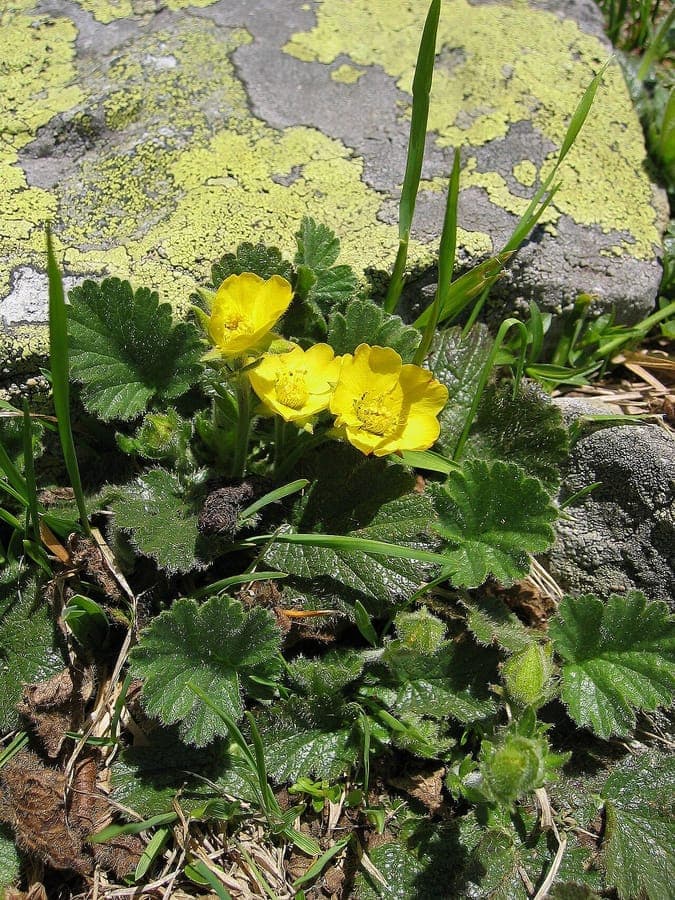
Wikimedia Commons / CC BY-SA 3.0, via Wikimedia Commons
Alpine avens: complete guide
Geum montanum
Want to see Alpine avens: complete guide in your garden?
1 minute, no credit card
Overview
Alpine avens (Geum montanum) is a quiet achiever in the garden. Native to mountainous regions across central and southern Europe - from Austria and Germany to Greece and Bulgaria - this compact perennial in the Rosaceae family thrives in rocky, well-drained conditions. Standing just 10–15 cm tall and spreading slowly to about 20 cm wide, it's tailor-made for rock gardens, wall crevices, or the front of sunny borders. Its cheerful yellow blooms in midsummer bring a soft glow without overwhelming the space.
On gardenworld.app, you can design a planting scheme that matches the specific light and drainage needs of Alpine avens, ensuring it settles in perfectly.
Appearance & bloom cycle
The plant forms a low, dense mound of dark green, deeply lobed foliage that feels slightly hairy to the touch. In July and August, slender stems rise just above the leaves, each bearing a single, bright yellow flower about 2–3 cm across. The five-petalled blooms have a simple, wildflower charm and last for several weeks. After flowering, the seed heads develop into soft, fuzzy tufts that add textural interest into autumn.
Alpine avens is semi-evergreen in milder climates, meaning it retains much of its foliage through winter. This makes it a valuable asset in year-round garden structure, especially in alpine or gravel beds where green presence is limited in colder months.
Ideal location
Aim for a spot rated around 7 on the light scale - that's full sun to partial shade. An east- or south-facing slope, a rock crevice, or a raised bed with good airflow works best. While it enjoys sun, intense afternoon heat in hot summers can stress the plant, especially if the soil dries out too fast. In the UK and northern Europe, full sun is usually fine, but in hotter zones (USDA 7–8), a little midday shade helps.
Avoid low-lying, damp areas. Elevation or slope improves drainage, which is critical. On gardenworld.app, you can simulate microclimates in your garden and test whether your chosen spot offers the right balance of light and airflow for Geum montanum.
Soil requirements
The soil must be sharply drained. A mix of gritty sand, loam, and leaf compost works well. pH should be on the acidic side - between 4.0 and 4.5. Avoid chalky or lime-rich soils, as Alpine avens is sensitive to high pH. If your garden has heavy clay, grow it in a raised bed or container with a blend of 2 parts loam, 1 part grit, and 1 part peat-free compost.
Good drainage is non-negotiable. Soggy roots in winter are the main cause of failure. A top dressing of gravel helps keep the crown dry and deters rot.
Free design
Want to see Alpine avens: complete guide in your garden? Make a free design now.
Watering
Water moderately during the growing season (May to August), especially in dry spells. Once established, Alpine avens is fairly drought-tolerant but performs better with occasional deep watering. Use rainwater when possible - tap water with high alkalinity can affect soil pH over time.
Reduce watering in autumn and stop completely during wet winters unless the plant is in a container and the compost dries out.
Pruning
After flowering, cut back spent flower stems to the base to keep the plant tidy and prevent self-seeding. No hard pruning is needed. In early spring, remove any damaged or winter-killed foliage to make way for fresh growth.
Maintenance calendar
- January: Check for crown rot; ensure good drainage.
- February: No action needed.
- March: Clear old leaves; apply a light mulch of compost.
- April: Monitor for new growth; start watering if dry.
- May: Water during dry periods; watch for slugs.
- June: Flower buds form; maintain consistent moisture.
- July: Peak bloom; deadhead spent flowers.
- August: Bloom ends; trim back flower stems.
- September: Leave seed heads for winter interest.
- October: Reduce watering; keep area tidy.
- November: Protect from wet soil; avoid mulching too heavily.
- December: Ensure plant stays dry; avoid winter wet.
Winter hardiness
Alpine avens is hardy in USDA zones 5 to 8. It survives most winters well, but prolonged wetness is its biggest enemy. In colder zones, a light winter mulch of grit or pine needles helps, but avoid organic mulches that retain moisture. In pots, elevate containers to prevent waterlogging.
Companion plants
Pair with other alpine or rock garden species like Saxifraga, Draba, or Thymus. It also works well with low-growing sedums, Campanula carpatica, or dwarf iris. Avoid moisture-loving plants like hostas or astilbes. For colour contrast, plant near purple alliums, blue veronicas, or white daisies.
Group in threes or fives for best visual impact. Its compact size makes it ideal for edging or softening hard landscape features.
Closing
Alpine avens may not grab attention like a peony or rose, but it earns its place through reliability, subtle beauty, and low demands. It's a smart pick for rock gardens, crevices, or dry, sunny spots where other plants struggle. You'll find it at garden centres in the alpine or perennial section - look for stock at Truffaut, Jardiland, or local independents in Europe. In the UK, check specialist nurseries or alpine sales.
With thoughtful placement and minimal care, Geum montanum delivers a quiet but lasting charm. And with gardenworld.app, you can preview how this little yellow gem fits into your overall garden design before you plant a single seed.
Want to see Alpine avens: complete guide in your garden? Make a free design now.
Upload a photo, pick a style, and get a photorealistic design with plant list in under a minute.
No credit card required


Similar plants
Siberian crab apple: complete guide
Malus x robusta
Complete guide to the Siberian crab apple (Malus x robusta): location, soil, pruning, winter hardiness and the best companion plants for your garden.
Chinese flowering crabapple (Malus x spectabilis): complete guide
Malus x spectabilis
Meet the Chinese flowering crabapple (Malus x spectabilis): a classic spring bloomer with carmine buds and pink blossom.
Potentilla crassinervia: complete guide
Potentilla crassinervia
Potentilla crassinervia, the Corsican cinquefoil, grows wild on Corsica and Sardinia's peaks. Discover how to grow this hardy alpine rock garden gem.