
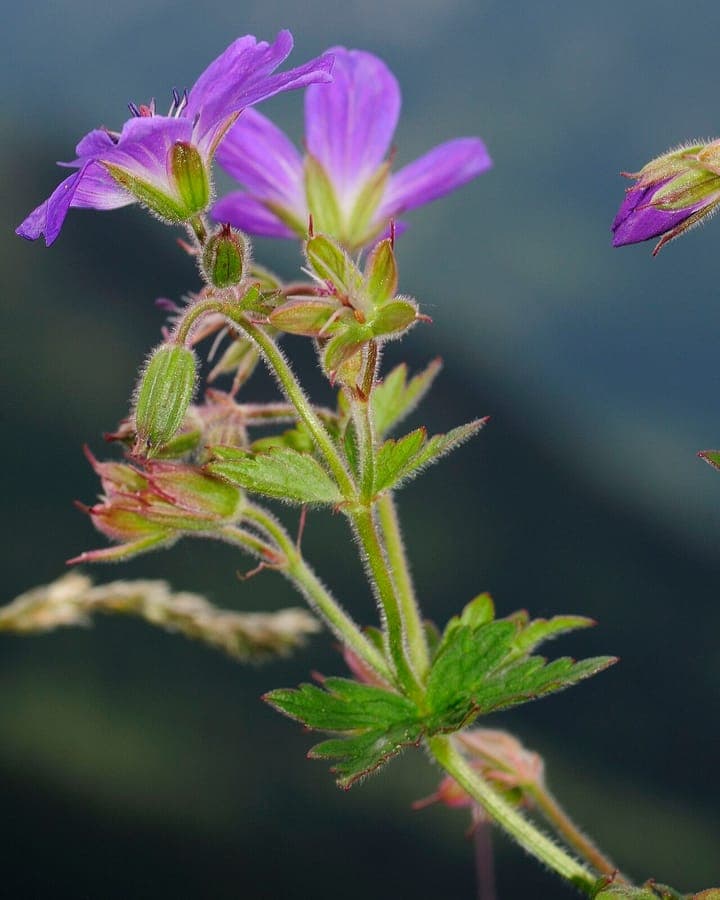
Philipp Weigell / CC BY 3.0, via Wikimedia Commons
Wood crane's-bill: complete guide
Geranium sylvaticum
Want to see Wood crane's-bill: complete guide in your garden?
1 minute, no credit card
Overview
Geranium sylvaticum, commonly known as Wood crane's-bill, is a hardy herbaceous perennial native to forested regions across central and eastern Europe. In the UK and northern Europe, it thrives in dappled shade beneath deciduous trees, where the soil stays consistently moist but well-drained. This plant reaches 50–70 cm in height and spreads slowly via underground rhizomes, forming soft, billowing clumps without becoming invasive. Its deeply lobed, palmate leaves and delicate, pale purple flowers give it a refined, naturalistic look that fits perfectly in cottage or woodland-style gardens.
On gardenworld.app, you can design a planting scheme that highlights the airy texture of Wood crane's-bill, especially when paired with ferns or early spring bulbs.
Appearance & bloom cycle
From late May through June, Geranium sylvaticum produces open clusters of soft lavender to pale pink flowers, each about 2–3 cm wide. The petals are slightly notched and surround a darker purple center, creating a gentle contrast. The foliage is mid- to dark green, deeply divided into five to seven lobes, and has a softly hairy texture that feels pleasant to the touch. In autumn, the leaves often turn golden or bronze, adding subtle warmth to the late-season garden.
The blooming period lasts roughly four weeks. After flowering, the plant develops the classic crane's-bill seed pods, which twist and snap open to fling seeds several feet away-a clever natural dispersal mechanism. While it self-seeds lightly, it rarely becomes a nuisance.
Ideal location
Wood crane's-bill performs best in light to partial shade, scoring a 5 on the light scale (1–10). It loves the filtered sunlight found beneath trees like birch, hazel, or maple. Full sun is acceptable only if the soil remains reliably moist. In hot, dry spots, the plant will wilt and may go dormant early.
This species shines in naturalistic borders, woodland edges, or along shaded pathways. It's also excellent for softening the base of shrubs or filling gaps under tall perennials. Try planting it in groups of five or more for a natural drift effect.
Soil requirements
The plant prefers fertile, humus-rich, well-drained soil with a pH between 7.0 and 7.5. Loamy or slightly sandy soils work well as long as they retain moisture. Avoid heavy clay unless amended with compost or grit to improve drainage. Poor, sandy soils will require regular mulching and organic feeding to maintain moisture and fertility.
Before planting, incorporate plenty of compost or well-rotted manure to boost soil structure and nutrient content. A neutral to slightly alkaline pH is ideal-avoid strongly acidic conditions.
Free design
Want to see Wood crane's-bill: complete guide in your garden? Make a free design now.
Watering
Water regularly during the first growing season to help establish strong roots. Once settled, Wood crane's-bill has moderate to high water needs, especially in spring and early summer. Keep the soil evenly moist but never waterlogged. During dry spells, deep watering every 7–10 days is beneficial.
Mulch in spring with leaf mold or compost to conserve moisture and suppress weeds. Avoid peat-based mulches, as they can acidify the soil over time. A 5–8 cm layer is sufficient.
Pruning
After flowering in early summer, cut back the spent flower stems to just above the foliage mound. This encourages fresh leaf growth and may promote a light rebloom in late summer. Avoid cutting back hard in autumn-leave the old foliage intact to protect the crown during winter.
If the plant becomes too dense or starts to flop, a light trim in midsummer helps maintain shape and improve air circulation.
Maintenance calendar
- February–March: Remove any damaged or matted foliage from winter.
- April: Apply a layer of compost or balanced organic fertilizer.
- May–June: Peak bloom period; ensure consistent moisture.
- July: Deadhead and trim back flowered stems.
- August: Top up mulch if soil dries quickly.
- September–October: No active care needed; let plant die back naturally.
- November–January: Dormant period; no pruning or feeding.
Winter hardiness
Wood crane's-bill is fully hardy in USDA zones 4 to 8. It reliably survives cold winters, with the top growth dying back and the rhizomes overwintering safely underground. In wet winters, good drainage is essential to prevent crown rot. No winter protection is needed in most temperate climates.
Companion plants
This geranium pairs beautifully with other shade-tolerant perennials. Try it with Hosta, Astrantia, or Alchemilla mollis for contrasting textures. It also complements ferns, Pulmonaria, or early spring ephemerals like Erythronium. For a natural look, plant in loose drifts among shrubs or under trees.
Avoid overly aggressive spreaders like mint or bishop's weed, which can overwhelm it. On gardenworld.app, you can map out a balanced planting design that ensures each species has room to breathe.
Closing
Geranium sylvaticum is a reliable, graceful perennial that brings elegance to shaded corners without demanding much in return. Its soft flowers, attractive foliage, and easy care make it a staple in many UK and northern European gardens. Look for it at garden centres in spring, especially at trusted retailers where native or hardy perennials are well-stocked. With the right spot and minimal upkeep, Wood crane's-bill will return year after year, quietly enhancing your garden's depth and charm.
Want to see Wood crane's-bill: complete guide in your garden? Make a free design now.
Upload a photo, pick a style, and get a photorealistic design with plant list in under a minute.
No credit card required


Similar plants
Pelargonium acetosum: complete guide
Pelargonium acetosum
Discover the Sorrel-leaf Geranium: a South African plant with aromatic foliage. Perfect for containers and warm locations. Learn cultivation and care.
Erodium foetidum: complete guide
Erodium foetidum
Rock stork's-bill is a delicate alpine plant with purple flowers and fine foliage. Learn how to grow this Mediterranean charmer in your front garden.
Pelargonium crithmifolium: complete guide
Pelargonium crithmifolium
Discover Samphire-leaf pelargonium: an exotic South African geranium with distinctive foliage. Growing tips, care advice and garden inspiration.