
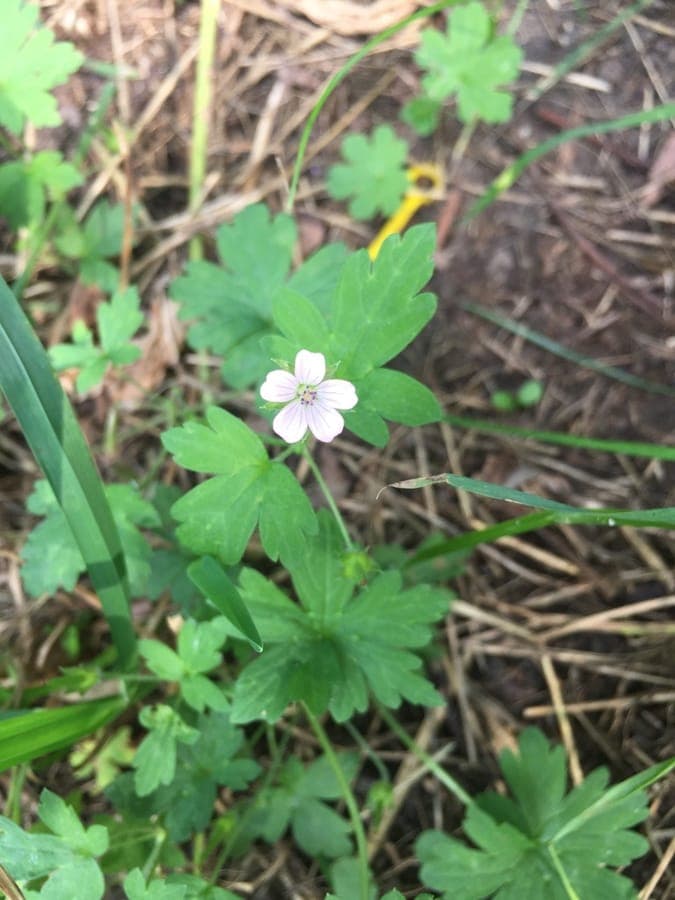
W4Vdragon / CC BY 4.0, via Wikimedia Commons
Siberian crane's-bill: complete guide
Geranium sibiricum
Want to see Siberian crane's-bill: complete guide in your garden?
1 minute, no credit card
Overview
Geranium sibiricum, commonly known as Siberian crane's-bill, is a resilient perennial that thrives in temperate gardens across Europe and North America. Native to regions stretching from the Baltic States to central China, this herbaceous plant brings a long bloom season, attractive foliage, and minimal care demands. It's a favorite among gardeners who value reliability without sacrificing beauty.
One of the standout traits of Geranium sibiricum is its ability to bounce back after dry spells. Unlike more aggressive geraniums, it spreads gently, forming neat clumps without overwhelming neighboring plants. This makes it ideal for mixed borders, woodland edges, and cottage gardens. On gardenworld.app, you can design a garden layout that accommodates its moderate spread and seasonal rhythm.
Appearance & bloom cycle
This geranium typically grows 30–45 cm tall and spreads 35–40 cm wide. The leaves are deeply palmate, mid to dark green, and slightly hairy, turning warm shades of yellow, bronze, or reddish-brown in autumn. This fall color adds visual interest long after flowering has ended.
Flowering occurs from June to August, producing soft lavender-pink flowers about 3 cm in diameter. Each stem bears 2–5 blooms in loose clusters. The petals have subtle veining, and the center features prominent stamens that attract bees, hoverflies, and small butterflies.
After blooming, the seed pods elongate into distinctive beak-like structures-hence the common name 'crane's-bill'. These persist into late autumn, providing texture and movement in the garden.
Ideal location
Siberian crane's-bill performs best in partial shade but tolerates full sun if soil moisture is consistent. In full sun, blooming may shorten during prolonged drought. A spot with morning sun and afternoon shade is ideal, especially in warmer zones (USDA 7–8).
Avoid deep, dense shade, as this reduces flowering and encourages leggy growth. Plant it along the middle or front of a border, where its mounded form can be appreciated. Use gardenworld.app to map light patterns in your garden and identify the perfect microclimate for this plant.
Soil requirements
It prefers moist, well-drained loam or clay-loam soils but adapts to a range of conditions. The ideal pH is slightly acidic to neutral (5.5–7.0). While not fussy, it struggles in very sandy or waterlogged soils.
At planting time, enrich the soil with compost or well-rotted manure. In heavy clay, add grit or coarse sand to improve drainage. Avoid standing water-root rot can develop if roots sit in saturated soil for too long.
Free design
Want to see Siberian crane's-bill: complete guide in your garden? Make a free design now.
Watering
During the first growing season, water weekly to help establish strong roots. Once established, Geranium sibiricum is moderately drought-tolerant, though it performs best with occasional deep watering during dry spells.
In summer, water at the base in the morning or evening to reduce evaporation. Aim for 2.5 cm of water per week during extended dry periods. Mulching lightly with organic material helps retain moisture and suppress weeds.
Pruning
This geranium doesn't require heavy pruning, but cutting back by half after the main bloom in late July or early August can promote a second, smaller flush in September.
In late winter or early spring (February–March), remove any dead or damaged foliage to make room for new growth. Cut back old stems to about 5–10 cm above the crown. Use clean, sharp shears to prevent disease transfer.
Maintenance calendar
- January: No action needed. Monitor for any winter dieback.
- February: Clear away old foliage.
- March: Apply compost around the base.
- April: Watch for new shoots; water if spring is dry.
- May: Maintain even soil moisture as growth accelerates.
- June–August: Peak bloom. Deadhead or cut back after flowering.
- September: Possible second bloom; reduce watering gradually.
- October: Leave foliage in place for winter protection.
- November–December: Dormant period. No maintenance required.
Winter hardiness
This plant is hardy in USDA zones 4–8, surviving temperatures as low as -34°C. It dies back to the ground in winter and re-emerges in spring from the rootstock.
No special protection is needed, but in exposed sites or sandy soils, a light mulch of leaf mold or compost can help insulate roots. Remove mulch in early spring to prevent crown rot.
Companion plants
Pair Siberian crane's-bill with shade-tolerant perennials like Hosta, Astrantia, or ferns. Its soft purple blooms contrast beautifully with yellow flowers such as Rudbeckia or bright white blooms like Anemone nemorosa.
For structure, combine with upright grasses like Hakonechloa macra. Avoid invasive groundcovers like Vinca minor, which may choke out slower spreaders.
Plant in groups of 3–5 for a natural look. Spacing of 40 cm between plants ensures room for gentle expansion without overcrowding.
Closing
Geranium sibiricum is a workhorse in the garden-long-blooming, tough, and attractive to pollinators. Whether you're refreshing a border or designing a low-maintenance space, it earns its place.
You can find it at garden centres across the UK and North America from May through September. Look for healthy, bushy plants with no signs of mildew. For help visualizing how it fits into your overall design, try the planning tools on gardenworld.app.
Want to see Siberian crane's-bill: complete guide in your garden? Make a free design now.
Upload a photo, pick a style, and get a photorealistic design with plant list in under a minute.
No credit card required


Similar plants
Pelargonium acetosum: complete guide
Pelargonium acetosum
Discover the Sorrel-leaf Geranium: a South African plant with aromatic foliage. Perfect for containers and warm locations. Learn cultivation and care.
Erodium foetidum: complete guide
Erodium foetidum
Rock stork's-bill is a delicate alpine plant with purple flowers and fine foliage. Learn how to grow this Mediterranean charmer in your front garden.
Pelargonium crithmifolium: complete guide
Pelargonium crithmifolium
Discover Samphire-leaf pelargonium: an exotic South African geranium with distinctive foliage. Growing tips, care advice and garden inspiration.