
Alvesgaspar / CC BY-SA 3.0, via Wikimedia Commons
Round-leaf crane's-bill: complete guide
Geranium rotundifolium
Want to see Round-leaf crane's-bill: complete guide in your garden?
1 minute, no credit card
Overview
Geranium rotundifolium, commonly known as round-leaf crane's-bill, is a dependable and graceful perennial that brings subtle charm to British and North American gardens alike. Native to parts of Europe and Central Asia, it thrives in USDA hardiness zones 6 to 9, making it a solid choice for temperate climate gardens. With a low-growing, spreading habit and blooms that last from late spring into early autumn, it's a standout for borders, rock gardens, or even containers on patios. It won't dominate a flowerbed, but it earns its place through resilience, long bloom time, and ease of care.
On gardenworld.app, you can design a garden layout that highlights how round-leaf crane's-bill fits into naturalistic planting schemes with other low-growing perennials.
Appearance & bloom cycle
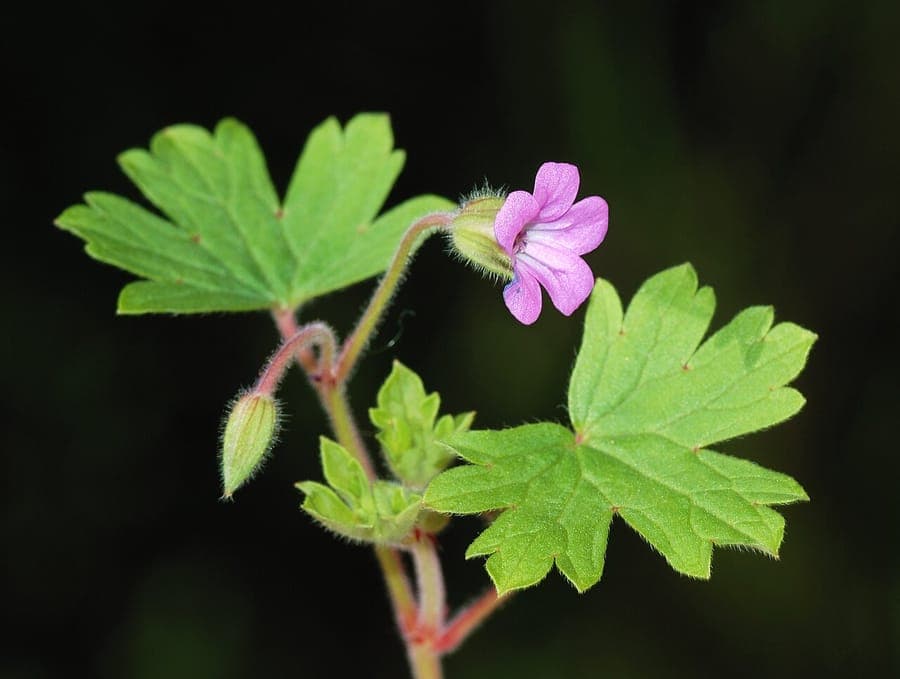
As the name suggests, this geranium features nearly circular, slightly hairy leaves that form a dense, ground-hugging mat. The foliage is medium green with a scalloped edge, reaching about 20–30 cm in height. From April through September, it produces delicate 2–3 cm wide flowers in a soft violet-purple shade, each with five distinct petals and a pale center. Blooms appear singly or in small clusters on slender stalks, peaking in May and June but continuing intermittently if deadheaded.
The plant spreads gently by underground runners, forming colonies over time without becoming invasive. In autumn, the leaves often take on a warm bronze or coppery tint, adding seasonal interest. Unlike some geraniums that die back completely in winter, this one often stays semi-evergreen in milder climates.
Ideal location
Round-leaf crane's-bill grows best in locations rated around 7 on the light scale - meaning partial sun to light shade. It performs well in morning sun with afternoon shade, especially in warmer zones. Full midday sun in southern exposures can scorch the leaves or dry out the soil too quickly, so avoid hot, exposed south-facing spots unless soil moisture is well-managed.
It's an excellent choice for rock gardens, woodland edges, or under the dappled shade of small trees. If you're planting in a container, ensure good airflow and place it where it gets filtered light. For visual inspiration, gardenworld.app offers planting plans that position this geranium as a soft groundcover under ornamental grasses.
Soil requirements
This geranium prefers neutral to slightly alkaline soils with a pH between 7.0 and 7.5. While adaptable, it does poorly in heavy, waterlogged clay. If your garden has dense soil, amend it with grit, compost, or fine gravel to improve drainage. Sandy loam is ideal.
Avoid overly rich or manure-heavy soils - these can lead to floppy growth and fewer flowers. In pots, use a mix of standard potting soil and 30% perlite or horticultural grit to prevent water retention. Good drainage is non-negotiable; root rot is the main threat in poorly aerated substrates.
Free design
Want to see Round-leaf crane's-bill: complete guide in your garden? Make a free design now.
Watering
During the first growing season, water weekly if rainfall is below 2.5 cm. Once established, Geranium rotundifolium is drought-tolerant and rarely needs supplemental watering except during prolonged dry spells. When you do water, apply it at the base to keep foliage dry and reduce fungal risks like powdery mildew.
Check soil moisture by inserting your finger 5 cm deep - if it's dry, it's time to water. In containers, this plant dries out faster, so monitor every few days in summer. Overwatering is more dangerous than underwatering.
Pruning
Pruning isn't essential, but cutting back by one-third after the main flowering flush in June encourages a fresh flush of growth and a second bloom in late summer. Use clean shears and cut just above a leaf node. Remove spent flowers regularly to prolong blooming and prevent self-seeding if you prefer a tidier look.
In late autumn or early spring, tidy up any damaged or old foliage. Avoid cutting too hard in winter, as the remaining leaves offer some protection to the crown.
Maintenance calendar
- Jan: Check for frost damage; leave old growth for insulation
- Feb: No action needed
- Mar: Remove any lingering dead leaves; watch for new shoots
- Apr: Apply a thin layer of compost; plant new specimens
- May: Monitor for blooms and pests; water if dry
- Jun: Cut back after flowering peak; deadhead regularly
- Jul: Watch for moisture stress; inspect for mildew
- Aug: Enjoy second bloom; water container plants if needed
- Sep: Allow seed heads to form if collecting seed
- Oct: Reduce watering; leave foliage intact
- Nov: Protect container plants from freezing
- Dec: Dormant period - no pruning or feeding
Winter hardiness
Hardy in USDA zones 6–9, this geranium withstands winter lows down to -23°C. In zone 6, a light mulch can help protect the crown during harsh freezes. In containers, move pots to a sheltered spot or insulate with burlap or bubble wrap. The plant may die back above ground in colder areas but reliably returns in spring from the rootstock.
Companion plants
Pair round-leaf crane's-bill with plants that share its soil and light needs. Good companions include Nepeta, Alchemilla mollis, or compact salvias. The soft purple flowers contrast beautifully with yellow yarrows, white daisies, or silver-foliaged Artemisia.
It also works well with small shrubs like lavender or dwarf roses, provided the soil drains well. Avoid pairing with aggressive spreaders like mint or bishop's weed.
Closing
Geranium rotundifolium is a quiet achiever in the garden. It doesn't shout, but it delivers consistent color, ground cover, and ease. You'll find it at garden centres across the UK and US, often labelled under its botanical name or common name. Look for it at the start of the growing season.
For design help, explore gardenworld.app - you can simulate how this geranium fits into a drought-tolerant border or a cottage garden scheme.
Want to see Round-leaf crane's-bill: complete guide in your garden? Make a free design now.
Upload a photo, pick a style, and get a photorealistic design with plant list in under a minute.
No credit card required


Similar plants
Pelargonium acetosum: complete guide
Pelargonium acetosum
Discover the Sorrel-leaf Geranium: a South African plant with aromatic foliage. Perfect for containers and warm locations. Learn cultivation and care.
Erodium foetidum: complete guide
Erodium foetidum
Rock stork's-bill is a delicate alpine plant with purple flowers and fine foliage. Learn how to grow this Mediterranean charmer in your front garden.
Pelargonium crithmifolium: complete guide
Pelargonium crithmifolium
Discover Samphire-leaf pelargonium: an exotic South African geranium with distinctive foliage. Growing tips, care advice and garden inspiration.