
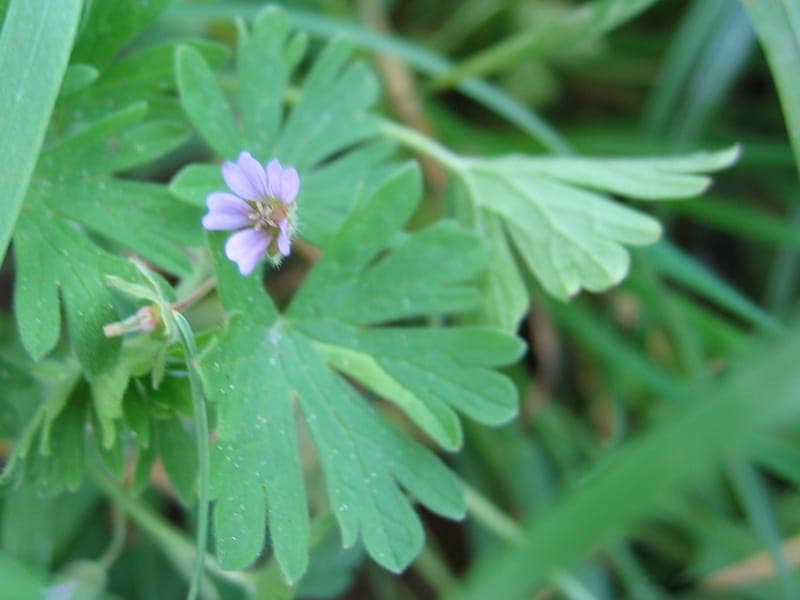
Kristian Peters -- Fabelfroh 14:40, 8 May 2005 (UTC) / CC BY-SA 3.0, via Wikimedia Commons
Small-flower crane's-bill: complete guide
Geranium pusillum
Want to see Small-flower crane's-bill: complete guide in your garden?
1 minute, no credit card
Overview
Small-flower crane's-bill (Geranium pusillum) is a dainty annual herb that slips under the radar in many gardens, yet offers quiet charm and resilience where other plants struggle. Native to a broad swath of Europe and parts of Western Asia - from the Baltic States to Algeria - it thrives in open, dry areas with minimal competition. It's not commonly sold in garden centres, but once established, it returns year after year through self-seeding. At just 10–25 cm tall, it's ideal for the front of borders, between stepping stones, or in meadow-style plantings. If you're aiming for a naturalistic, low-effort garden, this Geranium deserves a spot.
Appearance & bloom cycle
Don't expect bold displays - this plant whispers. Its stems are slender and branching, clothed in small, deeply lobed leaves about 1–2 cm wide. The foliage is pale green, slightly hairy, and has a fern-like delicacy. Flowers are tiny, with five soft purple petals, each about 5 mm across, often with a paler centre. They bloom from May through September, peaking in June and July. Each flower lasts a day or two, but the plant produces them steadily, creating a haze of colour over time. The seed pods resemble miniature stork's bills - hence the common name - and when ripe, they snap open, flinging seeds several inches away.
Ideal location
Small-flower crane's-bill wants at least 5–6 hours of direct sun daily (light level 7/10). It tolerates light shade but won't bloom well in deep shade. Full sun in the morning with afternoon relief is ideal. It's perfect for gravel gardens, rock crevices, or natural meadows where foot traffic is light. Avoid wet, heavy soils - this plant hates sitting in water. Use gardenworld.app to map out a sunny, well-drained area in your yard where this Geranium can self-seed freely without getting trampled.
Soil requirements
Aim for a pH between 6.5 and 7.0 - neutral to slightly acidic. The soil should be lean, gritty, and fast-draining. Mix in sand or fine gravel if your garden has clay. Rich, fertile soils encourage weeds that will outcompete this modest grower. No fertiliser needed - in fact, too much nutrients can reduce flowering and shorten its lifespan. A thin layer of compost in spring is plenty if your soil is very poor.
Watering
Once germinated, this plant is drought-tolerant. Water only during prolonged dry spells, especially in the first four weeks after seedlings emerge. Use a fine spray to avoid disturbing the soil. Established plants rarely need supplemental watering. Overhead watering should be avoided in humid climates to prevent fungal issues. Let the soil dry between waterings - soggy roots mean quick decline.
Free design
Want to see Small-flower crane's-bill: complete guide in your garden? Make a free design now.
Pruning
No pruning required. Since it's an annual, the goal is to let it complete its life cycle: bloom, set seed, die. Cutting it back won't encourage rebloom. Instead, leave the spent stems through late summer to allow seeds to mature and disperse. If self-seeding becomes too enthusiastic, cut back or pull excess plants in early autumn before they drop seed.
Maintenance calendar
- Jan: Dormant (seed stage)
- Feb: No action
- Mar: Prepare seedbeds if sowing early
- Apr: Sow seeds directly outdoors; protect from late frost
- May: Flowers appear; monitor for slugs
- Jun: Peak bloom; check for drought stress
- Jul: Continue blooming; avoid overwatering
- Aug: Seed pods forming; reduce watering
- Sep: Allow seed dispersal; thin if overcrowded
- Oct: Clear debris if needed; otherwise leave for wildlife
- Nov: Seeds settle into soil
- Dec: Dormant period
Track this rhythm with gardenworld.app's seasonal planner - set reminders for sowing, thinning, and assessing next year's self-sown crop.
Winter hardiness
Geranium pusillum is not winter-hardy as a plant - it dies after seeding. However, its seeds survive winter dormancy and germinate in spring when soil hits 10–12°C. Hardy in USDA zones 5–8. In colder zones, sow seeds in autumn so they undergo natural stratification. No mulch needed - in fact, too much cover can inhibit germination.
Companion plants
Pair with other low-growers that don't smother it. Good choices include Thymus serpyllum, Sedum acre, and Bellis perennis. It blends well with fine grasses like Festuca ovina or Deschampsia cespitosa. Avoid vigorous spreaders like mint or ground ivy. In a cottage garden, it fits between pavers or at the edge of stone paths. Let it mingle with native wildflowers for a relaxed, informal look.
Closing
Small-flower crane's-bill isn't flashy, but that's its strength. It fills gaps with grace, asks for almost nothing, and supports pollinators in subtle ways. It's a plant for gardeners who appreciate understated beauty and ecological balance. Find seeds in specialty native plant mixes or order online. Check larger garden centres in late spring - sometimes it appears under 'wildflower blends'. Use gardenworld.app to preview how this Geranium fits into your existing planting scheme, and let nature do the rest.
Want to see Small-flower crane's-bill: complete guide in your garden? Make a free design now.
Upload a photo, pick a style, and get a photorealistic design with plant list in under a minute.
No credit card required


Similar plants
Pelargonium acetosum: complete guide
Pelargonium acetosum
Discover the Sorrel-leaf Geranium: a South African plant with aromatic foliage. Perfect for containers and warm locations. Learn cultivation and care.
Erodium foetidum: complete guide
Erodium foetidum
Rock stork's-bill is a delicate alpine plant with purple flowers and fine foliage. Learn how to grow this Mediterranean charmer in your front garden.
Pelargonium crithmifolium: complete guide
Pelargonium crithmifolium
Discover Samphire-leaf pelargonium: an exotic South African geranium with distinctive foliage. Growing tips, care advice and garden inspiration.