
Franz Xaver / CC BY-SA 3.0, via Wikimedia Commons
Little-robin: complete guide
Geranium purpureum
Want to see Little-robin: complete guide in your garden?
1 minute, no credit card
Overview
Little-robin (Geranium purpureum) is a delicate, herbaceous forb that brings subtle charm to spring gardens. Native to southern Europe - including the Azores, Canary Islands, Corsica, and parts of the eastern Mediterranean - this annual or short-lived perennial thrives in cool, semi-shaded spots. It's not the boldest geranium in the border, but its understated beauty and easygoing nature make it a favorite among gardeners who appreciate naturalistic planting schemes.
At just 20–40 cm tall, it slips gracefully between taller perennials or forms loose colonies under light tree canopies. Unlike its more showy cousins, Little-robin doesn't demand attention - but once you've grown it, you'll look forward to its return each spring.
On gardenworld.app, you can design a spring border that highlights the soft color palette of Little-robin and complements its growth habit.
Appearance & bloom cycle
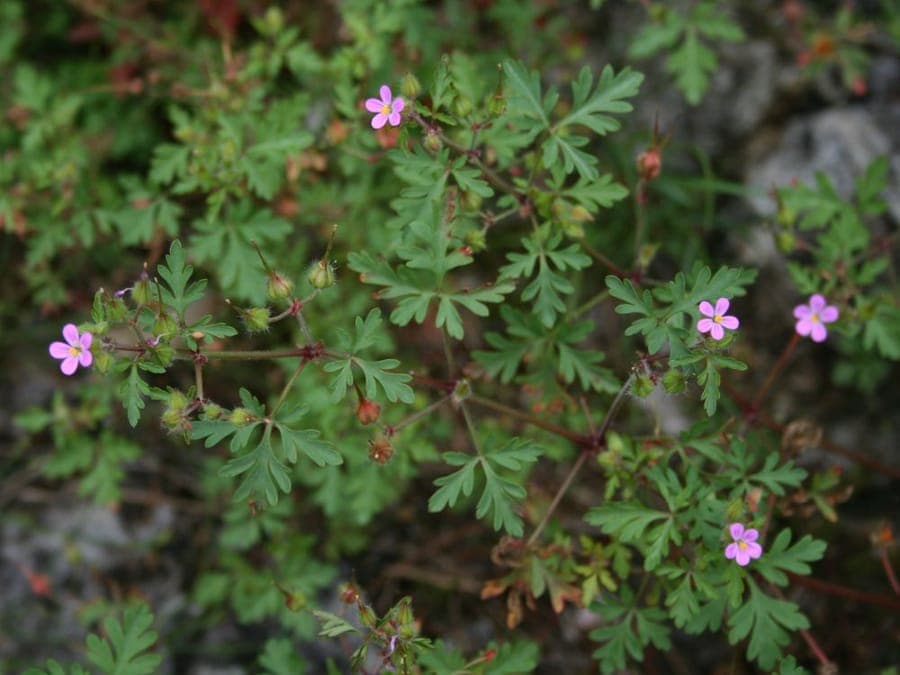
Little-robin produces deeply lobed, palmate leaves that are bright green with a slight sheen. The foliage often develops a hint of purple on new growth, especially in cooler weather. From late April to early June, the plant sends up slender stems topped with small, five-petaled flowers in rich magenta to deep pink-purple. Each bloom is about 1.5 cm wide and appears in loose clusters of 2–4.
The flowering peak is in May, making it a valuable nectar source for early bees and hoverflies. After blooming, the plant forms long, beak-like seed pods - characteristic of the Stork's-bill family - that burst open when ripe, flinging seeds a short distance. This self-seeding tendency means you'll often find new plants popping up nearby the next year, especially in undisturbed soil.
Ideal location
Aim for a light level of 7 - that's 4 to 6 hours of sun daily, preferably morning or dappled light. Full sun in hot climates will scorch the leaves and shorten the bloom period. Deep shade, on the other hand, reduces flowering. The sweet spot is under open-canopy trees like birch or alder, along north-facing walls, or in rock gardens with partial exposure.
It grows well in USDA zones 6–8. In zone 6, it may need light mulch to help seeds germinate reliably; in zones 7–8, it often self-sows freely. Avoid south-facing, fully exposed beds unless the soil stays consistently cool and moist.
On gardenworld.app, you can simulate sun patterns in your garden to find the best spot for Little-robin.
Soil requirements
Little-robin prefers well-draining, loamy to sandy soil with a pH between 6.5 and 7.0. It tolerates slightly alkaline conditions but struggles in heavy clay unless amended with grit or compost. Avoid waterlogged soil - root rot is a real risk. If planting in containers, use a mix of garden soil, peat-free compost, and perlite (3:1 ratio) to ensure good aeration.
A light application of compost in early spring gives young plants a gentle boost without encouraging leggy growth.
Free design
Want to see Little-robin: complete guide in your garden? Make a free design now.
Watering
Keep the soil evenly moist, especially during germination and early growth. Once established, Little-robin is moderately drought-tolerant but performs best with consistent moisture. Water when the top 2 cm of soil feels dry. Use rainwater when possible, and water at the base to prevent fungal issues on the foliage.
In pots, check daily during dry spells. Container-grown plants dry out faster and may need watering every other day in warm weather.
Pruning
No formal pruning is needed. Deadheading spent flowers can extend blooming slightly and reduce self-seeding if you want to keep the plant contained. Cut back faded stems to just above a leaf node. If you welcome natural spread, let some seed heads mature. In late autumn, clear away dead foliage to tidy the bed and reduce overwintering pests.
Maintenance calendar
- Jan: Monitor for early germination in mild areas.
- Feb: Sow seeds indoors at 15°C in a bright spot. Use seed compost.
- Mar: Harden off seedlings. Plant out after last frost (mid-March in zone 8, April in zone 6).
- Apr: Water regularly. Watch for aphids on new shoots.
- May: Peak bloom. Deadhead for neatness.
- Jun: Flowers fade. Allow some seed set for next year.
- Jul: Check for volunteer seedlings. Thin if overcrowded.
- Aug: Water during dry periods. No feeding.
- Sep: Transplant any self-sown seedlings to desired locations.
- Oct: Let plants die back naturally. Mulch lightly.
- Nov: Clear debris. Protect seed beds with leaf litter.
- Dec: Rest period. No action needed.
Winter hardiness
Little-robin is not reliably perennial but persists through self-seeding. In USDA zones 7–8, seeds germinate in early spring without help. In zone 6, a thin layer of straw or leaf mould can protect overwintering seeds. Mature plants rarely survive freezing temps, but the life cycle is adapted to this - the plant relies on seed banks in the soil.
Companion plants
Pair with early spring bloomers like Pulmonaria, Brunnera, or dwarf Narcissus. It works well with ferns (e.g., Dryopteris filix-mas) and groundcovers like Ajuga reptans. Avoid aggressive spreaders like mint or Ophiopogon planiscapus 'Nigrescens', which can overwhelm it. In rock gardens, combine with Sedum spurium or Thymus serpyllum for texture contrast.
Closing
Little-robin won't dominate your garden, and that's exactly its strength. It's a quiet performer that adds seasonal color without fuss. Let it weave through your borders, and you'll be rewarded with a soft haze of purple-pink each spring. Sow seeds directly or buy young plants from garden centres like those at local nurseries. With minimal care and the right conditions, it becomes a welcomed annual guest - or a self-sustaining resident. For layout ideas, visit gardenworld.app and plan a design that embraces its natural spread.
Want to see Little-robin: complete guide in your garden? Make a free design now.
Upload a photo, pick a style, and get a photorealistic design with plant list in under a minute.
No credit card required


Similar plants
Pelargonium acetosum: complete guide
Pelargonium acetosum
Discover the Sorrel-leaf Geranium: a South African plant with aromatic foliage. Perfect for containers and warm locations. Learn cultivation and care.
Erodium foetidum: complete guide
Erodium foetidum
Rock stork's-bill is a delicate alpine plant with purple flowers and fine foliage. Learn how to grow this Mediterranean charmer in your front garden.
Pelargonium crithmifolium: complete guide
Pelargonium crithmifolium
Discover Samphire-leaf pelargonium: an exotic South African geranium with distinctive foliage. Growing tips, care advice and garden inspiration.