
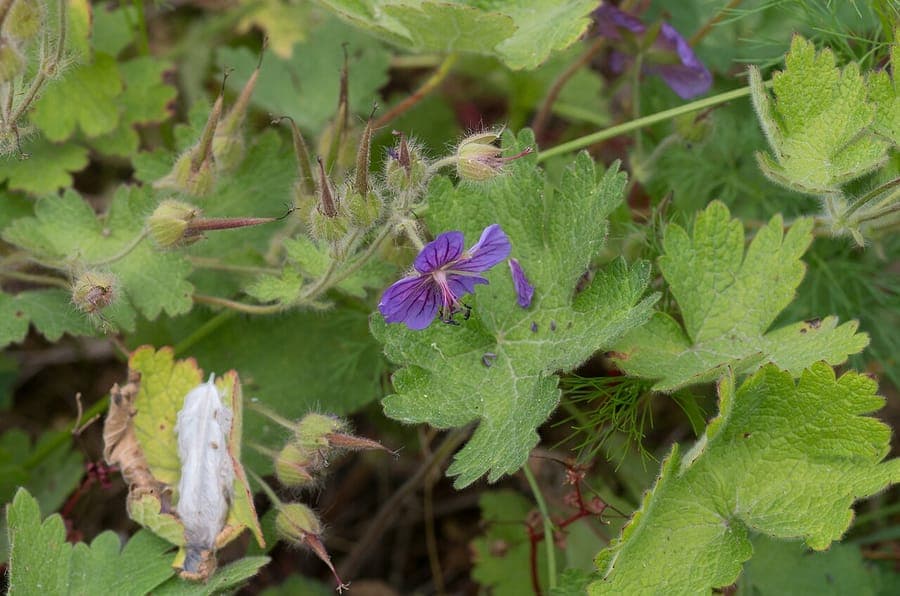
Dinkum / CC BY-SA 3.0, via Wikimedia Commons
Caucasian crane's-bill: complete guide
Geranium ibericum
Want to see Caucasian crane's-bill: complete guide in your garden?
1 minute, no credit card
Overview
Geranium ibericum, commonly known as Caucasian crane's-bill, is a resilient and adaptable herbaceous perennial that brings long-lasting colour and texture to gardens across Europe and North America. Native to the woodlands and mountain slopes of the Caucasus, Iran, and Turkey, this plant has evolved to handle fluctuating climates, making it a dependable choice for UK and US gardeners alike. It grows vigorously in borders, under trees, or along pathways, blooming from June through August with showy, deep purple flowers. With its compact habit and resistance to pests and diseases, it's a top pick for both new and experienced gardeners.
On gardenworld.app, you can create a garden plan that highlights the bloom cycle and spread of Caucasian crane's-bill, ensuring it fits seamlessly into your layout.
Appearance & bloom cycle
Geranium ibericum reaches a height of 40 to 60 cm and spreads to about 50 cm wide. The leaves are palmately lobed, medium to dark green, and emit a faint, herbaceous scent when brushed. From June to late August, it produces clusters of vivid purple, saucer-shaped flowers, each about 3–4 cm in diameter, held on sturdy stems. The blooms have a radial symmetry that adds elegance to any planting scheme.
After flowering, the plant develops distinctive long-beaked seed pods – the origin of the 'crane's-bill' name. These pods can explosively disperse seeds up to a metre away, leading to gentle self-seeding. If you prefer to keep it contained, deadhead spent blooms before seed set.
Ideal location
Caucasian crane's-bill performs best in partial shade but tolerates full sun if the soil retains moisture. In sunny spots, it may need supplemental watering during dry spells. In deep shade, growth slows and flowering reduces, but the plant remains healthy. A dappled light setting under open-canopy trees like birch or small maples is ideal.
Pair it with other moisture-loving perennials in mixed borders. Try combining with Helleborus, Alchemilla mollis, or ferns for a layered effect. On gardenworld.app, you can visualise plant combinations that balance height, texture, and bloom time.
Soil requirements
This geranium isn't fussy but prefers well-drained, moderately fertile soil. Loamy or sandy loam with a pH between 6.0 and 7.5 works best. If your soil is heavy clay, amend it with compost or grit to improve drainage. Poor drainage, especially in winter, can lead to root rot.
Avoid waterlogged sites. In containers, use a standard potting mix with added perlite or coarse sand for aeration.
Free design
Want to see Caucasian crane's-bill: complete guide in your garden? Make a free design now.
Watering
During the first growing season, water weekly to establish strong roots. Once settled, it's fairly drought-tolerant but benefits from occasional deep watering in prolonged dry periods, especially in full sun. Water at the base to prevent fungal leaf spots.
Use rainwater when possible, and avoid overhead watering during hot afternoons.
Pruning
After the main flush of bloom, cut the plant back by half or to about 10 cm above ground to encourage fresh foliage and a second, lighter bloom in September. This rejuvenation cut keeps the plant tidy and extends seasonal interest. Remove any damaged or diseased leaves during the season. No pruning is needed in autumn – leave old growth for winter structure and insulation.
Maintenance calendar
- February–March: Clear away any dead foliage if it hasn't decomposed.
- April: Apply a thin layer of compost or organic fertiliser.
- May: Plant new specimens. Keep young plants evenly moist.
- June–August: Peak bloom. Monitor for moisture stress in hot weather.
- September: Cut back after flowering. Collect seeds if desired.
- October–November: Leave stems intact. No feeding.
- December–January: Dormant period. No action required.
Winter hardiness
Geranium ibericum is hardy to USDA zone 5 (-29°C). In the UK and most of the US (zones 5–8), it reliably survives winter. The top growth dies back, but the roots remain active below ground. A 5–7 cm layer of leaf mulch or compost helps retain moisture and insulates roots during harsh winters.
Companion plants
This geranium pairs well with plants that share similar growing conditions. Try:
- Alchemilla mollis – adds soft chartreuse highlights.
- Epimedium spp. – early bloomer that fills space before geranium takes over.
- Carex divulsa – provides textural contrast.
- Allium karatinum – offers vertical interest just before geranium blooms.
Avoid aggressive spreaders like mint or goutweed that could overwhelm it.
Closing
Geranium ibericum is a low-effort, high-reward perennial that brings months of colour and graceful form to the garden. It supports pollinators, integrates well into naturalistic designs, and maintains visual appeal into autumn. Whether you're revamping a shady corner or designing a wildlife-friendly border, this plant delivers.
You can find Geranium ibericum at garden centres across the UK and North America, often sold in 1-litre pots. Look for healthy, bushy plants at trusted retailers and plant them in groups for a bold effect.
Want to see Caucasian crane's-bill: complete guide in your garden? Make a free design now.
Upload a photo, pick a style, and get a photorealistic design with plant list in under a minute.
No credit card required


Similar plants
Pelargonium acetosum: complete guide
Pelargonium acetosum
Discover the Sorrel-leaf Geranium: a South African plant with aromatic foliage. Perfect for containers and warm locations. Learn cultivation and care.
Erodium foetidum: complete guide
Erodium foetidum
Rock stork's-bill is a delicate alpine plant with purple flowers and fine foliage. Learn how to grow this Mediterranean charmer in your front garden.
Pelargonium crithmifolium: complete guide
Pelargonium crithmifolium
Discover Samphire-leaf pelargonium: an exotic South African geranium with distinctive foliage. Growing tips, care advice and garden inspiration.