
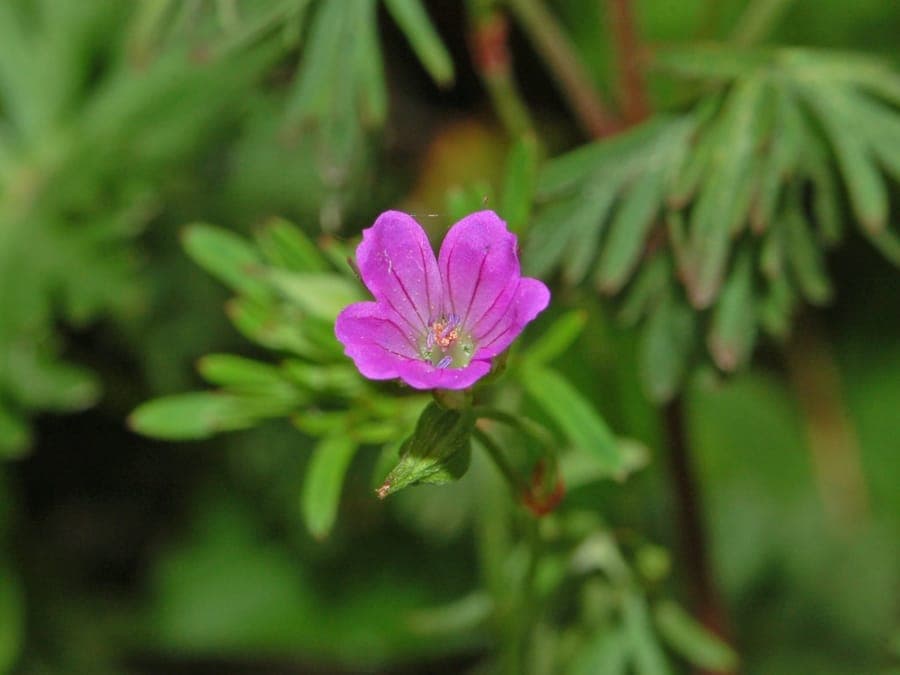
Hectonichus / CC BY-SA 3.0, via Wikimedia Commons
Long-stalk crane's-bill: complete guide
Geranium columbinum
Want to see Long-stalk crane's-bill: complete guide in your garden?
1 minute, no credit card
Overview
Long-stalk crane's-bill, or Geranium columbinum, is a graceful herbaceous perennial that brings delicate charm to cottage gardens, woodland edges, and wildflower meadows. Native to regions across southern and central Europe - including Austria, Bulgaria, and the Baltic States - this species thrives in open, well-drained sites with moderate sunlight. It's not native to the UK, but it behaves responsibly in the garden, self-seeding gently without becoming invasive. Its airy structure and extended bloom period make it a favorite for gardeners seeking subtle beauty with minimal upkeep. On gardenworld.app, you can design a seasonal border layout that highlights this plant's height and bloom rhythm, syncing it with complementary textures and colors.
Appearance & bloom cycle
This geranium grows 30–50 cm tall with a spread of 25–35 cm. The slender, softly hairy stems carry deeply lobed, bright green leaves that may flush reddish in summer heat. From May through August, it produces pale purple flowers, each about 2–2.5 cm across, with darker veining radiating from the center. The petals are narrow and slightly notched, giving the bloom a delicate, almost ethereal look. After flowering, the seed pods elongate into a distinctive beak-like shape - the origin of the 'crane's-bill' name - and eventually snap open to scatter seed several feet away. Deadheading encourages a lighter second flush in late summer.
Ideal location
Choose a spot with full sun to light shade. In southern UK gardens or on sandy soils, partial shade helps prevent moisture stress. Avoid deep shade or constantly wet areas, as both reduce flowering and increase fungal risk. This plant excels in naturalistic plantings, gravel gardens, or as understory near shrubs with open canopies like roses or shrubby cinquefoil. On gardenworld.app, use the sunlight mapper to assess your garden's microclimates and pinpoint where Long-stalk crane's-bill will thrive based on daily sun exposure.
Soil requirements
Well-drained, loamy to sandy soil suits it best, with a pH range of 6.0–7.5. It tolerates slightly alkaline conditions, making it suitable for chalky soils in southern England. Avoid rich, heavily amended soils - excessive fertility promotes leafy growth at the expense of flowers. A light mulch of leaf mold in early spring is sufficient. No fertilizer needed; this is a plant that prefers modest conditions.
Free design
Want to see Long-stalk crane's-bill: complete guide in your garden? Make a free design now.
Watering
Established plants are moderately drought-tolerant. Water young plants weekly during their first summer if rainfall is below 25 mm per week. Once rooted, they rely mostly on natural rainfall, except during prolonged dry spells. Water at the base to keep foliage dry and reduce the risk of powdery mildew. Overwatering leads to root rot, especially in clay-heavy soils.
Pruning
Pruning is minimal. After the main bloom in July, cut the plant back by two-thirds to stimulate fresh foliage and a secondary bloom in August. Deadheading during peak season keeps the plant tidy and redirects energy to flowering. Leave stems intact over winter - they provide shelter for beneficial insects and add winter texture. Cut back to ground level in early spring before new growth emerges.
Maintenance calendar
- Jan: Dormant. No action needed.
- Feb: Still dormant. Check for early shoots.
- Mar: Clear old stems. Apply light organic mulch.
- Apr: Monitor new growth. Keep soil weed-free.
- May: Flowers begin. Watch for slugs on young shoots.
- Jun: Full bloom. Water if dry.
- Jul: Deadhead or cut back for second flush.
- Aug: Enjoy late flowers. Allow some seed to mature.
- Sep: Reduce watering. Let plant wind down.
- Oct: Seeds disperse naturally. Leave stems standing.
- Nov: No pruning. Protect soil with leaf litter.
- Dec: Winter dormancy. No care required.
Winter hardiness
Hardy to USDA zone 6 (–15°C), Long-stalk crane's-bill survives most UK winters without protection. The roots remain viable underground, resprouting each spring. In areas with persistent wet soil, improve drainage with grit or plant on a slope. Snow cover offers natural insulation, but in exposed gardens, a thin layer of dry leaves can help without smothering the crown.
Companion plants
Pair with other mid-height perennials like Campanula carpatica, Achillea filipendulina, or Salvia nemorosa. The soft purple complements yellow blooms such as Rudbeckia or Echinacea. It also works well with fine-textured grasses like Stipa tenuissima or Deschampsia cespitosa. Avoid overly vigorous neighbors like mint or goldenrod that may outcompete it. You can find Geranium columbinum at independent garden centres, especially those specializing in herbaceous perennials or native-adjacent species.
Closing
Long-stalk crane's-bill is a quiet performer with lasting appeal. It doesn't dominate, but it enhances - adding movement, color, and ecological value over many weeks. With little demand on your time, it returns reliably each year, quietly improving your garden's rhythm. For gardeners planning a layered, sustainable planting scheme, a virtual garden planner like gardenworld.app helps visualize how this plant fits into the bigger picture over time.
Want to see Long-stalk crane's-bill: complete guide in your garden? Make a free design now.
Upload a photo, pick a style, and get a photorealistic design with plant list in under a minute.
No credit card required


Similar plants
Pelargonium acetosum: complete guide
Pelargonium acetosum
Discover the Sorrel-leaf Geranium: a South African plant with aromatic foliage. Perfect for containers and warm locations. Learn cultivation and care.
Erodium foetidum: complete guide
Erodium foetidum
Rock stork's-bill is a delicate alpine plant with purple flowers and fine foliage. Learn how to grow this Mediterranean charmer in your front garden.
Pelargonium crithmifolium: complete guide
Pelargonium crithmifolium
Discover Samphire-leaf pelargonium: an exotic South African geranium with distinctive foliage. Growing tips, care advice and garden inspiration.