
Bernd Haynold / CC BY-SA 3.0, via Wikimedia Commons
German Gentian: complete guide
Gentianella germanica
Want to see German Gentian: complete guide in your garden?
1 minute, no credit card
Overview
The German Gentian (Gentianella germanica), also known as the Chiltern Gentian, is a delicate alpine plant belonging to the Gentianaceae family. This distinctive alpine bloomer from Central and South Europe represents one of the more underappreciated mountain garden treasures with a preference for moisture-rich rocky habitats.
Appearance and bloom
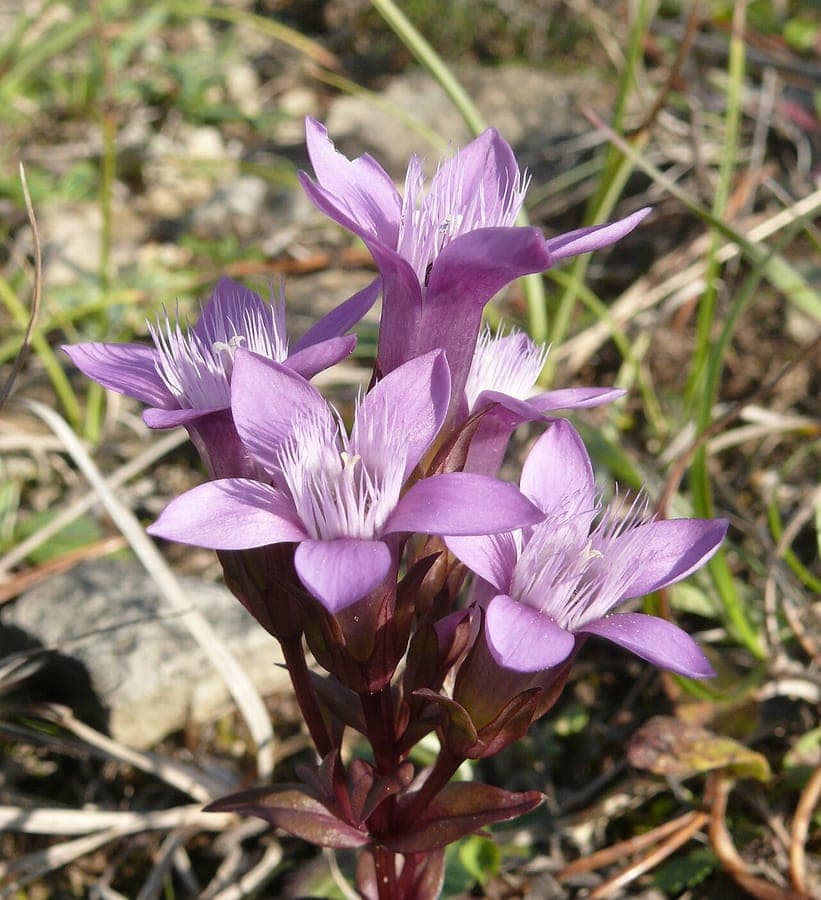
This compact plant reaches 20-30 cm in height and forms an elegant rosette of narrow leaves. Flowers appear late in the season (August-October) in intense violet-blue tones with yellow internal markings. The blooms measure up to 2 cm long, presenting themselves in terminal clusters on branched flower stems.
Ideal location
German Gentians thrive in dappled shade to semi-shaded positions with afternoon sun protection. In mountain habitats, they occur on northern exposures where soil moisture persists longer. In gardens, position them where they receive 2-3 hours of morning sun with afternoon shade protection.
Soil requirements
Soil composition proves critical for success. The plant requires sharply draining yet moisture-retentive soil. Optimal mix: 50% stone grit or perlite, 30% peat moss or coco fiber, 20% mineral soil. Prefer pH 6.0-6.8 range. In containers, apply same formula with extra grit for excellent drainage.
Free design
Want to see German Gentian: complete guide in your garden? Make a free design now.
Watering regime
During growth season (spring-autumn), maintain consistent moisture without waterlogging. Soil should never completely dry out, yet standing water damages roots fatally. Winter dormancy demands drastically reduced watering. Rainwater preferred over tap water minerals.
Pruning
Gentians require minimal pruning. Remove only faded flowers and damaged leaves. Following bloom, yellowed foliage can be gently cleared. Avoid aggressive cutting that disturbs the root system.
Maintenance calendar
March: Check soil moisture, apply low-nitrogen feed. June: Monthly feeding applications. August-October: Flowering period, reduce feeding. November-February: Winter dormancy, minimal water and nutrients.
Winter hardiness
Gentianella germanica proves hardy to -20°C and can winter outdoors in alpine troughs. In extreme climates, protect with glass cover. Container plants benefit from light shelter.
Companion plants
Pair perfectly with other alpines: Saxifraga species, Primula marginata, Dryas octopetala. These share the same preference for sharp drainage and alpine conditions.
Final thoughts
The German Gentian belongs among the charming yet demanding alpines. With careful attention to soil, moisture balance and position, this plant rewards with years of blue splendor. Available at specialty garden centers across the UK and Europe.
For more information visit gardenworld.app/en and gardenworld.app/en.
Want to see German Gentian: complete guide in your garden? Make a free design now.
Upload a photo, pick a style, and get a photorealistic design with plant list in under a minute.
No credit card required


Similar plants
Branched gentianella: complete guide
Gentianella ramosa
Full growing guide for Gentianella ramosa, the branched Alpine gentianella of the SW Alps - location, soil, watering, winter care and companion plants.
Spiked centaury: complete guide
Schenkia spicata
Full growing guide for Schenkia spicata (spiked centaury): sunny position, dry soil, bloom season and garden companions.
Narrow-leaf gentian: complete guide
Gentiana angustifolia
Narrow-leaf gentian growing guide: intense blue trumpet flowers in May-July on well-drained limestone. Full cultivation tips.