
Hectonichus / CC BY-SA 3.0, via Wikimedia Commons
Field gentian: complete guide
Gentianella campestris
Want to see Field gentian: complete guide in your garden?
1 minute, no credit card
Overview
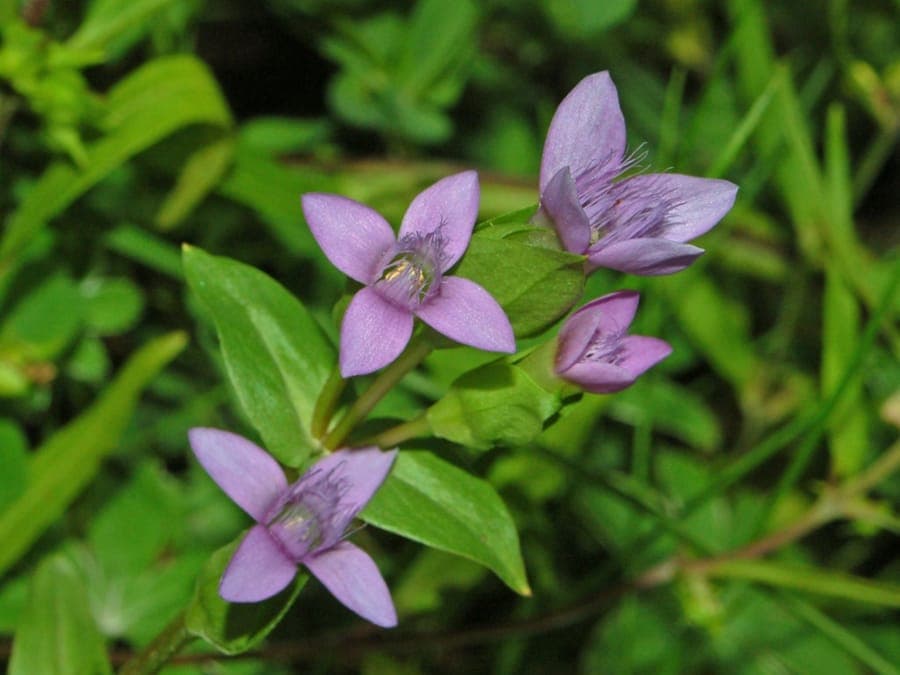
Field gentian (Gentianella campestris) is a delicate yet resilient herbaceous biennial or short-lived perennial that brings a burst of true blue to wildflower meadows and naturalistic garden designs. Native across temperate regions of Europe - including the UK, Germany, France and the Baltic states - this plant thrives in open, sunny habitats with well-drained, acidic soil. Despite its modest stature, it commands attention with its intense cobalt-blue blooms from early summer through early autumn.
Often overlooked in formal gardens, Field gentian is gaining popularity among eco-conscious gardeners seeking low-maintenance, pollinator-friendly plants. It's not commonly found in standard garden centres, but specialty nurseries and wildflower suppliers sometimes stock seeds or plugs. On gardenworld.app, you can design a planting scheme that highlights its compact form and vibrant colour, especially in rock gardens or dry borders where it won't be overshadowed.
Appearance & bloom cycle
Field gentian grows between 10 and 25 cm tall, forming upright, slender stems with opposite, lance-shaped leaves that are deep green and slightly glossy. The flowers are the real showstoppers: star-shaped, 1.5 to 2 cm across, with four or five sharply fringed blue petals. These open fully only in bright sunlight, closing partially on cloudy or rainy days - a clever adaptation to protect pollen.
Blooming runs from June to September, peaking in July and August. Each plant produces multiple flowers over the season, especially if deadheading is practiced. After flowering, seed capsules develop and split open when mature, allowing for natural self-seeding in suitable conditions. This makes it ideal for informal gardens where a little spontaneity is welcome.
Ideal location
This gentian demands full sun - aim for a light rating of 8 out of 10. It performs best in south- or southwest-facing spots that receive at least 6 to 8 hours of direct sunlight daily. Avoid shaded or damp corners; the plant will stretch, flop, and fail to bloom.
Perfect locations include rockeries, dry stone walls, gravel gardens, or sloped areas where water drains quickly. It's particularly well-suited to gardens in regions with sandy or gravelly soils, such as parts of southern England or coastal zones. Use the site analysis tool on gardenworld.app to assess your garden's sun exposure and plan placement accordingly.
Soil requirements
Soil must be sharply drained with a pH between 5.0 and 5.5 - acidic to mildly acidic. Avoid chalky, alkaline, or heavy clay soils, which retain too much moisture and can lead to root rot. Amend heavy ground with coarse sand, grit, and leaf mould to improve structure.
Nutrient-poor soils are actually beneficial; over-fertilizing encourages leafy growth at the expense of flowers. A thin layer of compost at planting is sufficient. If your soil is too rich, consider growing Field gentian in raised beds or containers filled with ericaceous mix.
Free design
Want to see Field gentian: complete guide in your garden? Make a free design now.
Watering
Once established, Field gentian is drought-tolerant. Water young plants regularly during their first few weeks, but avoid soggy conditions. Use rainwater when possible, as tap water in hard-water areas may raise soil pH over time.
During prolonged dry spells, a light soak at the base helps, but never allow water to pool. Wet foliage increases the risk of fungal diseases, so water in the morning and aim for the soil, not the leaves.
Pruning
Pruning isn't essential, but deadheading spent flowers encourages longer blooming and can promote self-seeding. In late September, cut back stems to about 5 cm above ground level to tidy the patch and prepare for winter.
If you prefer to limit spread, remove flower heads before seeds mature. This also helps maintain a neat appearance in more structured garden areas.
Maintenance calendar
- January: Check for winter damage; ensure crowns aren't waterlogged.
- February: No action needed.
- March: Monitor for early seedlings; thin if overcrowded.
- April: Sow seeds or plant plugs; space 10–15 cm apart.
- May: Keep young plants lightly moist; no feeding required.
- June: Bloom begins; watch for slugs on new shoots.
- July: Peak flowering; deadhead regularly.
- August: Continue blooming; water lightly during heatwaves.
- September: Cut back after flowering; collect seeds if desired.
- October: Clear debris; allow self-seeding in wild areas.
- November: No care needed.
- December: Dormant; fully hardy.
Winter hardiness
Field gentian is hardy in USDA zones 5 to 8, surviving temperatures down to -20°C. It tolerates UK winters well, even in exposed or coastal sites, as long as the roots stay dry. No mulch or protection is necessary - its natural resilience makes it a reliable choice for low-input gardening.
Companion plants
Pair Field gentian with other sun-loving, drought-tolerant species. Good companions include Common catsear (Hypochaeris radicata), Wild thyme (Thymus serpyllum), Sheep's bit (Jasione montana), and Harebell (Campanula rotundifolia). These share similar soil and light needs and create a harmonious, meadow-like effect.
Avoid aggressive spreaders or moisture-loving plants like nettles or ferns, which can outcompete or rot the gentian.
Closing
Field gentian is a quiet achiever in the garden. It asks for little - just sun, sharp drainage, and acidic soil - but gives back with months of brilliant blue blooms. While not a staple in most garden centres, you may find seeds or young plants at specialist suppliers or through online retailers. Look for availability in spring from trusted sources.
With the right conditions, this charming gentian can become a self-sustaining part of your garden, returning year after year with minimal effort. For inspiration on where to place it, browse planting combinations on gardenworld.app tailored to your garden's microclimate.
Want to see Field gentian: complete guide in your garden? Make a free design now.
Upload a photo, pick a style, and get a photorealistic design with plant list in under a minute.
No credit card required


Similar plants
Branched gentianella: complete guide
Gentianella ramosa
Full growing guide for Gentianella ramosa, the branched Alpine gentianella of the SW Alps - location, soil, watering, winter care and companion plants.
Spiked centaury: complete guide
Schenkia spicata
Full growing guide for Schenkia spicata (spiked centaury): sunny position, dry soil, bloom season and garden companions.
Narrow-leaf gentian: complete guide
Gentiana angustifolia
Narrow-leaf gentian growing guide: intense blue trumpet flowers in May-July on well-drained limestone. Full cultivation tips.