
Opioła Jerzy / CC BY-SA 3.0, via Wikimedia Commons
Spotted gentian: complete guide
Gentiana punctata
Want to see Spotted gentian: complete guide in your garden?
1 minute, no credit card
Overview
Spotted gentian (Gentiana punctata) isn't your average garden addition. It's a slow-grower, picky about conditions, but when it thrives, it delivers a show few plants can match. Native to alpine meadows across central and southeastern Europe, this perennial thrives at elevations between 800 and 2200 meters. It's not often seen in mainstream gardens, but for those who value rarity and seasonal drama, it's worth the effort. On gardenworld.app, you can design a garden layout that mimics its natural habitat-well-drained, acidic, and sun-drenched.
This isn't a plant for beginners or dry, chalky soils. But if you've got a rock garden, a heath bed, or a damp, shady slope that stays cool, this could be your standout performer. It's not aggressive, doesn't spread wildly, but once established, it can persist for years with minimal intervention.
Appearance & bloom cycle
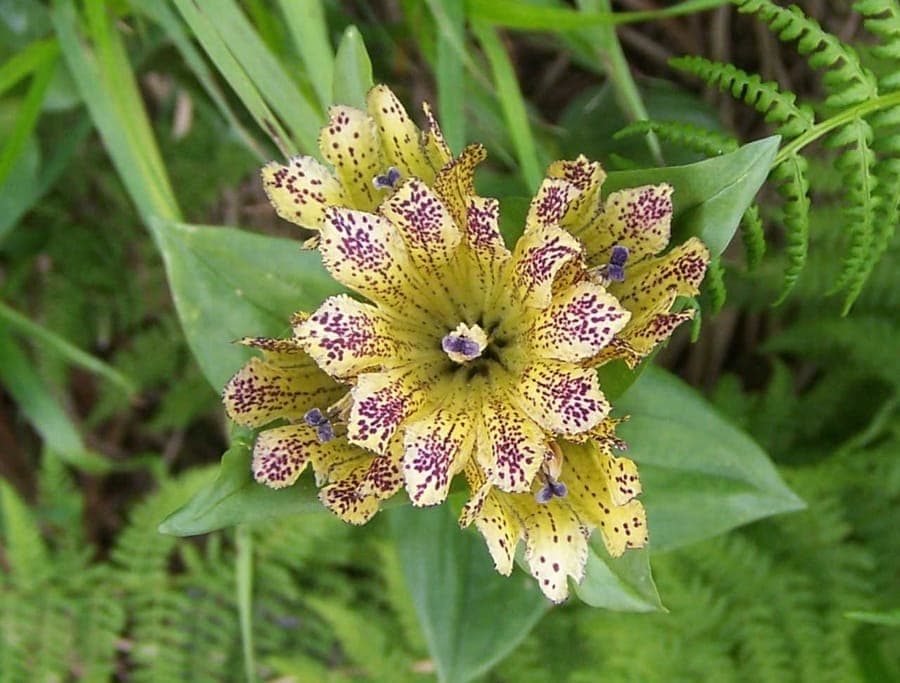
Spotted gentian grows 30–60 cm tall, with rigid, upright stems and glossy, dark green lance-shaped leaves, 5–10 cm long, arranged in opposite pairs. The leaves clasp the stem slightly, giving a neat, structured look. The real magic happens from late September into October. That's when deep blue, funnel-shaped flowers open-4 to 6 cm long, with a delicate pattern of tiny spots inside the throat, hence punctata.
The color is a vivid, almost iridescent blue, rare among fall-blooming plants. Each flower lasts 7–10 days, and a mature plant can produce 3–6 blooms per stem. There's no fragrance, but the visual impact under autumn light is stunning. After flowering, seed capsules form and split open in November, scattering fine seeds.
Ideal location
This plant needs bright light-around an 8/10 on the light scale. Full sun is best, but in hotter climates (zones 7–8), a bit of afternoon shade helps prevent scorching. A south- or southeast-facing slope or rock wall works perfectly. Avoid shaded areas under trees or near large shrubs-airflow matters. Stagnant, humid air encourages fungal issues.
If your garden lacks natural rock features, build a raised bed with gravel and acidic compost. On gardenworld.app, use the terrain planner to model sun exposure and drainage before planting.
Soil requirements
The soil must be acidic-pH 4.0 to 4.5. Chalk or lime will kill this plant over time. Use ericaceous compost mixed with sharp sand and fine grit (3:1:1). Avoid clay-heavy soils unless heavily amended. The root zone needs to stay moist but never waterlogged. Depth: 15–20 cm of prepared soil.
Before planting, test your soil pH. If it's above 5.0, consider growing in a container with proper mix. This gives you full control over conditions.
Free design
Want to see Spotted gentian: complete guide in your garden? Make a free design now.
Watering
Keep the soil consistently moist, especially from summer through bloom. Water when the top 2 cm of soil feels dry. Use rainwater-tap water is often too alkaline. Water at the base to avoid wetting the flowers, which can lead to rot.
During dry spells in July and August, deep soak once a week. Reduce watering in winter when the plant is dormant. Never let it dry out completely in its first year.
Pruning
No pruning needed. After flowering, you can trim back spent stems to 5 cm above ground level in late autumn. Leave a few seed heads if you want natural reseeding-though germination is slow and erratic. Do not cut back in spring; new growth emerges late, often in May.
Dead leaves decompose slowly but don't harm the plant. Remove only if they look unsightly.
Maintenance calendar
- January: Check for frost heave. No action needed.
- February: Inspect root zone. Add grit if drainage seems poor.
- March: Clear old debris. Top up with ericaceous compost.
- April: Watch for slugs. No feeding.
- May: New shoots appear. Keep soil moist.
- June: Monitor for drought. Water if needed.
- July: Maintain moisture. No fertiliser.
- August: Prepare for bloom. Avoid disturbance.
- September: Flowers begin. Water regularly.
- October: Peak bloom. Collect seeds if desired.
- November: Cut back stems. Protect young plants.
- December: Dormant. Ensure no waterlogging.
Winter hardiness
Hardy in USDA zones 5–8. In zone 5, mulch young plants with pine needles or bracken for the first two winters. In milder zones (6–8), no protection is usually needed. Avoid heavy mulches that trap moisture-this leads to crown rot. Snow cover is beneficial; it insulates without suffocating.
Companion plants
Pair with other acid-lovers: heathers (Calluna), dwarf rhododendrons, alpine strawberries (Fragaria vesca 'Semperflorens'), or blue-flowered Campanula carpatica. Avoid invasive groundcovers or plants with dense root competition.
In rock gardens, space plants 30 cm apart. Combine with sedums, thrift (Armeria), or creeping thyme for texture contrast.
Closing
Spotted gentian rewards patience. It may take two to three years to bloom from seed, and even transplanted specimens can sulk for a season. But once settled, it becomes a reliable fall highlight. Buy from reputable nurseries-never wild-collected. In the UK, look for it at specialist garden centres; in the US, check alpine plant societies.
You'll find it occasionally at garden centres, but stock is limited. Plan ahead. On gardenworld.app, simulate companion pairings and microclimates to avoid wasted effort. This plant deserves a thoughtful spot-not just another hole in the border.
Want to see Spotted gentian: complete guide in your garden? Make a free design now.
Upload a photo, pick a style, and get a photorealistic design with plant list in under a minute.
No credit card required


Similar plants
Branched gentianella: complete guide
Gentianella ramosa
Full growing guide for Gentianella ramosa, the branched Alpine gentianella of the SW Alps - location, soil, watering, winter care and companion plants.
Spiked centaury: complete guide
Schenkia spicata
Full growing guide for Schenkia spicata (spiked centaury): sunny position, dry soil, bloom season and garden companions.
Narrow-leaf gentian: complete guide
Gentiana angustifolia
Narrow-leaf gentian growing guide: intense blue trumpet flowers in May-July on well-drained limestone. Full cultivation tips.