
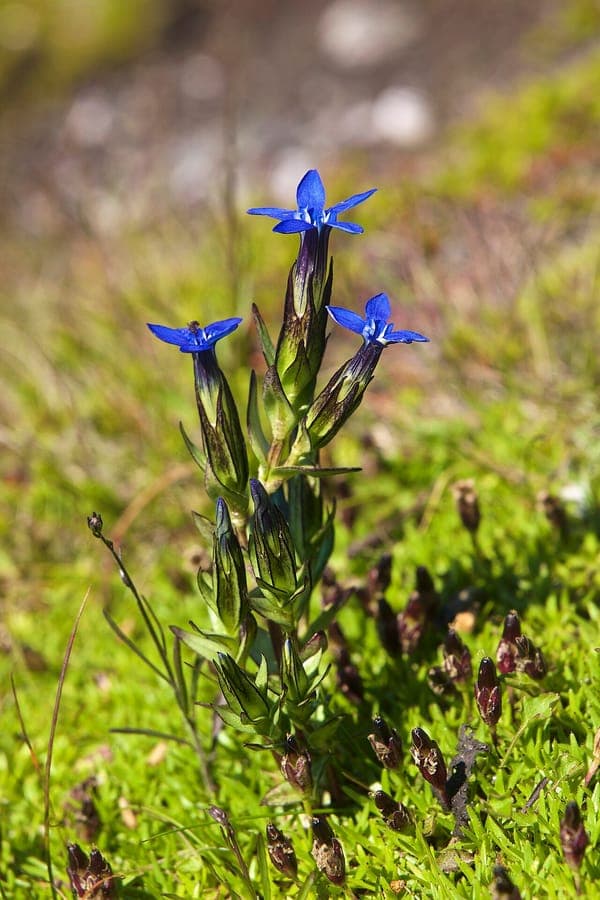
Jörg Hempel / CC BY-SA 3.0 de, via Wikimedia Commons
Alpine gentian: complete guide
Gentiana nivalis
Want to see Alpine gentian: complete guide in your garden?
1 minute, no credit card
Overview
Gentiana nivalis, commonly known as Alpine gentian, is a low-growing, herbaceous perennial native to high-altitude regions across central and northern Europe. Reaching only 5 to 8 cm in height, it punches far above its weight with striking, deep blue, trumpet-shaped flowers that bloom in midsummer. This member of the Gentianaceae family thrives in alpine meadows, rocky crevices, and scree slopes where drainage is sharp and competition from larger plants is low.
For UK and North American gardeners, it's a prized addition to rock gardens, troughs, or raised alpine beds. While not for beginners, it rewards careful placement with years of reliable performance. It's fully hardy down to USDA zone 3 (-40°C) and prefers a sunny, well-drained site. Its compact growth and vivid blooms make it a standout in any small-scale garden design.
On gardenworld.app, you can create a custom garden plan that features Alpine gentian in the perfect microclimate, with companion planting suggestions and soil prep tips.
Appearance & bloom cycle
Alpine gentian forms a creeping mat of narrow, lance-shaped, dark green leaves that hug the ground. The foliage is semi-evergreen in milder climates, persisting through winter. In July and August, upright flower stems rise slightly above the foliage, each bearing a single, intense blue, tubular flower. The blooms are typically 2–3 cm long, tightly closed at the tip, and open fully only in direct sunlight.
The flowering window is brief but dramatic, lasting three to four weeks depending on local conditions. No fragrance, but the colour density is unmatched-true ultramarine, almost iridescent. After blooming, seed capsules form and split open to release fine seed, though naturalization is slow and not aggressive.
Ideal location
This plant demands full sun: a 9/10 on the light scale means 6–8 hours of direct sunlight daily. A south- or southeast-facing slope or rock garden is ideal. In hot summer climates (zone 7 and above), light afternoon shade can prevent scorching, but full exposure is best in cooler regions.
Avoid planting in areas with overhead tree cover or where taller perennials might shade it out. Ideal installations include alpine troughs, stone walls, or gravel beds. On gardenworld.app, use the sun exposure mapping tool to pinpoint the best spot in your garden for Alpine gentian.
Soil requirements
Soil must be sharply drained and slightly alkaline, with a pH between 7.0 and 7.5. Heavy clay or water-retentive soils will rot the roots. A recommended mix: 2 parts grit or lava rock, 1 part loam, 1 part leaf mould or compost. Do not add fertilizer-this plant thrives in lean conditions.
For gardens with poor drainage, build a raised bed with a 15 cm base of crushed stone. Avoid peat-based composts, as they acidify the soil over time. Lime can be added sparingly if pH testing shows levels below 7.
Free design
Want to see Alpine gentian: complete guide in your garden? Make a free design now.
Watering
Water regularly during active growth (May to August), but allow the soil to dry between sessions. Once a week is sufficient in average conditions; more in drought. Use rainwater when possible, as tap water may increase salinity or alter pH. Reduce watering in September; stop completely once foliage begins to die back.
Never wet the foliage excessively-this invites fungal diseases like powdery mildew.
Pruning
No pruning is required. After flowering, you may deadhead spent blooms to prevent self-seeding if desired, but this is rarely necessary. Leave the foliage intact through winter; it protects the crown from frost heave and moisture damage.
Maintenance calendar
- Jan: Check for frost heave; ensure mulch isn't smothering crowns.
- Feb: No action needed.
- Mar: Remove any matted debris if present.
- Apr: Inspect drainage; hand-weed around plants.
- May: Begin light watering if dry.
- Jun: Prepare for bloom; no feeding.
- Jul: Peak bloom; water if soil dries.
- Aug: Flowers fade; remove spent stems if preferred.
- Sep: Reduce watering.
- Oct: Let plant go dormant; leave foliage.
- Nov: Apply gritty mulch if desired.
- Dec: Dormant period; monitor for rot.
Winter hardiness
Hardy to USDA zone 3. In zones 4–8, it survives with no protection. A light gravel mulch helps shed winter moisture. Avoid organic mulches like bark or leaves-these retain too much water and promote rot. In wet winters, elevate the planting site.
Companion plants
Pair with other alpine specialists that enjoy similar conditions:
- Sempervivum spp. – architectural rosettes contrast with gentian's delicate form.
- Thymus praecox – low, fragrant, and drought-tolerant.
- Draba aizoon – early yellow blooms precede gentian's show.
- Aubrieta deltoidea – creates a purple carpet in spring.
Avoid vigorous groundcovers like Vinca minor or ivy, which will overwhelm the gentian.
Closing
Alpine gentian is a jewel for the attentive gardener. Its brief bloom is unforgettable, and with the right care, it can persist for decades. It's not widely available in standard garden centres, but specialty nurseries and alpine plant fairs often carry it. In the UK, check independent garden centres and online alpine growers.
In the US and Canada, look for it at botanical garden sales or through alpine plant societies. Retailers like garden centres with alpine sections may stock it seasonally.
On gardenworld.app, generate a care schedule for Alpine gentian with seasonal reminders and soil checks tailored to your location.
Want to see Alpine gentian: complete guide in your garden? Make a free design now.
Upload a photo, pick a style, and get a photorealistic design with plant list in under a minute.
No credit card required


Similar plants
Branched gentianella: complete guide
Gentianella ramosa
Full growing guide for Gentianella ramosa, the branched Alpine gentianella of the SW Alps - location, soil, watering, winter care and companion plants.
Spiked centaury: complete guide
Schenkia spicata
Full growing guide for Schenkia spicata (spiked centaury): sunny position, dry soil, bloom season and garden companions.
Narrow-leaf gentian: complete guide
Gentiana angustifolia
Narrow-leaf gentian growing guide: intense blue trumpet flowers in May-July on well-drained limestone. Full cultivation tips.