
Robert Flogaus-Faust / CC BY 4.0, via Wikimedia Commons
Dyer's broom: complete guide
Genista tinctoria
Want to see Dyer's broom: complete guide in your garden?
1 minute, no credit card
Overview
Dyer's broom, or Genista tinctoria, is a long-lived deciduous shrub that's quietly earned its place in cottage gardens, dry borders, and naturalistic plantings across temperate zones. Native to central and eastern Europe - including Austria, the Baltic States, Belarus and parts of Russia - this plant has a rich history not just as an ornamental, but as a source of natural yellow dye, harvested from its flowers and young shoots. These days, it's grown more for its resilience and charm than its dye potential, though that heritage still lingers in its common name.
What sets Dyer's broom apart is its ability to thrive where many shrubs fail: dry, infertile soils, full sun, and low-input gardens. It's ideal for xeriscaping or sunny slopes where water retention is poor. On gardenworld.app, you can design a garden layout that maximizes sun exposure and soil drainage - perfect for Dyer's broom and its companions.
Appearance & bloom cycle
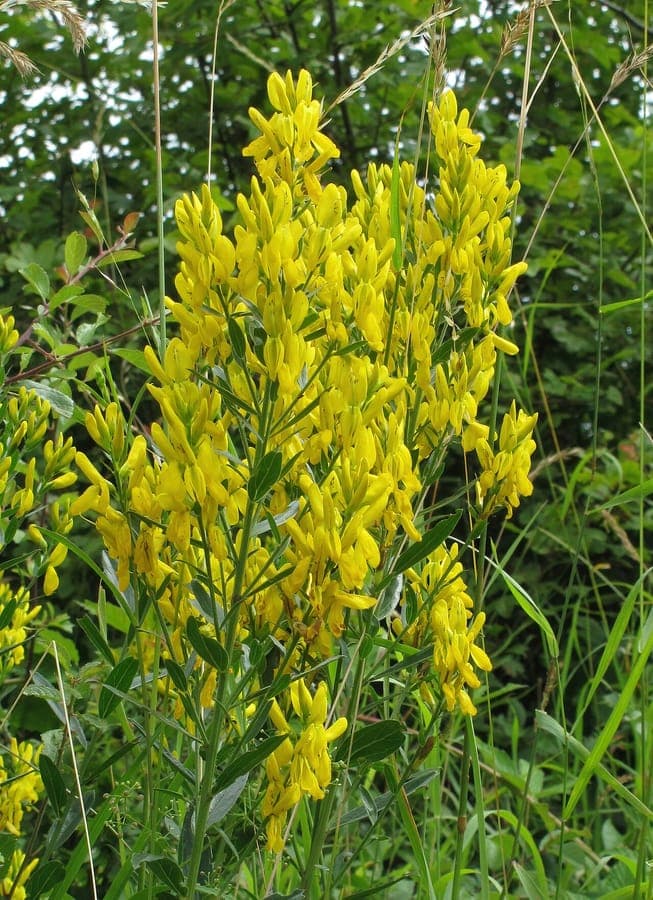
This upright, bushy shrub typically reaches 50–80 cm in height with a spread of about 60 cm. It features slender green stems and fine, trifoliate leaves that give it a soft, feathery texture. The foliage emerges fresh green in spring and matures to a medium green by midsummer.
The real spectacle happens from late May into July, when dense racemes of bright yellow, pea-like flowers cover the stems. These blooms last 4 to 6 weeks and are a magnet for bees, hoverflies, and other pollinators. After flowering, small flattened seed pods develop, turning brown by autumn and often persisting into winter, adding subtle structure to the dormant garden.
Ideal location
Dyer's broom thrives in full sun - aim for a light level of 7 or higher on a 1–10 scale. Choose south- or west-facing spots, open borders, or gravel gardens. While it tolerates light shade, flowering diminishes and growth becomes leggy.
Avoid heavily shaded or damp areas. This plant is sun-hungry and performs best when it gets uninterrupted light for most of the day. Use gardenworld.app to assess your garden's sunlight patterns and determine the best placement for sun-loving plants like Dyer's broom.
Soil requirements
It prefers well-drained, moderately fertile soil with a pH between 6.5 and 7.0. Sandy, loamy, or rocky soils work well. Heavy clay or waterlogged ground is a no-go - it leads to root rot, especially in winter.
If you're working with clay, amend planting holes with horticultural grit, sand, or perlite to improve drainage. A shallow gravel mulch around the base helps prevent moisture from sitting at the crown.
Watering
Once established, Dyer's broom is highly drought-tolerant. Young plants in their first growing season need regular watering - aim for deep soakings once a week during dry spells. After year one, supplemental watering is rarely needed unless you face prolonged drought.
Overwatering is a common mistake. This plant evolved in dry grasslands and poor soils - it doesn't want constant moisture. Let the soil dry out between waterings.
Free design
Want to see Dyer's broom: complete guide in your garden? Make a free design now.
Pruning
Pruning isn't essential, but a light trim after flowering helps maintain a neat shape and prevents the shrub from becoming sparse. Cut back by 15–20 cm, but avoid cutting into old wood, as it regenerates poorly from bare stems.
The best time to prune is late July to early August, right after the bloom cycle. Use sharp, clean secateurs to prevent disease. Leave seed pods intact over winter if you want to support birds or add visual interest to your winter garden.
Maintenance calendar
- January: Check for winter damage. Remove any broken or dead branches.
- February: Minimal care. Wait for signs of new growth.
- March: Light feeding with granular slow-release fertilizer if desired. Watch for new shoots.
- April: Control weeds around the base. Ensure soil isn't compacted.
- May: Prepare for blooming. Water if unusually dry.
- June: Peak bloom month! Avoid pruning. Support pollinators.
- July: Flowers fade. Light pruning can begin. No fertilizing.
- August: Let plant recover. Monitor for pests, though rarely an issue.
- September: No action needed. Seed pods may persist.
- October: Clear fallen debris. Check gravel mulch.
- November: Reduce watering. Protect from salt spray near roads.
- December: Final check. Avoid salt or de-icing chemicals near plant.
Winter hardiness
Dyer's broom is hardy to USDA zone 5 (-20°C), making it suitable for most of the UK, northern US, and central Europe. It's semi-evergreen in milder climates, with foliage often turning bronze in winter. The main winter risk is not cold, but wet soil combined with freeze-thaw cycles.
Avoid planting in low-lying, frost-pocket areas. Wind exposure can also cause desiccation, so consider a sheltered spot in exposed gardens. Salt from roads is harmful - keep it away from driveways or sidewalks treated in winter.
Companion plants
Pair Dyer's broom with other drought-tolerant perennials and shrubs. Excellent companions include lavender (Lavandula angustifolia), catmint (Nepeta), yarrow (Achillea), or sedum. The contrast between the fine green foliage and the silvery leaves of Artemisia or the purple spikes of Salvia nemorosa creates dynamic visual layers.
It also fits well in informal hedgerows or native meadow plantings. Combine with grasses like Stipa tenuissima or Festuca ovina for movement and texture. The yellow flowers bridge the gap between early spring blooms and late summer perennials.
Closing
Dyer's broom is a resilient, attractive shrub that brings color, structure, and ecological value to low-maintenance gardens. Its bright summer blooms, minimal care needs, and tolerance for tough conditions make it a smart choice for modern landscaping. Buy healthy specimens from local garden centres, where stock is often fresh and acclimated. And remember - on gardenworld.app, you can plan a garden that works with your soil, sunlight, and hardiness zone, putting Dyer's broom right where it thrives.
Want to see Dyer's broom: complete guide in your garden? Make a free design now.
Upload a photo, pick a style, and get a photorealistic design with plant list in under a minute.
No credit card required


Similar plants
Tall Silky Lupine: complete guide
Lupinus elatus
Tall silky lupine is a fast-growing Californian perennial with silvery foliage and blue-purple flower spikes, ideal for a prairie-style garden.
Garfield Lupine: complete guide
Lupinus garfieldensis
The Garfield lupine is a rare, fast-growing American perennial for alkaline, dry grassland gardens, with striking blue flower spikes.
Lupinus elegans: complete guide
Lupinus elegans
Lupinus elegans, the elegant lupine, is a spectacular blooming plant from Mexico with blue flower spikes. Care, cultivation and garden use.