
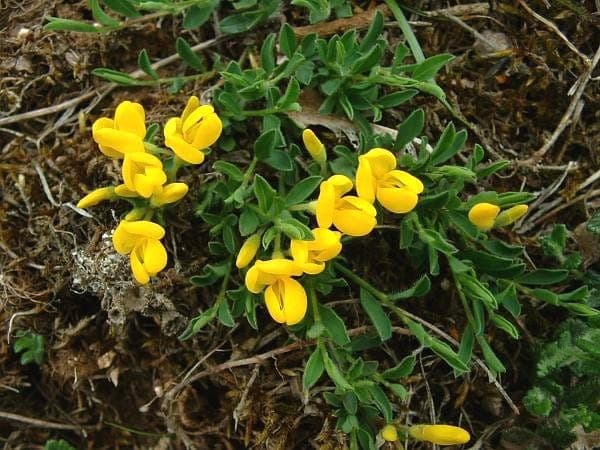
Wikimedia Commons / CC BY-SA 3.0, via Wikimedia Commons
Hairy greenweed: complete guide
Genista pilosa
Want to see Hairy greenweed: complete guide in your garden?
1 minute, no credit card
Overview
Genista pilosa, commonly known as Hairy greenweed, is a tough, low-growing shrub that thrives where other plants struggle. Native to much of central and western Europe, it's perfectly adapted to dry, infertile soils and full sun. In gardens, it shines as a groundcover or feature plant on slopes, rockeries, or gravel beds. Reaching 30–40 cm in height but spreading up to 1 m wide, it forms a dense, spreading mound with fine, hairy foliage and vibrant yellow flowers.
One of its quiet superpowers? Nitrogen fixation. Like other members of the Fabaceae family, Hairy greenweed hosts bacteria in its roots that convert atmospheric nitrogen into usable forms, enriching poor soils over time. It's a plant that gives back. On gardenworld.app, you can design a low-maintenance garden layout where this shrub improves soil while adding seasonal interest.
Appearance & bloom cycle
The leaves are narrow, lance-shaped, and covered in soft, downy hairs - giving the plant a silvery-green appearance up close. They're semi-evergreen in milder winters, keeping their foliage unless temperatures drop severely. The real spectacle starts in June, when upright racemes of bright yellow, pea-like flowers burst open. Bloom continues through July, sometimes into early August, attracting bees, hoverflies, and other pollinators.
After flowering, small dark seed pods develop and eventually split with a satisfying pop, scattering seed. Self-seeding is light and rarely problematic, making it suitable for naturalistic schemes. The seed pods add subtle texture into autumn, and the plant remains tidy even after bloom fades.
Ideal location
Hairy greenweed loves full sun - aim for at least 6 hours of direct light daily. It performs best on south- or west-facing slopes, gravel gardens, or dry embankments. Avoid heavy shade, which leads to leggy growth and sparse flowering.
It also works well in urban gardens with reflective heat, like near patios or driveways, as long as drainage is good. In smaller yards, consider using it in a terracotta pot with coarse compost. Just ensure the container has generous drainage holes. For help visualising placement, try gardenworld.app's garden planner to map sunlight and choose the right spot.
Soil requirements
This shrub prefers well-drained, poor to moderately fertile soils. Sandy, loamy, or chalky soils are ideal. Avoid heavy clay unless amended with sharp sand or gravel to improve drainage. The pH range is flexible - from slightly acidic (5.5) to slightly alkaline (7.5).
What it hates: waterlogged roots. Don't plant it in low-lying areas or compacted soil. No need for compost or manure - rich soil encourages weak growth and reduces flowering. Stick to lean conditions for best results.
Free design
Want to see Hairy greenweed: complete guide in your garden? Make a free design now.
Watering
Once established (after the first growing season), Hairy greenweed is highly drought tolerant. Young plants need regular watering in spring and summer - about 5–10 litres per week during dry spells.
After year one, supplemental watering is rarely needed, except during prolonged droughts. When you do water, soak deeply but infrequently to encourage deep root development. For container-grown plants, check moisture at 5 cm depth - dry means it's time to water.
Pruning
Pruning is minimal. The best time is right after flowering, in late July or early August. Lightly trim back long shoots to maintain shape and encourage bushiness. Avoid cutting into old wood - it rarely regrows from bare stems.
Use sharp, clean secateurs to prevent disease spread. Remove any dead or damaged branches in early spring. If you want to limit self-seeding, deadhead spent flower spikes before pods form.
Maintenance calendar
- January: Check for winter damage. No action needed.
- February: Inspect for pests or fungal spots.
- March: Remove dead foliage. Do not fertilise.
- April: Plant or transplant. Water if dry.
- May: Watch for emerging flower buds. Keep an eye on moisture.
- June: Peak bloom. Attracts pollinators.
- July: Flowering winds down. Prune lightly after bloom.
- August: Monitor for self-seeding. Remove pods if needed.
- September: Leave fallen leaves as natural mulch.
- October: No care required.
- November: Protect young plants with a light mulch of straw.
- December: Dormant period. Let it rest.
Winter hardiness
Hairy greenweed is hardy in USDA zones 6–9. In the UK and Ireland (zone 8), it typically survives winters without protection. Young plants in exposed sites may benefit from a light winter mulch to shield shallow roots from frost heave.
Avoid planting near roads or paths treated with salt - it's sensitive to salt spray. In snowy areas, avoid piling snow on top, as it can flatten the plant. If this happens, gently shake off the snow in spring.
Companion plants
Pair Hairy greenweed with other drought-tolerant perennials and shrubs. Lavender (Lavandula angustifolia), catmint (Nepeta x faassenii), and upright sedums (Hylotelephium) create pleasing contrasts in texture and colour. Add purple spires of Salvia or Echinacea for seasonal drama.
For rock gardens, combine with stonecrops, thrift (Armeria), or low grasses like Festuca ovina. Its low, spreading form makes it ideal for edging or spilling over walls. In mixed borders, use it to soften hard edges and add mid-level structure.
Closing
Hairy greenweed is a quiet achiever - unassuming but incredibly resilient. It asks for little and gives back with flowers, foliage, and enriched soil. Ideal for slopes, poor ground, or low-water gardens, it's a smart choice for eco-conscious gardeners. Buy young plants at garden centres like B&Q, Wyevale, or local independents, often in 1-litre pots.
If you're unsure how many to plant or where they'll thrive, gardenworld.app offers custom garden designs that match your space, light, and style. Let the platform help you grow smarter, not harder.
Want to see Hairy greenweed: complete guide in your garden? Make a free design now.
Upload a photo, pick a style, and get a photorealistic design with plant list in under a minute.
No credit card required


Similar plants
Tall Silky Lupine: complete guide
Lupinus elatus
Tall silky lupine is a fast-growing Californian perennial with silvery foliage and blue-purple flower spikes, ideal for a prairie-style garden.
Garfield Lupine: complete guide
Lupinus garfieldensis
The Garfield lupine is a rare, fast-growing American perennial for alkaline, dry grassland gardens, with striking blue flower spikes.
Lupinus elegans: complete guide
Lupinus elegans
Lupinus elegans, the elegant lupine, is a spectacular blooming plant from Mexico with blue flower spikes. Care, cultivation and garden use.