
Alvesgaspar / CC BY 2.5, via Wikimedia Commons
Treasure-flower: complete guide
Gazania rigens
Want to see Treasure-flower: complete guide in your garden?
1 minute, no credit card
Overview
Treasure-flower, or Gazania rigens, is a cheerful, sun-loving plant that adds bold splashes of colour to gardens from late spring through autumn. Native to South Africa's Cape Provinces, KwaZulu-Natal, and parts of Mozambique and Swaziland, it's adapted to hot, dry, sunny conditions. In the UK and much of Europe, it's typically grown as a half-hardy perennial or annual due to winter frost sensitivity (USDA zones 9–11).
This plant thrives in full sun and shuts its flowers on cloudy days or in the evening-a quirky trait that makes it feel alive with the rhythm of the sun. Despite its tender nature, it's widely available and easy to grow, making it a top choice for gardeners seeking vibrant, low-effort colour.
On gardenworld.app, you can design a sun-drenched border where Gazania rigens shines alongside other drought-tolerant species, maximizing visual impact with minimal watering.
Appearance & bloom cycle
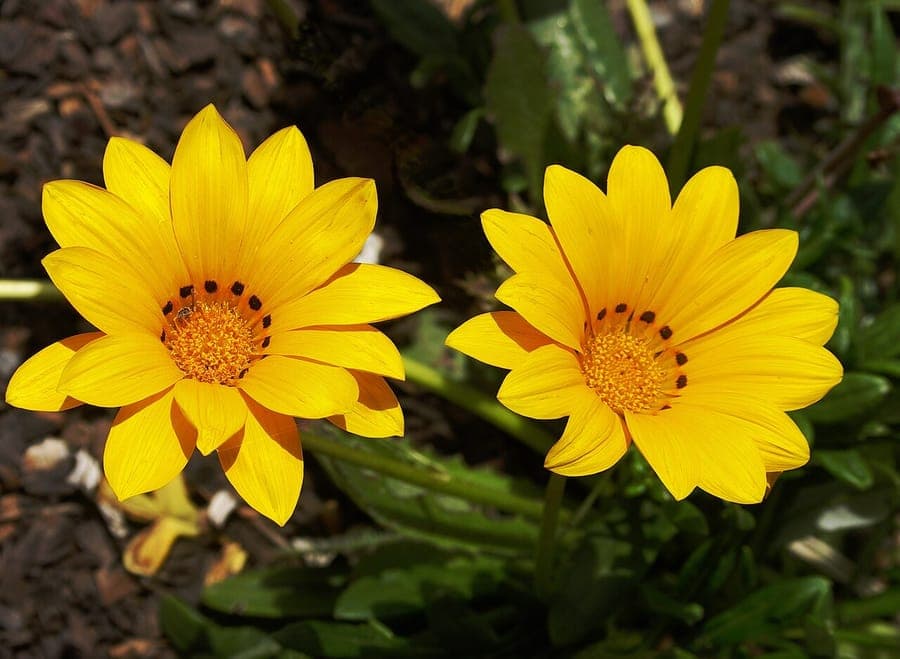
Gazania rigens produces daisy-like flowers in striking combinations of yellow, orange, red, pink and white, often with dark central markings or contrasting veins. Each flower head measures 5–8 cm across and sits atop stiff, leafless stems. The petals have a glossy, almost waxy finish, reflecting sunlight beautifully.
Flowering begins in May and can continue uninterrupted until October, especially if deadheaded regularly. The plant forms low, spreading clumps reaching 30 cm in diameter and 15–20 cm in height. Foliage is narrow, leathery, and deep green with a silvery underside, creating attractive texture even when not in bloom.
Ideal location
Plant in full sun-minimum 6 hours of direct sunlight daily. Treasure-flower will become leggy and bloom poorly in shade. Ideal spots include sunny borders, rock gardens, raised beds, or containers on patios and balconies.
In pots, use containers with drainage holes and place them where they catch maximum sun. Terracotta or plastic both work well. For inspiration on how to combine Gazania with trailing companions like Verbena or upright Sedum, check gardenworld.app's garden planner for seasonal container ideas.
Soil requirements
Well-drained soil is non-negotiable. Gazania rigens hates wet feet and will quickly succumb to root rot in heavy clay. Sandy or gravelly soils are ideal. If your garden soil is dense, amend it with horticultural sand or grit to improve drainage.
For container planting, use a mix of multipurpose compost with 30% perlite or coarse sand. A slightly acidic to neutral pH (6.0–7.0) is best. Avoid rich compost or high-nitrogen fertilizers, which promote leafy growth at the expense of flowers.
Free design
Want to see Treasure-flower: complete guide in your garden? Make a free design now.
Watering
Water sparingly. Once established, Gazania rigens is highly drought-tolerant. Water only when the top 2–3 cm of soil feels dry. In summer, this might mean once a week in borders; containers may need watering every 4–5 days during heatwaves.
Always water at the base to keep foliage dry and reduce fungal risk. Overwatering is the most common cause of failure-better to underwater than to drown this sun-lover.
Pruning
Deadhead spent blooms regularly by cutting the stem just above a leaf node. This encourages continuous flowering and prevents the plant from going to seed. A light trim in midsummer (around August) can rejuvenate leggy growth and promote bushier, neater plants.
In autumn, cut back dead foliage to about 5 cm above ground if it looks untidy. In mild areas, leave some growth for winter insulation.
Maintenance calendar
- Jan: Protect overwintering plants with dry mulch if in mild regions.
- Feb: Check for fungal issues; avoid wetting foliage.
- Mar: Start light feeding if overwintered; prepare pots for spring.
- Apr: Plant out after last frost (mid to late April). Begin regular watering.
- May: Flowers appear; start deadheading.
- Jun: Peak bloom; monitor container moisture.
- Jul: Continue deadheading; ensure good air circulation.
- Aug: Trim back leggy plants; refresh with half-strength feed.
- Sep: Final flush of flowers; reduce watering gradually.
- Oct: Cut back dead growth; decide whether to overwinter or replace.
- Nov: Keep dry; protect containers from waterlogging.
- Dec: Dormant period; avoid wet soil.
Winter hardiness
Not reliably hardy in the UK or colder European zones. Prolonged frost below -5°C will kill the plant. In milder coastal areas, it may survive with protection-cover with dry leaves or horticultural fleece. Container-grown plants can be moved to a cool, bright greenhouse (5–10°C).
Most gardeners treat Gazania rigens as an annual, replacing it each spring. You'll find young plants at garden centres from April onwards.
Companion plants
Pair with other sun-loving, drought-tolerant plants for a resilient, low-water garden. Good companions include Lavender, Echinacea, Sedum spectabile, and Russian Sage (Perovskia). For containers, try trailing Lobelia, upright Osteospermum, or silver-leaved Senecio.
The bold colours of Gazania contrast beautifully with soft blues and purples. Avoid pairing with moisture-loving plants like Hostas or Astilbes.
Closing
Treasure-flower delivers months of vibrant colour with minimal input. It's perfect for sunny spots where other plants struggle, and its resilience makes it ideal for beginners. Just remember: full sun, sharp drainage, and a light hand with water.
Whether in a rock garden, seaside border or patio pot, Gazania rigens earns its name as a true treasure. For layout ideas and plant pairing suggestions, visit gardenworld.app and build a custom garden plan tailored to your space and climate.
Want to see Treasure-flower: complete guide in your garden? Make a free design now.
Upload a photo, pick a style, and get a photorealistic design with plant list in under a minute.
No credit card required


Similar plants
Calendula stellata: complete guide
Calendula stellata
Complete guide to Calendula stellata, the star-flowered marigold from Sicily: location, soil, watering and companion planting tips.
Korean chrysanthemum: complete guide
Chrysanthemum x rubellum
Chrysanthemum x rubellum is a hardy autumn perennial with single pink to copper flowers from August to November. Care and combinations.
Helianthus divaricatus: complete guide
Helianthus divaricatus
Helianthus divaricatus is a North American woodland sunflower with yellow summer blooms, ideal for naturalistic borders and shady edges.