
Robert Flogaus-Faust / CC BY 4.0, via Wikimedia Commons
Salal: complete guide
Gaultheria shallon
Want to see Salal: complete guide in your garden?
1 minute, no credit card
Overview
Gaultheria shallon, commonly known as Salal, is a tough evergreen shrub native to the Pacific Northwest, stretching from Alaska to California. In gardens across temperate climates, it's prized for its resilience, year-round structure, and ornamental berries. It belongs to the Ericaceae family, sharing traits with rhododendrons, azaleas, and heathers. In the garden, Salal typically reaches 60–120 cm in height and spreads up to 100 cm wide. Its slow, spreading growth via underground rhizomes makes it ideal for ground cover in woodland settings.
Salal is hardy to USDA zone 7 (-15°C), making it suitable for most of the UK, northern Europe, and parts of the northern US. It's not a flashy plant, but its steady presence-glossy foliage, delicate spring blooms, and persistent berries-adds depth and texture to borders. On gardenworld.app, you can design a planting scheme that maximizes shade-loving acid plants like Salal, ensuring they thrive in harmony with surrounding species.
Appearance & bloom cycle
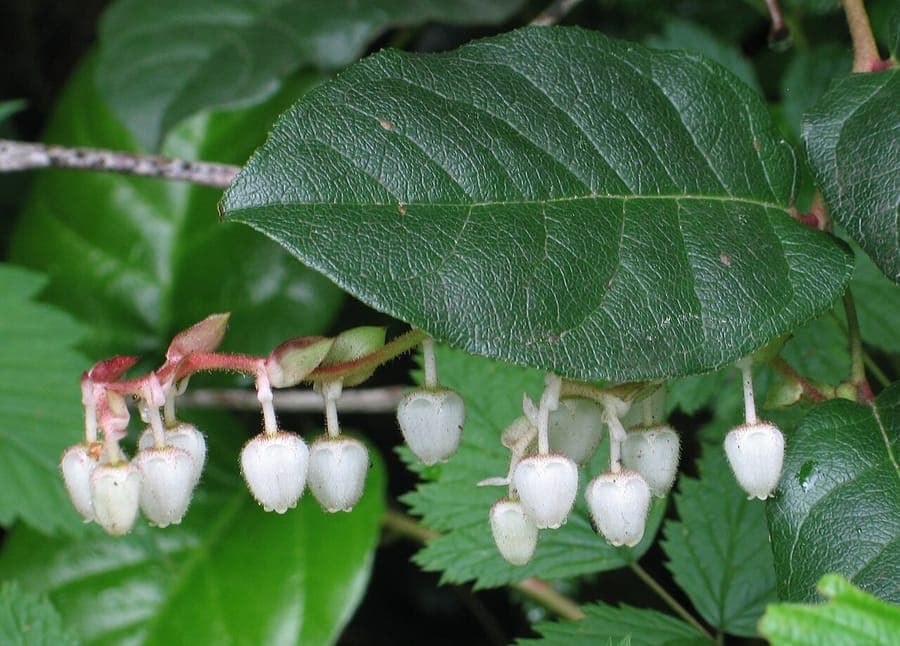
Salal features leathery, oval-shaped leaves that are deep green and glossy on top, with a paler, sometimes brownish underside. Leaves measure 5–10 cm and remain on the plant all year, offering winter interest. In late spring-typically May and June-pendulous clusters of small, bell-shaped, white to pale pink flowers dangle along the stems. These are subtle but attract bees, particularly bumblebees, which are effective pollinators.
After flowering, the plant produces edible, dark purple to almost black berries around 1 cm in diameter. These ripen in late summer, usually August to September, and can persist into winter. While edible, the berries are often described as mealy or bland when eaten raw, but they're excellent for jams, jellies, or as a thickener in other fruit preserves. The berries are also popular in floral arrangements, adding a rustic, wild touch. Their long shelf life on the plant makes Salal a favorite among cut-flower growers.
Ideal location
Salal performs best in partial to full shade, scoring an 8 on the light scale (10 being full sun). It thrives under dappled tree canopies, on north-facing slopes, or in woodland gardens. Full sun is tolerable only if the soil stays consistently moist, but direct afternoon sun in hot climates can scorch leaves and stress the plant. Deep shade reduces flowering and berry production, though the plant remains evergreen and healthy.
It's ideal for planting under open-canopy trees like birch, alder, or pine, where it can form a dense, weed-suppressing mat. On gardenworld.app, you can use the sun exposure tracker to map shaded areas in your garden and plan where to place acid-loving evergreens like Salal for maximum impact.
Soil requirements
Salal prefers moist, well-drained, acidic to neutral soil with a pH between 5.5 and 7.0. It thrives in humus-rich, organic soils that retain moisture without becoming waterlogged. If your soil is heavy clay, amend the planting hole with composted pine bark or leaf mold to improve drainage and acidity.
In alkaline soils, Salal may develop chlorosis-yellowing leaves with green veins-due to iron deficiency. In such cases, grow it in a large container using ericaceous compost. Avoid tap water high in lime; rainwater is preferable. Mulching with pine needles or oak leaves helps maintain acidity and moisture.
Free design
Want to see Salal: complete guide in your garden? Make a free design now.
Watering
Once established, Salal is moderately drought-tolerant, but young plants need consistent moisture during their first two growing seasons. Water deeply once a week during dry spells, especially in summer. Avoid overhead watering to prevent fungal issues on flowers and foliage.
In containers or dry garden spots, apply a 5–7 cm layer of organic mulch (like bark or pine needles) to conserve moisture and regulate soil temperature. During prolonged droughts, watch for leaf curling or browning edges-signs of water stress.
Pruning
Pruning is rarely needed. Salal naturally grows in a dense, neat form. If the plant becomes too wide or develops old, woody stems, a light trim in early spring (February to March) can help. Remove only dead, damaged, or crossing branches. Use sharp, sterilized secateurs to prevent disease spread. Avoid hard pruning-Salal regrows slowly from old wood.
If you're growing it for berry production or cut foliage, prune after winter when birds have eaten the fruit or berries have dried.
Maintenance calendar
- January: Check for frost damage. Protect young plants with mulch.
- February: Inspect for loose stems. Begin light pruning if needed.
- March: Plant new specimens. Apply organic mulch.
- April: Keep soil moist. Watch for slugs on new shoots.
- May: Flowering begins. Avoid wetting flowers.
- June: Peak bloom. No feeding required.
- July: Monitor for drought. Deep water during dry weeks.
- August: Berries start ripening. Leave for wildlife if desired.
- September: Full berry ripeness. Check for fungal spots in wet weather.
- October: Old berries and leaves may drop. No pruning.
- November: Apply mulch for winter protection.
- December: Check for winter burn on exposed plants.
Winter hardiness
Salal is hardy to USDA zone 7. In colder zones (6 and below), young plants may need protection-mulch heavily around the base with pine needles or bark. Mature plants usually survive with minimal damage, though extreme cold or icy winds can cause leaf browning. Container-grown plants are more vulnerable; wrap pots in hessian or move to a sheltered spot when temperatures drop below -5°C.
Companion plants
Salal pairs beautifully with other ericaceous plants: rhododendrons, azaleas, blueberries (Vaccinium), and heathers (Calluna). Ferns like Dryopteris or Polystichum add soft texture, while carex or sedge provide contrast. For winter interest, combine with holly (Ilex) or winter-flowering hellebores.
Avoid planting near lime-loving species like lavender, roses, or clematis. In mixed borders, use Salal as a backdrop for lighter-colored flowers such as Erythronium or white foxgloves.
Closing
Salal is a quiet achiever in the garden-unsung but incredibly useful. Its year-round foliage, wildlife value, and low demands make it perfect for naturalistic, low-maintenance gardens. Give it acidic soil, partial shade, and consistent moisture, and it will reward you with decades of reliable performance. You can find Salal at garden centres across the UK and US, often sold in 3 or 5 litre pots. With thoughtful planning on gardenworld.app, you can integrate Salal into a balanced, thriving garden design that celebrates shade and structure.
Want to see Salal: complete guide in your garden? Make a free design now.
Upload a photo, pick a style, and get a photorealistic design with plant list in under a minute.
No credit card required


Similar plants
Zenobia pulverulenta: complete guide
Zenobia pulverulenta
Everything about Zenobia pulverulenta (honeycup): siting, acid soil, pruning and the fragrant white bells, in this complete care guide.
Dwarf huckleberry: complete guide
Gaylussacia dumosa
Everything about dwarf huckleberry (Gaylussacia dumosa): acidic soil, partial shade, pruning and care for this compact North American berry shrub.
Drooping leucothoe: complete guide
Leucothoe fontanesiana
Everything about drooping leucothoe (Leucothoe fontanesiana): shade tolerance, soil, watering, pruning, hardiness and companion plants.