
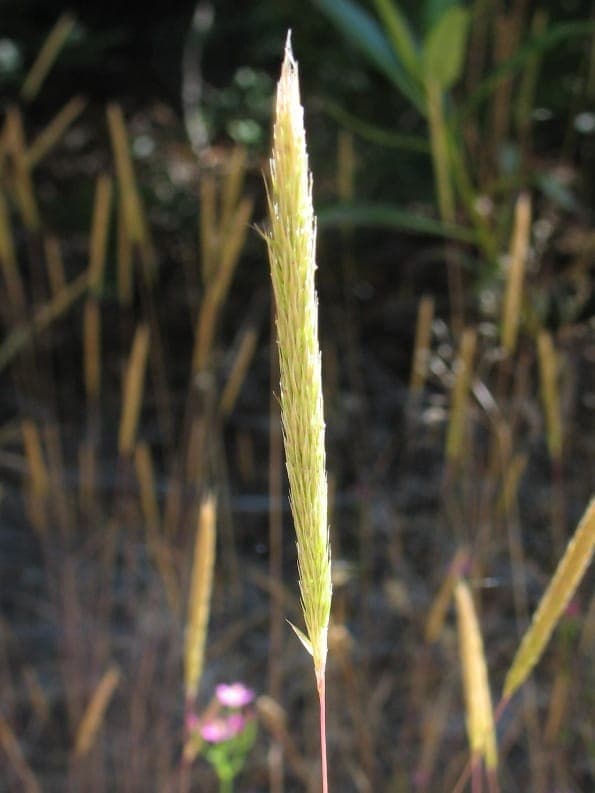
Robert Steers/NPS / CC0, via Wikimedia Commons
Gastridium ventricosum: complete guide
Gastridium ventricosum
Want to see Gastridium ventricosum: complete guide in your garden?
1 minute, no credit card
Overview
Gastridium ventricosum, commonly called nit grass or Southern needlegrass, is an elegant ornamental grass native to the Mediterranean region and Western Europe. This grass is valuable in gardens for its fine, delicate leaf structure and interesting seed heads. It provides movement and texture to grass schemes and mixed borders.
Although it is a Mediterranean grass, it grows well in many European countries including the Netherlands. It is a remarkably resilient and low-maintenance grass that adapts to many growing conditions.
Appearance and Bloom
Gastridium ventricosum grows as a compact grass, typically reaching 20 to 40 cm in height. The leaves are extremely fine and linear, giving the plant a soft, ethereal appearance. The flower spikes are small, delicate, and pale yellowish, emerging from April through September.
The seed heads have a characteristic sheen and add texture to the garden, particularly in contrast with broader-leaved plants. The grass is useful for dried flower arrangements and dried seed head displays.
Ideal Location
Gastridium ventricosum performs best in full sun locations. At least four to six hours of direct sunlight daily is necessary. The grass can grow in partial shade but will be less dense and show less vigor.
The grass is remarkably resilient to wind and pollution, making it suitable for urban and exposed locations. It is also quite drought-tolerant once established.
Soil
Gastridium ventricosum grows in virtually any soil, including poor soil. It prefers well-draining, light soils such as sand or gravel. Heavy clay soils should be avoided if possible, though the grass can grow in them with reduced vigor.
The pH preference is neutral to slightly alkaline. This grass tolerates dry periods without supplemental irrigation.
Free design
Want to see Gastridium ventricosum: complete guide in your garden? Make a free design now.
Watering
Once established, Gastridium ventricosum is very drought-tolerant. Water during the establishment period after planting, then only during extended drought. This grass prefers dryness to wet conditions.
Overwatering can lead to fungal infections and poor growth. Allow the soil to dry between waterings.
Pruning
Pruning is not strictly necessary. In late winter or early spring, cut the grass back to approximately 5 cm in height to remove dead material and stimulate new growth.
This plant does not produce spent flowers like flowering perennials, so deadheading is not applicable.
Maintenance Calendar
Feb-March: Cut back to 5 cm height. April-May: Water during establishment period, then minimal. June-September: Enjoy flowering and seed development. Oct-Dec: Minimal maintenance; leave seed heads for winter decoration.
Winter Hardiness
Gastridium ventricosum is winter-hardy in most European locations, including the Netherlands. It is native to Mediterranean and Western European regions, so it is fully adapted to European winters. In very severe northern winters, it may suffer damage, but generally it survives.
Companion Plants
Gastridium ventricosum combines beautifully with other Mediterranean plants. Try planting with Lavandula, Santolina, and Acanthus. This combination creates layers of texture and bloom color.
It also works well as an accent grass in borders with perennials and shrubs.
Conclusion
Gastridium ventricosum is an excellent choice for gardeners seeking delicate, low-maintenance ornamental grasses. It provides year-round texture interest with minimal effort. For plants, consult local garden centers or specialized grass nurseries. Some garden centers in Northern Europe carry Mediterranean grass species. For more inspiration, visit gardenworld.app for grass garden schemes and textured planting designs. Explore gardenworld.app for additional ornamental grass ideas and dried flower garden inspiration.
Want to see Gastridium ventricosum: complete guide in your garden? Make a free design now.
Upload a photo, pick a style, and get a photorealistic design with plant list in under a minute.
No credit card required


Similar plants
Sporobolus pungens: complete guide
Sporobolus pungens
Sporobolus pungens is a stoloniferous Mediterranean coastal grass with outstanding salt and drought tolerance, perfect for seaside and dry gardens.
Mediterranean aegilops: complete guide
Aegilops biuncialis
Everything about Aegilops biuncialis, a Mediterranean annual grass with ornamental spikes and outstanding drought tolerance for dry gardens.
Silver bluestem: complete guide
Bothriochloa saccharoides
Full guide to Bothriochloa saccharoides (silver bluestem): site, soil, watering, winter hardiness, pruning, and garden companions.