
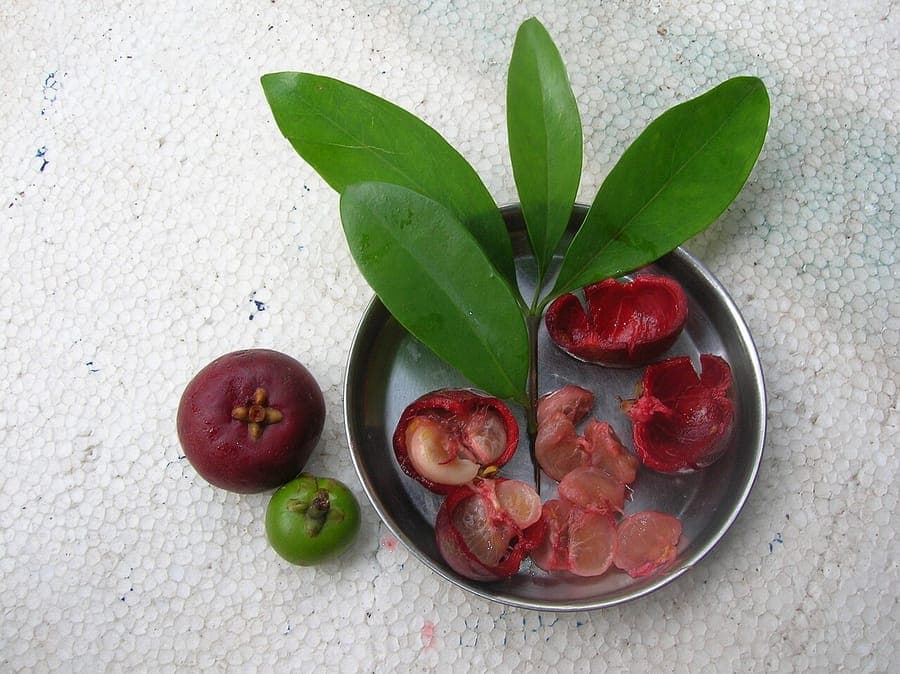
Subray Hegde / CC BY 1.0, via Wikimedia Commons
Garcinia indica: complete guide
Garcinia indica
Want to see Garcinia indica: complete guide in your garden?
1 minute, no credit card
Overview
Garcinia indica, commonly known as Goa-butter or kokam, is a tropical tree native to West India and Assam belonging to the Clusiaceae family. This versatile tree holds significant value as both a food and medicinal plant, with fruit utilized in traditional Asian cuisine and medicine for centuries.
The name kokam derives from Sanskrit origins and refers to fruits called "kokan" in Hindi. In Gujarati, the name "kokam" is standard, while English nomenclature uses "Goa-butter" referencing the fatty seeds which can be processed into sustainable vegetable butter.
This tree flourishes in subtropical and tropical climates with adequate rainfall and warmth. For gardeners in temperate regions, the plant is suitable as a container specimen that can be overwintered indoors during cold seasons.
Appearance & Blooming
Garcinia indica grows as a medium-sized tree reaching 8-12 meters in height, with a full, dense crown. Bark is gray-brown and smooth. Leaves are opposite, oblong-elliptic, dark green and glossy with prominent venation.
Flowers are small, whitish-yellow and grow in clusters at twig terminals. Bloom period occurs during spring and early summer. Following pollination, yellow to reddish-brown fruits measuring 2-4 cm in diameter develop.
Fruits contain 5-8 seed kernels surrounded by acidic flesh. This flesh is used extensively in Asian cuisine as sweetener and flavoring in curries and beverages. Seed kernels contain fatty cores traditionally processed for oil production.
Ideal Location
Garcinia indica grows optimally in warm, humid tropical climate with full sun exposure. In temperate zones, position this specimen in a sheltered location receiving at least 4-6 hours of direct sunlight daily.
Wind protection is important, as young trees are relatively brittle. Coastal locations suit the tree well due to maritime warmth and air circulation.
For indoor cultivation, place the tree in a bright location adjacent to a south-facing window. Ensure adequate ventilation without cold drafts or temperature fluctuations.
Soil
Garcinia indica thrives in nutrient-rich, well-draining soil with slightly acidic pH (6.5-7.5). For container cultivation, mix potting soil with coconut fiber and coarse sand in equal proportions.
The tree cannot tolerate waterlogging, making drainage essential. When planted in ground, incorporate compost regularly for nutrition. Annual organic material application stimulates growth and fruiting.
Watering
Water requirements are high during growing season but reduce during cooler months. During growth period (March-October), water regularly ensuring soil remains moist but not waterlogged.
During winter (November-February) in temperate regions, reduce watering as growth slows considerably. Check soil regularly: when the top 2 cm feel dry, water thoroughly.
Container-grown plants require more frequent watering than in-ground specimens. During very hot periods, daily watering may be necessary.
Free design
Want to see Garcinia indica: complete guide in your garden? Make a free design now.
Maintenance
Garcinia indica requires annual maintenance care. Remove dead branches in early spring. For container trees, prune annually after bloom to maintain shape and size.
The tree produces abundant fruit naturally, so thinning is unnecessary. You can harvest some fruit for culinary purposes without compromising tree vitality.
Feeding during growing season with balanced fertilizer or nutrient-rich compost supports fruiting. For container-grown specimens, fertilize every 3-4 weeks with diluted plant food.
Maintenance Calendar
January-February: Prune dead branches. Monitor soil moisture. Minimal feeding required.
March-April: Growth resumes. Watering increases. Bloom initiation. Begin regular feeding.
May-June: Flowering period. Insect pollination occurs. Water regularly. Fruit set begins.
July-September: Fruits expand. Intense watering needed. Continue feeding. Harvest begins in August-September.
October-December: Growth slows. Reduce watering. Final harvests. Prepare for dormancy period.
Winter Hardiness
Garcinia indica is highly frost-sensitive and does not tolerate cold climates. Temperatures below 10 degrees Celsius can prove fatal. In temperate zones, indoor overwintering is necessary or protected microclimate installation.
In regions with seasonal winter, bring the tree indoors in October and maintain it in a bright, cool location (10-15 degrees Celsius). Spring resumption outdoors can occur after frost danger passes.
Companion Plantings
In tropical gardens, combine Garcinia indica effectively with:
- Other fruit trees (mango, banana) for staggered canopy
- Palms for textural contrast and height
- Ginger and turmeric as understory
- Shade-tolerant flowers like begonias
- Aromatic plants such as lemongrass for fragrance
In container culture, position the tree as a focal specimen. Place seasonal plants around the container base.
Conclusion
Garcinia indica represents a unique and worthwhile plant for gardeners in tropical and subtropical regions. The tree offers nutritional return through fruit production alongside traditional medicinal value. For temperate climate gardeners, container cultivation works effectively.
The tree requires patience and nutritional attention, but rewards manifest as healthy foliage and harvests of kokam fruit. This suits gardeners seeking food security and exotic flavors at home.
Experiment with Garcinia indica in your garden and discover traditional Asian flavors. Source seedlings from local tropical nurseries. More information on gardenworld.app.
Want to see Garcinia indica: complete guide in your garden? Make a free design now.
Upload a photo, pick a style, and get a photorealistic design with plant list in under a minute.
No credit card required


Similar plants
Mangosteen: complete guide
Garcinia mangostana
Mangosteen (Garcinia mangostana) is the tropical fruit tree prized as the queen of fruits. Full glasshouse growing guide for cool-climate enthusiasts.
Symphonia globulifera: complete guide
Symphonia globulifera
Discover boarwood, a tropical tree with medicinal heritage and beautiful flowers. Growing tips and care for tropical and subtropical gardens.
Platonia insignis: complete guide
Platonia insignis
Bacury is a tropical fruit tree with elegant foliage and delicious edible fruits. Discover growing habits, care requirements and ideal conditions for this South American treasure.