
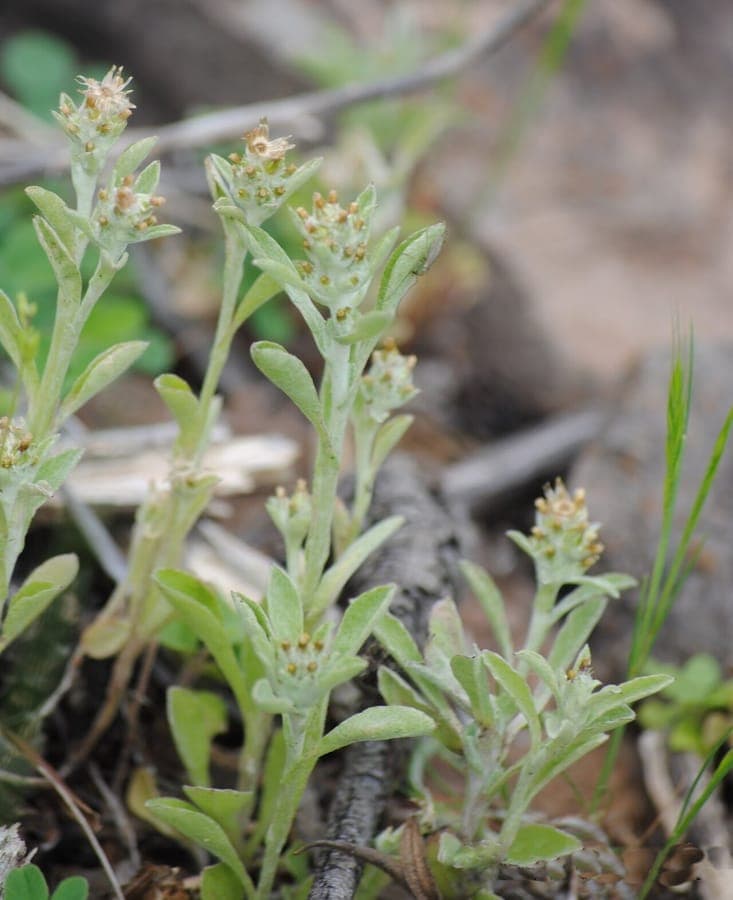
Andrés González / CC BY-SA 3.0, via Wikimedia Commons
Gamochaeta pensylvanica: complete guide to Pennsylvania everlasting
Gamochaeta pensylvanica
Want to see Gamochaeta pensylvanica: complete guide to Pennsylvania everlasting in your garden?
1 minute, no credit card
Overview
The Pennsylvania everlasting (Gamochaeta pensylvanica) is a frost-tender bloomer from the Americas that develops into a frost-sensitive annual or biennial plant. This plant is known for its minuscule gray-purple flowers that present themselves in tightly packed spikes. The real value lies in its use as a dried flower: these blooms retain their character for years.
This humble plant is ideal for those who love natural gardens, dry arrangements, and minimal maintenance requirements.
Appearance and bloom
Gamochaeta pensylvanica grows as a slender, upright plant of 20-60 centimeters tall. The foliage is gray-green and woolly, giving the plant a very tactile appearance. The flowers grow in compact, cylindrical spikes of about 5-10 centimeters long.
The flowers are very small, gray-purple to pale pink, and appear in July and August. After blooming, incredibly light seeds form that are dispersed by the wind. This plant is a fast grower and can even self-sow in favorable conditions.
Ideal location
This plant thrives in full sun in a very well-drained spot. It tolerates dry, poor soils much better than moist ones. A sunny, windy place with well-drained soil is ideal. Shade doesn't help; the plant wants light.
In all four countries, a full-sun spot with dry soil works perfectly. Avoid heavy, wet soils absolutely.
Soil
Gamechaeta pensylvanica makes no high demands on soil. In fact, it actually grows better in poor, dry soils. Sandy and gravelly soils are perfect. Heavy and wet? This plant will refuse.
Don't add extra compost; this encourages too much foliage at the expense of blooming. The plant naturally grows in lean terrain.
Watering
Once established, this plant needs almost no water. Make sure you get it well-established by watering regularly for the first two weeks. After that it can fend for itself. Even in dry summers this plant suffers little.
In pot culture you need to be more careful with watering, but always ensure well-draining potting soil.
Free design
Want to see Gamochaeta pensylvanica: complete guide to Pennsylvania everlasting in your garden? Make a free design now.
Pruning
Pruning is not really necessary. You can let faded spikes remain for dried arrangements, or cut them off for a neater appearance. If the plant becomes too dense, you can carefully remove some from the center.
That said, this plant grows so fast that pruning is usually unnecessary.
Maintenance calendar
Spring (March-May): Sow seeds directly in ground or pots. Minimal input.
Summer (June-August): Wait for blooming. Water only in extreme drought.
Autumn (September-October): Harvest dried flowers for arrangements. Allow self-sowing.
Winter (November-February): Plant dies back. Clean up and plan for next year.
Winter hardiness
Gamechaeta pensylvanica is not hardy outdoors in Europe. It's a frost-tender annual or biennial, depending on when you sow. Sow in spring for summer bloomers, or in autumn for earlier spring bloom.
The plant grows fast enough that freezing is not a problem; you simply resow each year.
Companion plants
Nice combinations are:
- Limonium (sea lavender): Similar texture, purple tones
- Echinops (thistle): Stiff and structured, purple globes
- Artemisia: Silver foliage, dry preference
- Statice: Another dried flower, complementary colors
Don't complicate combinations; let this plant be simple.
Conclusion
Gamechaeta pensylvanica is an unusual choice for garden owners who want dried arrangements without much fuss. Sow each year anew, and you have an endless supply of dried flowers. This plant is probably not available in regular garden centers; check seed suppliers. Via gardenworld.app you can integrate this humble plant perfectly into a dry-garden theme.
GardenWorld helps you maximize this almost unknown dried flower.
Want to see Gamochaeta pensylvanica: complete guide to Pennsylvania everlasting in your garden? Make a free design now.
Upload a photo, pick a style, and get a photorealistic design with plant list in under a minute.
No credit card required


Similar plants
Calendula stellata: complete guide
Calendula stellata
Complete guide to Calendula stellata, the star-flowered marigold from Sicily: location, soil, watering and companion planting tips.
Korean chrysanthemum: complete guide
Chrysanthemum x rubellum
Chrysanthemum x rubellum is a hardy autumn perennial with single pink to copper flowers from August to November. Care and combinations.
Helianthus divaricatus: complete guide
Helianthus divaricatus
Helianthus divaricatus is a North American woodland sunflower with yellow summer blooms, ideal for naturalistic borders and shady edges.