
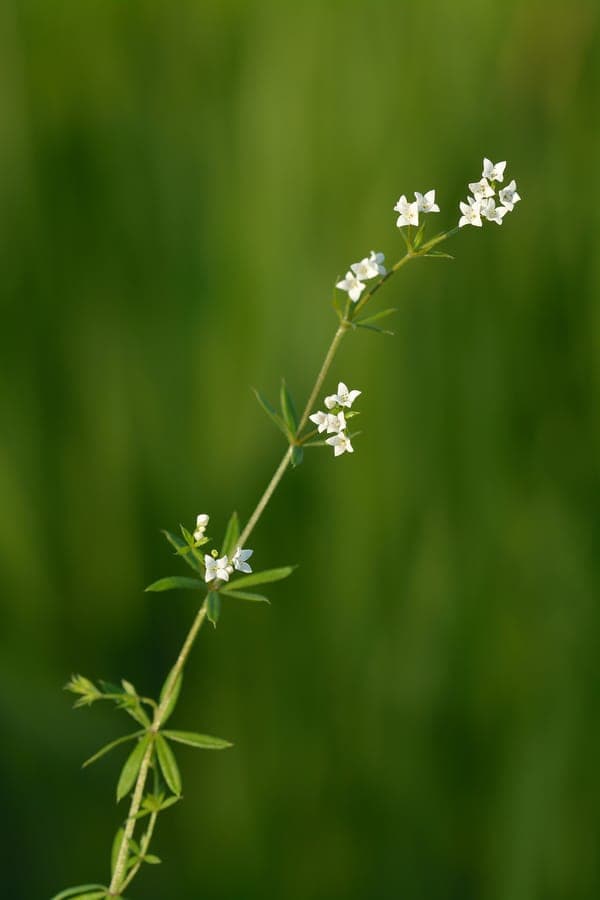
Ivar Leidus / CC BY-SA 3.0, via Wikimedia Commons
Fen bedstraw: complete guide
Galium uliginosum
Want to see Fen bedstraw: complete guide in your garden?
1 minute, no credit card
Overview
Fen bedstraw (Galium uliginosum) is a modest yet resilient perennial that thrives in damp, often overlooked corners of the garden. Native to wetlands across Central and Eastern Europe, this creeping plant from the Rubiaceae family brings quiet charm to moist borders, woodland edges, and pond margins. It's not the kind of plant that shouts for attention, but once established, it forms a lush, weed-suppressing carpet that supports pollinators and adds textural interest.
If you're working with soggy soil or a shaded, boggy patch, fen bedstraw is a smart, ecological choice. On gardenworld.app, you can simulate planting schemes to see how this species integrates with other moisture-loving perennials in your garden layout.
Appearance & bloom cycle
Fen bedstraw features slender, square stems with whorls of 4–5 narrow, lance-shaped leaves. The foliage feels slightly rough to the touch - a trait shared with other bedstraws - due to tiny hooked hairs along the leaf margins. Plants typically reach 20–40 cm in height and spread horizontally up to 60 cm via creeping stems.
From June to August, small, creamy-white to pale yellow flowers bloom in terminal clusters. Each flower is just 3–5 mm wide, forming star-like patterns that attract hoverflies, small bees, and other beneficial insects. While not showy, the extended bloom period provides consistent forage during midsummer, a crucial time for pollinator support.
After flowering, the plant produces round, bristly seed pods that cling to clothing or animal fur, aiding natural dispersal. This trait helps it colonise suitable areas over time, though it rarely becomes invasive or problematic in garden settings.
Ideal location
Choose a spot with partial to full shade for best results. Fen bedstraw struggles in hot, dry sun, particularly during prolonged summer droughts. It performs well under open-canopy trees like birch or alder, along stream banks, or in damp woodland gardens.
In temperate zones (USDA zones 4–8), it's ideal for wetland gardens, rain gardens, or low-lying areas where water collects. Avoid exposed, windy sites - this plant prefers still, humid microclimates. If you're unsure about moisture levels in your garden, use gardenworld.app to map drainage patterns and shade coverage before planting.
Soil requirements
Fen bedstraw demands consistently moist, humus-rich soil with a slightly acidic to neutral pH (4.5–6.5). It tolerates peaty or clay-loam soils as long as they remain wet but not waterlogged. Sandy soils can work only if irrigated regularly or situated in naturally damp areas.
Before planting, amend the soil with well-rotted leaf compost or pine bark to improve moisture retention and acidity. Avoid liming or adding chalk - fen bedstraw is sensitive to alkaline conditions and will show stunted growth or chlorosis in high-pH soils.
Free design
Want to see Fen bedstraw: complete guide in your garden? Make a free design now.
Watering
Keep the soil evenly moist year-round. During spring and early summer (April–July), water weekly if rainfall is below 25 mm. In dry spells, increase to twice weekly, especially for young plants. A 5 cm layer of leaf mulch helps retain moisture and keeps roots cool.
Use rainwater when possible. Tap water with high lime content can gradually raise soil pH and harm long-term health. Established plants are more resilient, but never let the topsoil dry out completely.
Pruning
Pruning is minimal. In early spring (February–March), cut back any dead or tangled stems to 5 cm above ground level. This encourages fresh, upright growth and prevents the plant from becoming too leggy.
Use clean, sharp shears to avoid crushing the delicate stems. Leave clippings as a light protective mulch until new growth emerges - it decomposes quickly and returns nutrients to the soil.
Maintenance calendar
- February–March: Cut back old growth. Apply a thin layer of compost.
- April–May: Monitor moisture. Plant new plugs in wet areas.
- June–August: Peak bloom. Watch for pollinators. Water during dry periods.
- September–October: Seeds disperse naturally. No action needed.
- November–January: Dormant period. No maintenance required.
Winter hardiness
Fen bedstraw is fully winter-hardy in USDA zones 4–8, tolerating temperatures down to -25°C. The aerial parts often die back in winter, but the root system survives under leaf litter or snow cover.
No special winter protection is needed. In regions with dry, snowless winters, a light mulch of pine needles or straw can prevent root desiccation without smothering the crown.
Companion plants
Pair fen bedstraw with other moisture-loving species such as marsh marigold (Caltha palustris), tussock sedge (Carex elata), golden ragwort (Packera aurea), and creeping jenny (Lysimachia nummularia). It works well as an understory plant beneath willows (Salix spp.) or alders (Alnus glutinosa).
Avoid aggressive spreaders like nettles or mint, which can overwhelm fen bedstraw. Stick to slow-growing, shade-tolerant companions with similar water needs.
Find healthy plugs at local garden centres, especially those specialising in native or wetland plants. Trusted retailers include Triffic, Thompson & Morgan, and specialist nurseries listed on gardenworld.app.
Closing
Fen bedstraw is a quiet achiever in the perennial border. It won't dazzle with bold blooms, but it excels where few others thrive - in cool, damp, shaded corners. Its low maintenance, ecological value, and subtle beauty make it a worthy addition to any sustainable garden.
If you're designing a rain garden, restoring a wetland edge, or simply taming a soggy patch, consider fen bedstraw as a functional yet elegant ground cover. On gardenworld.app, you can explore planting combinations and visualise how this unassuming plant enhances your garden's resilience and biodiversity.
Want to see Fen bedstraw: complete guide in your garden? Make a free design now.
Upload a photo, pick a style, and get a photorealistic design with plant list in under a minute.
No credit card required


Similar plants
Oregon bedstraw: complete guide
Galium oreganum
Everything about Oregon bedstraw (Galium oreganum): shade planting, soil requirements, care and use as a low groundcover in woodland and shade gardens.
Awned woodruff: complete guide
Asperula aristata
Full guide to growing Asperula aristata, the awned woodruff: sunny location, alkaline soil, minimal watering, and companion plants for dry or rock gardens.
Purple woodruff: complete guide
Asperula purpurea
Full guide to Asperula purpurea, purple woodruff: sunny sites, chalky soil, watering, pruning, winter hardiness and companion plants for rock and dry gardens.