
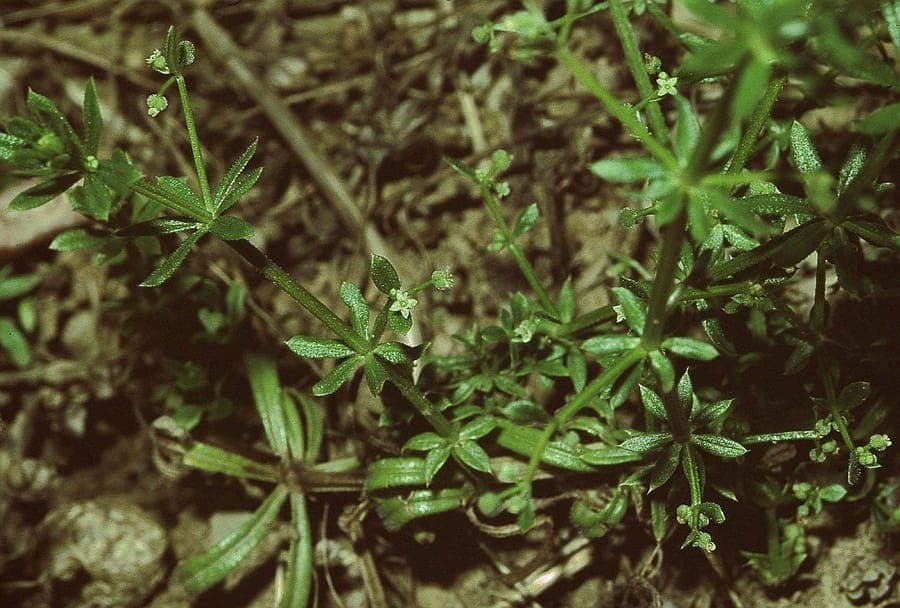
Wikimedia Commons / CC BY-SA 3.0, via Wikimedia Commons
False cleavers: complete guide
Galium spurium
Want to see False cleavers: complete guide in your garden?
1 minute, no credit card
Overview
False cleavers (Galium spurium) might not be the first plant you think of when planning your garden, but this unassuming annual has a quiet charm and surprising usefulness. A member of the Rubiaceae family - the same as coffee and bedstraw - it's native across parts of Europe, North Africa, and Asia, often popping up along field edges, waste ground, and woodland paths. While it's sometimes dismissed as a weed, in the right garden context, it can add soft texture, movement, and ecological value without overwhelming other plants.
One of the things that makes Galium spurium interesting is its ability to weave through other vegetation, using tiny hooked hairs on its stems and leaves to cling lightly to nearby plants. It's not aggressive, but it does spread by seed, so planting it with intention is key. If you're unsure where it fits in your design, gardenworld.app offers smart garden planning tools that help visualise how False cleavers can integrate into layered, naturalistic borders.
Appearance & bloom cycle
False cleavers grow 30 to 80 cm tall with slender, square stems and whorls of 6 to 8 narrow, lance-shaped leaves. The foliage is a fresh light green, and the stems feel slightly rough due to the tiny hooks - they're what give the plant its 'cleaving' habit. These hooks aren't harmful, but they do mean the plant can stick to clothing or animal fur, aiding seed dispersal.
Flowering runs from June to September, with small star-shaped white flowers appearing in loose clusters at the stem tips. Each bloom is only about 3 mm across, but they appear in abundance, creating a delicate, airy effect. While the scent is faint, it does attract small pollinators like hoverflies and solitary bees. After flowering, the plant produces small, round fruits that are slightly sticky - another adaptation for spreading.
Ideal location
This plant thrives in partial shade to light sun. Full sun works only if the soil stays reliably moist. In deep shade, growth becomes leggy and weak. The sweet spot is dappled shade under open-canopy shrubs or at the back of a border with mid-height perennials.
Avoid planting it in hot, dry corners unless you're prepared to water regularly. It's not a drought lover like yarrow or sedum. Instead, think of it as a companion for woodland-edge species. If you're designing such a space, gardenworld.app lets you map light levels and plant compatibility so you can place False cleavers exactly where it will thrive.
Soil requirements
Galium spurium isn't fussy about soil type, but it does best in well-drained, moderately fertile ground. It tolerates sandy soils and light clay, as long as water doesn't pool. The ideal pH range is 6.0 to 7.5 - slightly acidic to neutral.
Avoid heavy fertilisation. Too much nitrogen leads to floppy growth and fewer flowers. When planting, mix in a small amount of compost into the hole, but skip synthetic fertilisers. Let the plant find its balance in a more natural setting.
Free design
Want to see False cleavers: complete guide in your garden? Make a free design now.
Watering
During the first month after planting, water every 2–3 days if there's no rain. Once established, it can handle short dry spells, but prolonged drought will cause it to wilt and stop flowering. Check the soil with your finger - if the top 2–3 cm feel dry, it's time to water.
Use a soaker hose or water at the base to avoid wetting the foliage, which can encourage mildew. In hot summers, especially in USDA zones 7–9, check every few days during heatwaves.
Pruning
Pruning isn't required for shaping, but it helps control spread. If you don't want volunteer seedlings next year, cut back the stems before the fruits ripen - usually by late August. Trim them down to 10–15 cm above ground level using sharp shears.
You can also pinch back young plants in early summer to encourage bushier growth, though this isn't essential. The plant naturally branches as it grows.
Maintenance calendar
- March–April: Sow seeds directly or transplant seedlings. Choose a spot with light shade.
- May: Water regularly if dry. Watch for early flowering signs.
- June–September: Peak bloom. Deadhead lightly if desired, but not required.
- October: Cut back old growth. Leave some debris for overwintering insects if preferred.
- November–February: Dormant period. No action needed.
Winter hardiness
As an annual, False cleavers doesn't survive winter frost. However, it often self-seeds reliably in USDA zones 6 to 9. In colder zones (below -15°C), seeds lie dormant until spring warmth triggers germination. A light mulch of leaf litter helps protect the seedbank over winter.
Companion plants
False cleavers pairs well with plants that offer contrast in form and texture:
- Allium ursinum (wild garlic) – early foliage clears space for later growth
- Anemone nemorosa – delicate spring bloomer that retreats before cleavers take off
- Geranium macrorrhizum – tough groundcover that won't be smothered
- Euphorbia characias – architectural form that holds its shape
Avoid pairing with aggressive spreaders or dense groundcovers that might outcompete it.
Closing
False cleavers isn't a showstopper, but it's a thoughtful addition to gardens that value movement, texture, and ecological function. It's easy to grow, supports pollinators, and fits well in informal or wildlife-friendly designs. Use it to soften edges, fill gaps, or add a wild touch to structured beds. For inspiration on where to place it, check gardenworld.app's visual garden planner. You can find seeds or young plants at most garden centres, including online retailers and local independents.
Want to see False cleavers: complete guide in your garden? Make a free design now.
Upload a photo, pick a style, and get a photorealistic design with plant list in under a minute.
No credit card required


Similar plants
Oregon bedstraw: complete guide
Galium oreganum
Everything about Oregon bedstraw (Galium oreganum): shade planting, soil requirements, care and use as a low groundcover in woodland and shade gardens.
Awned woodruff: complete guide
Asperula aristata
Full guide to growing Asperula aristata, the awned woodruff: sunny location, alkaline soil, minimal watering, and companion plants for dry or rock gardens.
Purple woodruff: complete guide
Asperula purpurea
Full guide to Asperula purpurea, purple woodruff: sunny sites, chalky soil, watering, pruning, winter hardiness and companion plants for rock and dry gardens.