
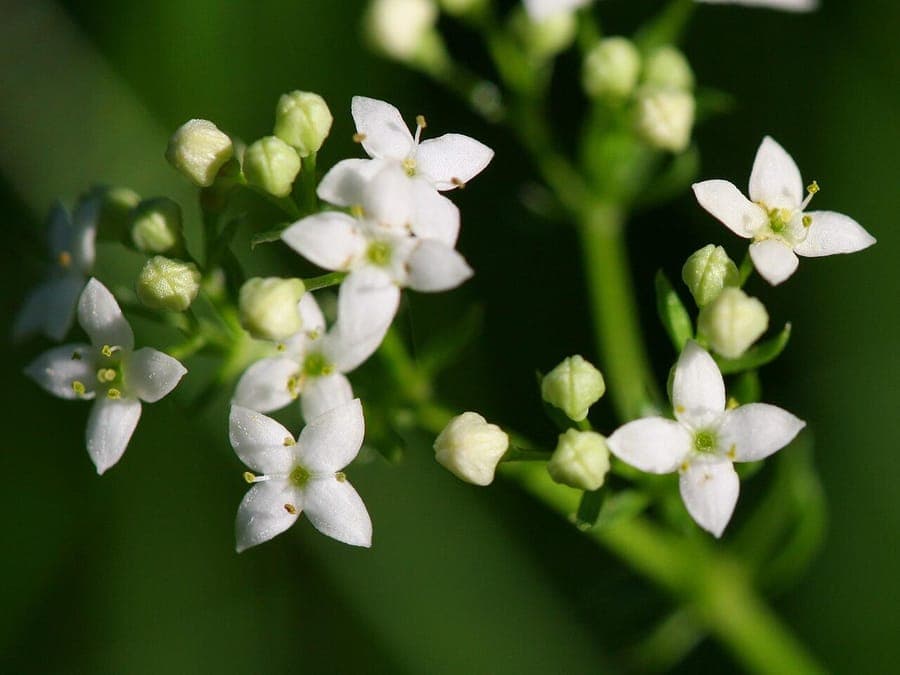
Kristian Peters -- Fabelfroh 08:01, 29 June 2007 (UTC) / CC BY-SA 3.0, via Wikimedia Commons
Heath bedstraw: complete guide
Galium saxatile
Want to see Heath bedstraw: complete guide in your garden?
1 minute, no credit card
Overview
Heath bedstraw (Galium saxatile) is a quiet but resilient little herb that thrives in acidic, well-drained soils. While it won't grab attention like a sunflower or hydrangea, it's a dependable groundcover for gardeners who appreciate subtle beauty and low-maintenance plants. Native to heathlands and open woodlands across northern and western Europe, it's particularly at home in sandy or rocky conditions where richer plants struggle. Though not native to all regions, it adapts well to garden settings that mimic its natural habitat – especially in rock gardens, heath beds, or under light-canopy shrubs.
On gardenworld.app you can design a garden layout that suits Heath bedstraw's preferences, ensuring the right light and soil balance for long-term success.
Appearance & bloom cycle
Heath bedstraw has a creeping growth habit, with slender stems spreading horizontally and rooting at the nodes. It rarely exceeds 15 cm in height but can extend up to 30–40 cm across, forming loose mats. The foliage is fine-textured, arranged in whorls of four to six narrow, lance-shaped leaves per node. The overall effect is airy and delicate, almost fern-like when grown in drifts.
From June through August, tiny white, star-shaped flowers appear – each just 3–5 mm across. They're not showy, but they bloom reliably in clusters at the stem tips. The flowers are scentless and pollinated by small insects, particularly hoverflies and bees. After blooming, small round fruits develop, but they don't spread aggressively, making this plant non-invasive in cultivation.
Ideal location
Heath bedstraw prefers partial sun to light shade, scoring about a 6 on a light scale of 1–10 (10 being full sun). Full sun works well in cooler climates or if the soil retains some moisture, but in hot, dry summers, too much exposure can lead to scorching. Deep shade, on the other hand, limits flowering and encourages leggy growth.
Best results come from planting it on gentle slopes, in rock gardens, or beneath open-canopy trees like silver birch or dwarf conifers. A spot with morning sun and afternoon shade is ideal. Avoid south-facing walls or heat-retaining paved areas unless the soil is deeply amended.
Soil requirements
This plant demands acidic soil with a pH between 4.0 and 4.5. It will not thrive in neutral or alkaline conditions. Use a soil test kit (available at most garden centres) to confirm your pH before planting. If needed, amend the soil with peat-free ericaceous compost or pine bark fines to lower pH and improve drainage.
The soil should be sandy or gravelly, with excellent drainage. Heavy clay soils must be avoided or heavily amended with grit and organic matter. Heath bedstraw dislikes soggy roots and will rot in waterlogged conditions. It grows naturally in nutrient-poor soils, so avoid rich composts or fertilisers – they encourage competing weeds more than the bedstraw itself.
Free design
Want to see Heath bedstraw: complete guide in your garden? Make a free design now.
Watering
Water regularly during the first growing season, especially in dry spells. Once established, Heath bedstraw is moderately drought-tolerant, but prolonged dry periods can cause dieback. Use rainwater when possible, as tap water in some regions is too alkaline and can gradually raise soil pH.
Water at the base to keep foliage dry and reduce fungal risk. A weekly soak during drought is usually sufficient. Do not let the plant sit in wet soil – good drainage is non-negotiable.
Pruning
Pruning isn't necessary for routine care. However, a light trim in early spring (March or April) can rejuvenate the plant by removing old, woody stems and encouraging denser growth. Use hand shears or a low-setting grass trimmer, cutting back no more than 5 cm above ground level.
Avoid heavy cutting, as this can damage the rooting nodes along the stems. If the plant becomes sparse, consider dividing and replanting healthy sections rather than pruning hard.
Maintenance calendar
- January: Check for frost damage; none usually expected in USDA zones 6–8.
- February: Minimal activity. Prepare tools for spring tidying.
- March: Trim back old growth lightly. Test soil pH if needed.
- April: Plant new specimens. Keep soil moist until rooted.
- May: Monitor moisture levels. No feeding required.
- June: Bloom season begins. Watch for pests – rarely an issue.
- July: Peak flowering. Enjoy the quiet charm of white blooms.
- August: Flowers fade. Allow seed heads to mature naturally.
- September: Let plant spread passively. No intervention needed.
- October: Remove any visibly damaged material.
- November: Leave plant intact for winter structure.
- December: Protect from extreme cold in zone 6 if prolonged below -15°C.
Winter hardiness
Heath bedstraw is hardy in USDA zones 6 to 8. It remains semi-evergreen in milder winters, with foliage turning bronze or brown but staying intact. In colder zones, top growth may die back, but the plant reliably regrows from rooted nodes in spring. Mulching with pine needles or leaf litter can help in exposed sites, but it's rarely essential.
Companion plants
Pair Heath bedstraw with other acid-loving plants such as Erica carnea, Calluna vulgaris, or Pteridium aquilinum. It also works well with small bulbs like Scilla bifolia or Anemone nemorosa. Avoid vigorous groundcovers like Vinca minor or Lamium maculatum, which will quickly overwhelm it.
On gardenworld.app, use the companion planting tool to visualise how Heath bedstraw fits into your garden scheme alongside compatible species.
Closing
Heath bedstraw won't win any garden shows, and it won't draw gasps from visitors. But for gardeners who value quiet resilience, ecological balance, and plants that belong rather than dominate, it's a quiet triumph. Give it acidic soil, good drainage, and a little space – and it will return year after year with minimal demand. It's a plant for those who listen closely to their garden, not just those who look.
Want to see Heath bedstraw: complete guide in your garden? Make a free design now.
Upload a photo, pick a style, and get a photorealistic design with plant list in under a minute.
No credit card required


Similar plants
Oregon bedstraw: complete guide
Galium oreganum
Everything about Oregon bedstraw (Galium oreganum): shade planting, soil requirements, care and use as a low groundcover in woodland and shade gardens.
Awned woodruff: complete guide
Asperula aristata
Full guide to growing Asperula aristata, the awned woodruff: sunny location, alkaline soil, minimal watering, and companion plants for dry or rock gardens.
Purple woodruff: complete guide
Asperula purpurea
Full guide to Asperula purpurea, purple woodruff: sunny sites, chalky soil, watering, pruning, winter hardiness and companion plants for rock and dry gardens.