
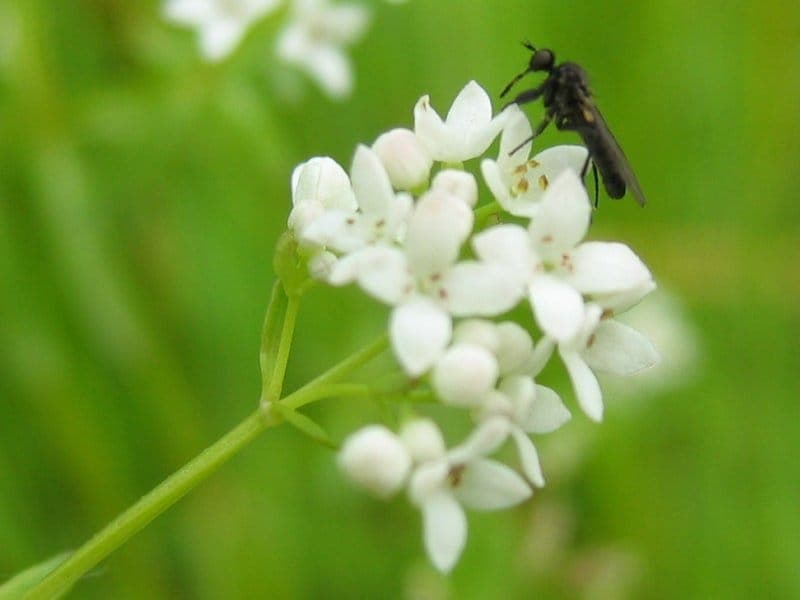
Kristian Peters -- Fabelfroh 08:10, 20 September 2006 (UTC) / CC BY-SA 3.0, via Wikimedia Commons
Common marsh bedstraw: complete guide
Galium palustre
Want to see Common marsh bedstraw: complete guide in your garden?
1 minute, no credit card
Overview
Galium palustre, commonly known as common marsh bedstraw, is a resilient perennial that thrives in consistently moist environments. Native across much of Europe and parts of North Africa, it's a quiet standout in wildlife gardens and boggy areas where other plants struggle. Unlike its clingy cousin, cleavers (Galium aparine), marsh bedstraw behaves itself - forming neat clumps without becoming invasive. It's a plant that fits naturally into ecological planting schemes, especially where water retention is high.
On gardenworld.app, you can design a wetland-inspired garden layout that highlights moisture-loving species like common marsh bedstraw, ensuring proper spacing and companion choices.
Appearance & bloom cycle
This plant grows 40–60 cm tall, with slender, four-angled stems that branch lightly at the top. The leaves grow in whorls of 6–8, are narrow and bright green, and have a soft, almost silky feel. From June to August, it produces small, star-shaped white flowers in loose terminal clusters. Each flower is only 3–5 mm wide but appears in abundance, creating a delicate, airy effect. The blooms have a faint, honey-like scent, especially noticeable in the evening, attracting hoverflies, beetles, and small bees.
After flowering, the plant develops small, bristly fruits, but these don't spread aggressively. Over time, it forms low, spreading patches via shallow rhizomes, slowly expanding by 5–10 cm per year - perfect for soft edging or filling gaps in damp borders.
Ideal location
Choose full sun to partial shade. In full sun, flowering is more prolific, but in dappled shade (like under open-canopy trees), it still performs well as long as soil moisture is consistent. Avoid hot, dry spots - this plant will wilt quickly if left to bake in afternoon sun without moisture.
It's ideal for planting near pond margins, in rain gardens, or in low-lying areas that collect water after rain. Think of wet meadows or damp woodland edges - that's its natural habitat. On gardenworld.app, you can explore plant combinations that mimic these native ecosystems.
Soil requirements
Marsh bedstraw demands moist to wet, humus-rich soil. It tolerates clay and silt but prefers a slightly acidic to neutral pH (5.5–7.0). Sandy soils are unsuitable unless heavily amended with compost or leaf mould to improve water retention. A 5 cm layer of organic mulch in spring helps maintain consistent moisture and suppresses competing weeds.
Avoid chalky or drought-prone soils - they'll stress the plant and lead to poor growth.
Free design
Want to see Common marsh bedstraw: complete guide in your garden? Make a free design now.
Watering
Keep the soil consistently damp, especially during the first growing season. Once established, it's more resilient but still requires supplemental watering during dry spells. Deep, infrequent watering is better than daily sprinkling - it encourages deeper root development. In a rain garden or near a water feature, natural runoff often provides enough moisture.
Never let the plant sit in stagnant water for prolonged periods - while it likes wet feet, it doesn't tolerate waterlogged roots.
Pruning
Pruning isn't essential, but cutting back old growth in late winter or early spring (March) promotes fresh, tidy foliage. If the plant looks tired after flowering, trim the stems by a third to encourage bushier regrowth. Use clean, sharp shears and cut just above a leaf node. No need to deadhead - the spent flowers don't look untidy and may provide minor food sources for insects.
Maintenance calendar
- January–February: Dormant period. Check mulch layer; add if needed for root protection.
- March: Cut back last year's stems. Apply compost around the base.
- April–May: New growth emerges. Watch for slugs if foliage is slow to develop.
- June–August: Peak bloom. Monitor soil moisture, especially in sunny spots.
- September–October: Growth slows. Leave seed heads for winter interest or cut back for neatness.
- November–December: Dies back to ground level. No action needed.
Winter hardiness
Hardy in USDA zones 5–9. It survives temperatures down to -23°C when protected by mulch or leaf litter. The top growth dies in winter, but the roots remain alive. In colder zones, a light mulch of straw or compost in late autumn helps prevent frost heave.
Companion plants
Pair with moisture-loving species like tussock sedge (Carex elata 'Aurea'), marsh marigold (Caltha palustris), or purple loosestrife (Lythrum salicaria). For contrast, use bronze fennel (Foeniculum vulgare 'Purpureum') or dark-leaved bugle (Ajuga reptans 'Brunswick'). In pond edges, combine with water mint (Mentha aquatica) or yellow flag iris (Iris pseudacorus).
Avoid drought-tolerant plants like lavender, sedum, or yarrow - they'll suffer in the same wet conditions that marsh bedstraw loves.
Closing
Common marsh bedstraw is a low-key but invaluable plant for wet areas. It's not flashy, but it supports biodiversity, fills gaps gracefully, and asks for little in return. It's a reliable performer in naturalistic planting schemes and a must-have for rain gardens. You can find it at garden centres like those under the Garden Centres Group, or order online from native plant suppliers. Plant in autumn or spring, space 30–40 cm apart, and enjoy its quiet beauty year after year.
Want to see Common marsh bedstraw: complete guide in your garden? Make a free design now.
Upload a photo, pick a style, and get a photorealistic design with plant list in under a minute.
No credit card required


Similar plants
Oregon bedstraw: complete guide
Galium oreganum
Everything about Oregon bedstraw (Galium oreganum): shade planting, soil requirements, care and use as a low groundcover in woodland and shade gardens.
Awned woodruff: complete guide
Asperula aristata
Full guide to growing Asperula aristata, the awned woodruff: sunny location, alkaline soil, minimal watering, and companion plants for dry or rock gardens.
Purple woodruff: complete guide
Asperula purpurea
Full guide to Asperula purpurea, purple woodruff: sunny sites, chalky soil, watering, pruning, winter hardiness and companion plants for rock and dry gardens.