
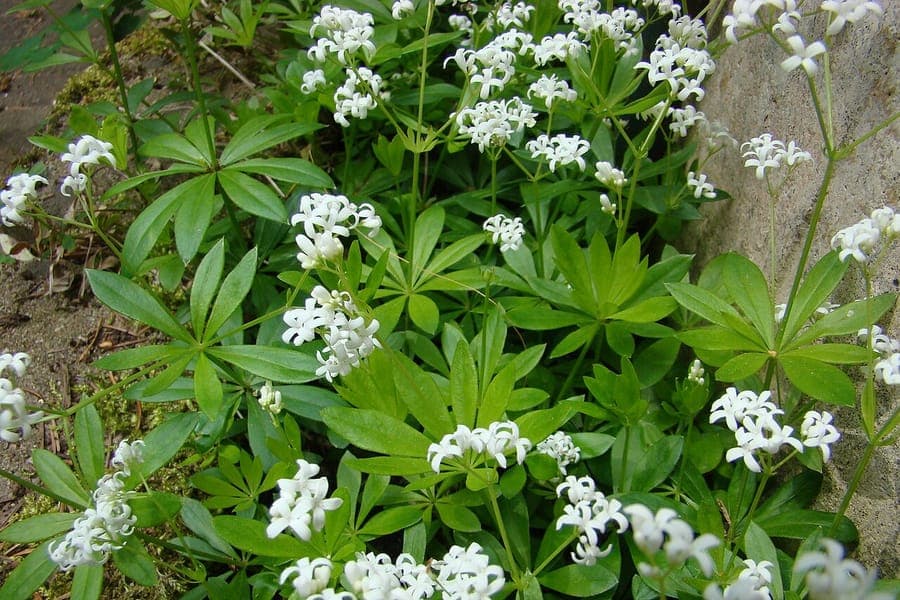
Hajotthu 13:34, 11. Mai 2009 (CEST) / CC BY-SA 3.0, via Wikimedia Commons
Woodruff: complete guide
Galium odoratum
Want to see Woodruff: complete guide in your garden?
1 minute, no credit card
Overview
Woodruff, or Galium odoratum, is a quiet powerhouse in the shade garden. Native to woodlands across central and western Europe, this perennial herb spreads slowly but steadily, forming a dense, fragrant carpet beneath trees and shrubs. It's a favorite among gardeners who value low-maintenance beauty and natural aesthetics. At gardenworld.app, you can design a woodland-style garden that integrates woodruff seamlessly with native ferns and spring bulbs.
Thriving in conditions where many plants fail, it handles the dry shade under beech or maple trees better than most ground covers. Its creeping rhizomes stabilize soil and suppress weeds without choking out neighbors. With its attractive foliage and subtle spring bloom, woodruff brings life to overlooked corners of the garden. It's a reliable performer in zones 4 to 8, and once established, it asks for little in return.
Appearance & bloom cycle
Woodruff grows 20 to 30 cm tall, with slender, square stems rising vertically from the base. The leaves grow in whorls of 6 to 8, arranged in a star pattern that gives the plant an airy, delicate structure. In May, small white flowers bloom in terminal clusters, each about 3 to 5 mm wide, forming a soft, starry display that lasts through June.
The flowers attract pollinators like hoverflies and small bees, contributing subtly to garden biodiversity. After flowering, the plant sets small, bristly seeds that cling to passing animals or clothing, aiding natural dispersal. One of its most distinctive traits is the sweet hay-like scent of its dried foliage, often compared to vanilla or freshly cut grass-perfect for natural potpourri or dried arrangements.
Ideal location
Woodruff prefers partial to full shade, ideally with a light rating of 3 out of 10. It thrives under deciduous trees where it receives dappled sunlight in spring before the canopy closes. Avoid hot, south-facing exposures or full sun, which can scorch leaves and dry out the root zone too quickly.
Ideal spots include north-facing borders, woodland edges, or beneath dense shrubs. It works especially well in naturalistic plantings, combining beautifully with hostas, hellebores, and ferns. At gardenworld.app, you can simulate how woodruff fills in shaded areas over time, helping you plan spacing and companion planting with precision.
Soil requirements
This plant loves moist, humus-rich, well-draining soil with a pH between 5.5 and 6.5. It performs poorly in sandy or heavily compacted clay soils unless amended. Incorporate generous amounts of compost or well-rotted leaf litter when planting to boost organic content.
Mulching with shredded leaves or bark helps retain moisture and slowly enriches the soil. Avoid lime-heavy soils, as they raise pH and hinder growth. Woodruff dislikes drought, so soil that retains some moisture-without becoming waterlogged-is key. If your garden has alkaline soil, consider growing it in raised beds with acidic compost.
Free design
Want to see Woodruff: complete guide in your garden? Make a free design now.
Watering
Consistent moisture is essential, especially during the first two growing seasons. Once established, woodruff tolerates short dry spells but performs best with regular watering during prolonged dry periods. Water early in the morning or late in the evening using a soaker hose or watering can.
Avoid overhead spraying, as wet foliage can encourage fungal issues. Drought stress shows as browning leaf edges and stunted growth. In hotter zones (7–8), monitor soil moisture weekly during summer. A drip irrigation system set to run weekly for 20 minutes is ideal for larger plantings.
Pruning
Woodruff needs little to no pruning. After flowering in June, you may cut back the stems to ground level to tidy the bed and encourage fresh foliage. This also prevents excessive self-seeding in confined spaces.
In autumn, you can leave the foliage to decay naturally, providing winter mulch and habitat for beneficial insects. In early spring (March), remove any remaining debris before new shoots emerge. Use hand shears-avoid gas-powered tools that might damage shallow rhizomes.
Maintenance calendar
January: Dormant; no action needed February: Leave old foliage for insulation March: Clear debris, apply compost April: Monitor new growth, maintain moisture May: Blooming period; avoid disturbing soil June: Trim after flowering; collect seeds if desired July: Watch for drought; water if needed August: Observe spread; thin if overcrowded September: Stop fertilizing; reduce watering October: Allow leaf litter to accumulate November: No maintenance December: Dormant; prepare for winter
Winter hardiness
Woodruff is hardy in USDA zones 4 to 8, surviving temperatures as low as -30°C. Top growth dies back in fall, but rhizomes remain alive underground, resprouting in March or April. In colder regions, a light layer of leaf mulch adds protection without smothering new shoots.
It's well adapted to temperate climates with seasonal snow cover, which insulates the crown naturally. Avoid heavy winter foot traffic over the planting area to prevent soil compaction.
Companion plants
Pair woodruff with hostas, astilbes, ferns, and hellebores for a lush, layered look. It also grows well beneath rhododendrons and cherry laurels, where shade and moisture levels are ideal. Avoid aggressive spreaders like mint or bishop's weed that could dominate.
For a cohesive design, use gardenworld.app to preview how woodruff blends with bulbs like snowdrops or bluebells in early spring. The combination creates a dynamic, seasonal display with minimal upkeep.
Closing
Woodruff is a quiet achiever in the shade garden-fragrant, attractive, and resilient. It thrives where other plants struggle and brings elegance to neglected areas. With proper site selection and initial care, it becomes self-sustaining within two to three years.
Plant it under trees, along pathways, or in naturalized beds. Source healthy stock from garden centres like B&Q, Wyevale, or local independents. Once established, it asks for little but gives much-making it a must-have for thoughtful gardeners.
Want to see Woodruff: complete guide in your garden? Make a free design now.
Upload a photo, pick a style, and get a photorealistic design with plant list in under a minute.
No credit card required


Similar plants
Oregon bedstraw: complete guide
Galium oreganum
Everything about Oregon bedstraw (Galium oreganum): shade planting, soil requirements, care and use as a low groundcover in woodland and shade gardens.
Awned woodruff: complete guide
Asperula aristata
Full guide to growing Asperula aristata, the awned woodruff: sunny location, alkaline soil, minimal watering, and companion plants for dry or rock gardens.
Purple woodruff: complete guide
Asperula purpurea
Full guide to Asperula purpurea, purple woodruff: sunny sites, chalky soil, watering, pruning, winter hardiness and companion plants for rock and dry gardens.