
Wikimedia Commons / CC BY-SA 3.0, via Wikimedia Commons
Great Marsh-bedstraw: complete guide
Galium elongatum
Want to see Great Marsh-bedstraw: complete guide in your garden?
1 minute, no credit card
Overview
Galium elongatum, commonly known as Great Marsh-bedstraw or Hohes Labkraut, is an elegant moisture-loving plant from the Rubiaceae family. This slender perennial thrives throughout Europe from the Mediterranean region to northwest Iran and the Himalaya mountains. With its long, slender forms and delicate white flowers, it makes a perfect addition to pond and stream edges, water gardens and damp lowland planting schemes.
Appearance and bloom
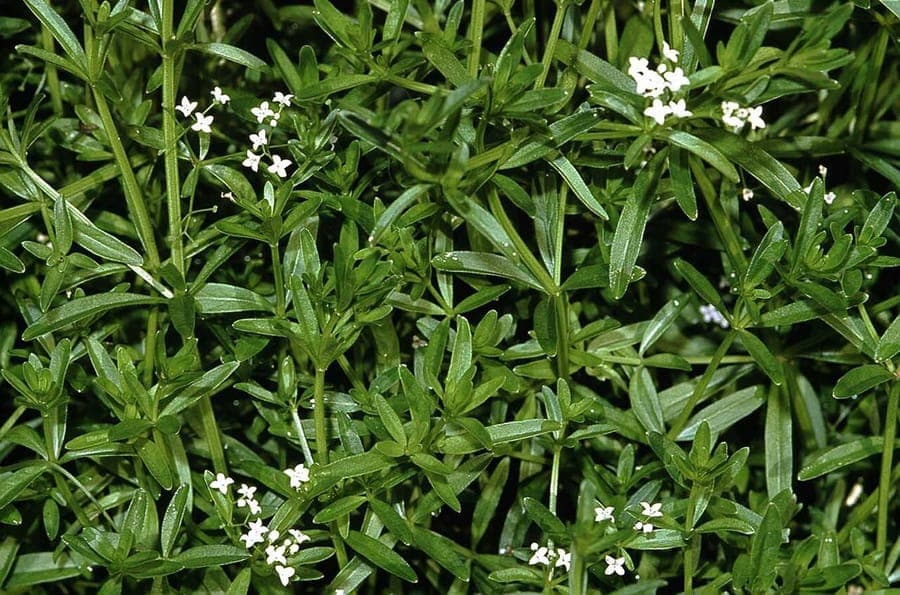
Galium elongatum grows to approximately 50-80 cm tall with a slender, upright growth habit. The plant has very fine, narrow leaves in whorls around the stems - characteristic of the genus Galium. The name 'elongatum' refers to its elongated growth pattern. From May through August, the plant produces numerous small white flowers in compound inflorescences. These blooms attract pollinator insects and aquatic birds utilize the foliage. The seed capsules disperse via water and wind currents.
Ideal location
Great Marsh-bedstraw grows best in part-shaded to sunny locations with moist soils. The plant is perfect for pond and stream edges, in water gardens, along ditches and in damp meadows. The plant can tolerate full sun provided soil moisture remains constant. Part shade is ideal if the soil stays moist.
Soil quality
The plant prefers rich, moist soils with a pH of 5.5-6.5 (slightly acidic to neutral). It grows best in clayey, nutrient-rich soils (nutrient score 5 on scale 1-10). Adding abundant organic matter such as compost or peat improves water-holding capacity. The plant can grow in wet soils and tolerates waterlogging better than most bedstraw species.
Watering needs
As a true marsh plant, Galium elongatum prefers consistently moist conditions. The plant should receive regular water and grows best in soils that remain slightly moist year-round. In water gardens, the plant can be grown up to 5-10 cm below the water surface. In regular gardens, water regularly and add organic matter at the base to retain moisture.
Free design
Want to see Great Marsh-bedstraw: complete guide in your garden? Make a free design now.
Pruning
Great Marsh-bedstraw requires minimal pruning. The plant grows naturally in elegant, upright forms. After flowering in August, faded flower heads can be removed for a tidier appearance, but this is optional. In early spring, dead stems can be removed. Heavy pruning can damage the plant and is unnecessary.
Maintenance calendar
- April-May: Check water level, water if dry
- May-August: Flowering period; remove faded flowers
- August-September: Seed ripening; allow seeds to mature
- October-March: Winter dormancy; maintain soil moisture
Winter hardiness
Galium elongatum is fully winter hardy throughout Europe. The plant grows wild from France to Bulgaria, so it tolerates severe winters easily (hardy to -20°C and below). In very wet winter conditions, drainage can be improved, although the plant tolerates moisture well.
Companion plants
The elegant slender structure of Galium elongatum combines well with other moisture-loving plants:
- Lythrum (loosestrife) - together create water garden beauty
- Mentha (water mint) - similar moist habitat
- Carex (sedge) - together create marsh aesthetics
- Iris versicolor (blue iris) - color contrast and texture
- Filipendula (meadowsweet) - together form moist landscapes
Conclusion
Great Marsh-bedstraw offers elegant beauty for the water garden. This is a perfect plant for gardeners with water gardens or wet soils. Its preference for moisture and nutrient-rich soils makes it ideal for pond edges and marsh combinations. Try Galium elongatum in your water garden and discover the aquatic elegance it brings. Available at Intratuin and Gamma in the Netherlands. Visit gardenworld.app for more plant combinations and design inspiration.
Want to see Great Marsh-bedstraw: complete guide in your garden? Make a free design now.
Upload a photo, pick a style, and get a photorealistic design with plant list in under a minute.
No credit card required


Similar plants
Oregon bedstraw: complete guide
Galium oreganum
Everything about Oregon bedstraw (Galium oreganum): shade planting, soil requirements, care and use as a low groundcover in woodland and shade gardens.
Awned woodruff: complete guide
Asperula aristata
Full guide to growing Asperula aristata, the awned woodruff: sunny location, alkaline soil, minimal watering, and companion plants for dry or rock gardens.
Purple woodruff: complete guide
Asperula purpurea
Full guide to Asperula purpurea, purple woodruff: sunny sites, chalky soil, watering, pruning, winter hardiness and companion plants for rock and dry gardens.