
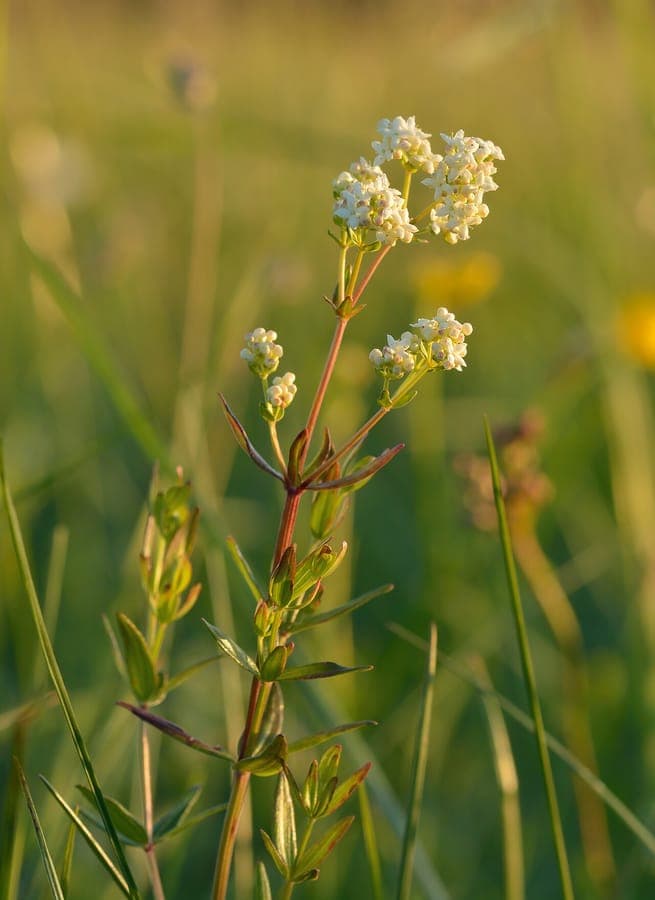
Iifar / CC BY-SA 3.0, via Wikimedia Commons
Northern bedstraw: complete guide
Galium boreale
Want to see Northern bedstraw: complete guide in your garden?
1 minute, no credit card
Overview
Northern bedstraw (Galium boreale) is a graceful, clump-forming perennial native to northern Europe, parts of Asia, and high-altitude regions like the Alps and Scandinavia. It's a quiet achiever in the garden-never flashy, but deeply reliable. Standing 30 to 60 cm tall, it brings airy elegance to borders, woodland edges, and shaded wildflower meadows. As a member of the Rubiaceae family, it shares traits with its more common cousin, cleavers, but with a refined, upright habit and cleaner look.
On gardenworld.app, you can design a planting scheme that highlights Northern bedstraw's subtle strengths, especially in native plantings or low-maintenance naturalistic gardens. Its presence across cold regions-from Alaska to the Baltics-means it's built to handle tough conditions, including USDA hardiness zones 3 to 7.
Appearance & bloom cycle
Northern bedstraw features narrow, lance-shaped leaves arranged in whorls of 6–8 around square stems. The foliage stays fresh and bright green all season, giving the plant a tidy, vertical structure. From June to August, small, star-shaped white flowers appear in loose cymes at the stem tips. Each flower is about 5 mm across, with a faint honey-like scent that attracts small pollinators.
After flowering, the plant forms tiny, dry fruits that cling to fur and fabric, aiding natural dispersal. It spreads slowly but not aggressively, making it a well-behaved choice for controlled naturalization. The plant dies back completely in autumn, leaving minimal debris.
Ideal location
This species thrives in light shade to partial sun. It's perfect for planting under deciduous trees, along woodland borders, or in moist perennial beds. In full sun, it needs consistently moist soil to prevent leaf scorch. In deep shade, flowering diminishes, though the plant remains green.
Avoid hot, south-facing spots with reflected heat. Northern bedstraw prefers cooler microclimates, especially in USDA zones 6 and 7. If you're unsure about light levels in your garden, use gardenworld.app's sunlight tracker tool to map daily exposure and find the best spot.
Soil requirements
Northern bedstraw likes fertile, humus-rich soil that's consistently moist but well-drained. A pH between 5.5 and 7.0 is ideal. Heavy clay soils should be amended with compost or leaf mould to improve structure and drainage. Sandy soils need organic matter to retain moisture.
Avoid overly rich or nitrogen-heavy soils, which can cause leggy growth and flopping. A light top-dressing of compost in spring is sufficient. Steer clear of chemical fertilizers-this is a plant that thrives on balance, not force-feeding.
Free design
Want to see Northern bedstraw: complete guide in your garden? Make a free design now.
Watering
Keep soil evenly moist, especially during the first growing season. Young plants need deep watering once a week if rainfall is less than 2.5 cm. Established plants are somewhat drought-tolerant but perform best with steady moisture.
Use rainwater when possible, as chlorinated tap water can stress the roots. Water at the base to keep foliage dry and reduce fungal risk. A 3–5 cm layer of organic mulch (like leaf litter or straw) helps retain moisture and suppresses weeds.
Pruning
Pruning isn't necessary, but you can cut back spent stems in late summer or early autumn to maintain a neat appearance. Leave some seed heads through winter to support overwintering insects and provide visual interest.
If you want to limit self-seeding, remove flower stalks before seeds mature. The stems are sturdy but snap easily, so use sharp pruners. Cuttings can be divided and replanted in early spring.
Maintenance calendar
- January: Check root crowns for heaving in freeze-thaw cycles
- February: No action needed
- March: Watch for new shoots; divide if needed
- April: Apply a thin compost layer around base
- May: Monitor for dry spells; water if needed
- June: Bloom begins; inspect for aphids
- July: Peak bloom; maintain soil moisture
- August: Cut back faded stems or leave for wildlife
- September: Allow seed to ripen; avoid heavy disturbance
- October: Leave plant debris for insect habitat
- November: Add light mulch in exposed areas
- December: Protect new plantings with pine boughs
Winter hardiness
Northern bedstraw is hardy in USDA zones 3–7 (-40°C). It dies back in fall and re-emerges reliably in spring. No winter protection is required, though young plants in windy spots benefit from a light mulch.
In milder zones, new growth may appear as early as March. The plant handles snow cover well and actually benefits from the insulation it provides.
Companion plants
Pair Northern bedstraw with other shade-tolerant perennials like Athyrium ferns, Tiarella cordifolia, or Epimedium spp. It also complements wild grasses such as Carex divulsa or Molinia caerulea.
For contrast, plant with deep green Hostas or variegated Solomon's seal. Avoid aggressive spreaders like mint or Japanese knotweed, which can overwhelm its slow, steady presence.
Closing
Northern bedstraw won't grab attention, but it earns your respect through resilience and quiet beauty. It's a great choice for gardeners who value ecological balance and low-input gardening. No drama, no fuss-just steady green presence and delicate blooms.
You can find Northern bedstraw at garden centres across the UK and North America, especially those specializing in native plants. Look for locally grown stock to support regional ecotypes. On gardenworld.app, explore design templates that integrate Northern bedstraw into woodland edge or pollinator-friendly schemes for a cohesive, sustainable garden.
Want to see Northern bedstraw: complete guide in your garden? Make a free design now.
Upload a photo, pick a style, and get a photorealistic design with plant list in under a minute.
No credit card required


Similar plants
Oregon bedstraw: complete guide
Galium oreganum
Everything about Oregon bedstraw (Galium oreganum): shade planting, soil requirements, care and use as a low groundcover in woodland and shade gardens.
Awned woodruff: complete guide
Asperula aristata
Full guide to growing Asperula aristata, the awned woodruff: sunny location, alkaline soil, minimal watering, and companion plants for dry or rock gardens.
Purple woodruff: complete guide
Asperula purpurea
Full guide to Asperula purpurea, purple woodruff: sunny sites, chalky soil, watering, pruning, winter hardiness and companion plants for rock and dry gardens.