
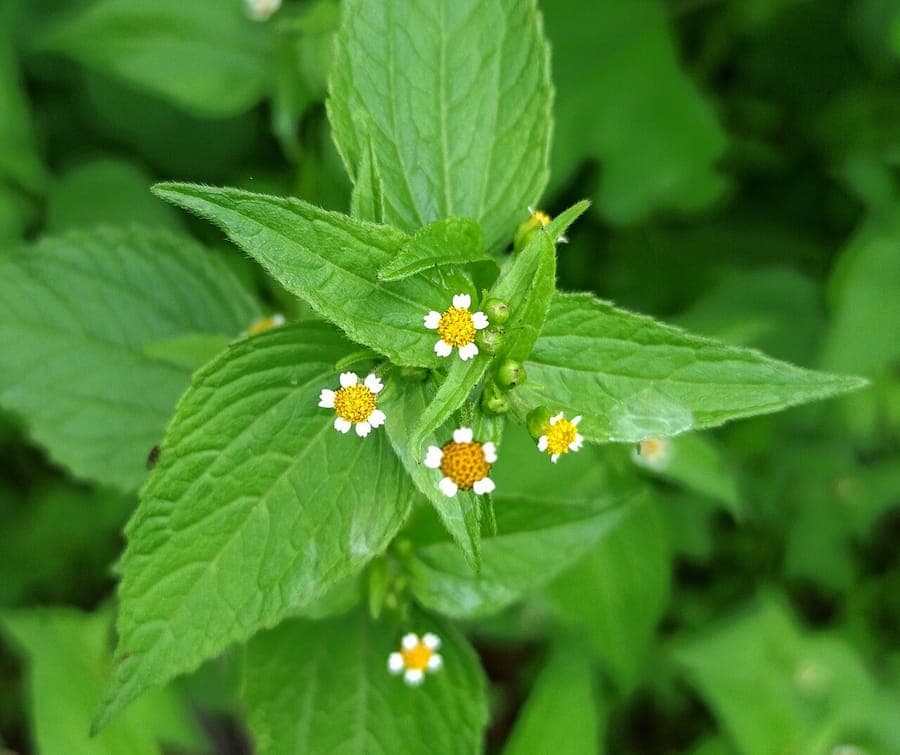
Juan Carlos Fonseca Mata / CC BY-SA 4.0, via Wikimedia Commons
Dumb-nettle: complete guide
Galinsoga parviflora
Want to see Dumb-nettle: complete guide in your garden?
1 minute, no credit card
Overview
Galinsoga parviflora, commonly known as dumb-nettle, is an annual herbaceous plant from the Asteraceae family. Native to South America-from northern Argentina through Bolivia, Brazil, Chile, and Colombia-it has spread globally as a resilient colonizer. In the UK and North America, it's often dismissed as a weed, but with mindful placement, it can serve as a useful filler in cottage-style borders or ecological gardens. It grows quickly, reaches 30–60 cm in height, and blooms from June until the first hard frost. On gardenworld.app you can design a planting scheme that integrates self-seeders like dumb-nettle into seasonal rotations.
Appearance & bloom cycle
Dumb-nettle has an upright, branching habit with slender stems and opposite, toothed leaves that are slightly rough to the touch. The leaves are ovate with pointed tips and a pronounced midrib. Flowers are small-5 to 8 mm across-with five white ray florets surrounding a yellow central disc. Blooming begins in early summer and continues until November, especially in USDA zones 7–9. The plant sets seed prolifically and often reappears in the same spot year after year. While the flowers aren't showy, they attract hoverflies and other beneficial insects, making it a quiet contributor to garden biodiversity.
Ideal location
With a light requirement of 7/10, dumb-nettle performs best in full sun to partial shade. It thrives with at least 5–6 hours of direct sunlight daily. In deep shade, it becomes leggy and produces fewer flowers. Ideal spots include open borders, vegetable plot edges, or near compost heaps where soil is disturbed. It's commonly found in urban gardens and allotments, often appearing spontaneously. It's not typically sold in garden centres, but can be easily grown from seed saved in late summer. In colder zones like 6, it behaves as a true annual and doesn't survive winter.
Soil requirements
This species prefers fertile, well-drained soil with a pH between 5.5 and 6.5. It grows best in loamy or sandy-loam soils rich in organic matter. Avoid waterlogged conditions-while it likes consistent moisture, it won't tolerate standing water. In heavy clay, amend with compost or grit to improve drainage. It's notably adaptable and can grow in poor or compacted soils, though growth will be slower. For intentional planting, sow seeds directly in early May after the last frost, spacing seedlings 15–20 cm apart.
Free design
Want to see Dumb-nettle: complete guide in your garden? Make a free design now.
Watering
Keep the soil evenly moist, especially during dry spells in June and July. Young plants are sensitive to drought and may wilt quickly without water. Once established, they're moderately drought-tolerant but bloom best with regular moisture. Use mulch to retain soil moisture and suppress competing weeds. Water at the base to avoid wetting foliage, which reduces the risk of powdery mildew and fungal issues.
Pruning
Pruning isn't required, but pinching back the tips at 20–25 cm encourages bushier growth and delays flowering slightly. This results in a denser plant with more flowers later in the season. To control self-seeding, deadhead spent blooms before seeds mature. Be cautious-stems are fragile and break easily. If managing as a volunteer, thin seedlings early to prevent overcrowding.
Maintenance calendar
- Jan: Dormant, no action needed
- Feb: Dormant
- Mar: Prepare soil if sowing early
- Apr: Sow seeds indoors or wait for natural germination
- May: Sow outdoors after frost, thin to 15–20 cm spacing
- Jun: Begin flowering, pinch tips for bushiness
- Jul: Maintain moisture, monitor for pests
- Aug: Continuous bloom, deadhead if limiting spread
- Sep: Allow some seed heads to mature for next year
- Oct: Bloom tapers off, observe reseeding
- Nov: Plant dies after first frost
- Dec: Clear debris, assess for mulching
Winter hardiness
Dumb-nettle is not winter-hardy and dies completely after the first hard frost (below 0°C). However, its seeds remain viable in the soil seed bank and germinate when soil temperatures exceed 10°C in spring. In milder climates (USDA zones 8–9), it may persist longer, but still behaves as an annual. To ensure next year's plants, collect and store dry seeds in a cool, dark place.
Companion plants
Due to its modest size and airy structure, dumb-nettle works well as a mid-layer filler. Pair it with taller perennials like Helenium, Monarda, or tall Phlox. It also complements herbs such as dill or chives in edible gardens. Avoid pairing with slow-establishing or delicate seedlings, as it can outcompete them. Its self-seeding nature means it's best used in dynamic, low-maintenance areas. On gardenworld.app you can map out seasonal companions that balance fast and slow growers.
Closing
Dumb-nettle isn't a headline plant, but it's a resilient, low-effort contributor to a lively garden ecosystem. It fills gaps quickly, supports pollinators, and adds subtle texture. While often overlooked or weeded out, it deserves a second look for gardeners who embrace spontaneity and natural cycles. Though not sold at most garden centres, it's easy to grow from seed or welcome as a volunteer. With a little management, it can be a reliable, self-sustaining element in your planting design.
Want to see Dumb-nettle: complete guide in your garden? Make a free design now.
Upload a photo, pick a style, and get a photorealistic design with plant list in under a minute.
No credit card required


Similar plants
Calendula stellata: complete guide
Calendula stellata
Complete guide to Calendula stellata, the star-flowered marigold from Sicily: location, soil, watering and companion planting tips.
Korean chrysanthemum: complete guide
Chrysanthemum x rubellum
Chrysanthemum x rubellum is a hardy autumn perennial with single pink to copper flowers from August to November. Care and combinations.
Helianthus divaricatus: complete guide
Helianthus divaricatus
Helianthus divaricatus is a North American woodland sunflower with yellow summer blooms, ideal for naturalistic borders and shady edges.