
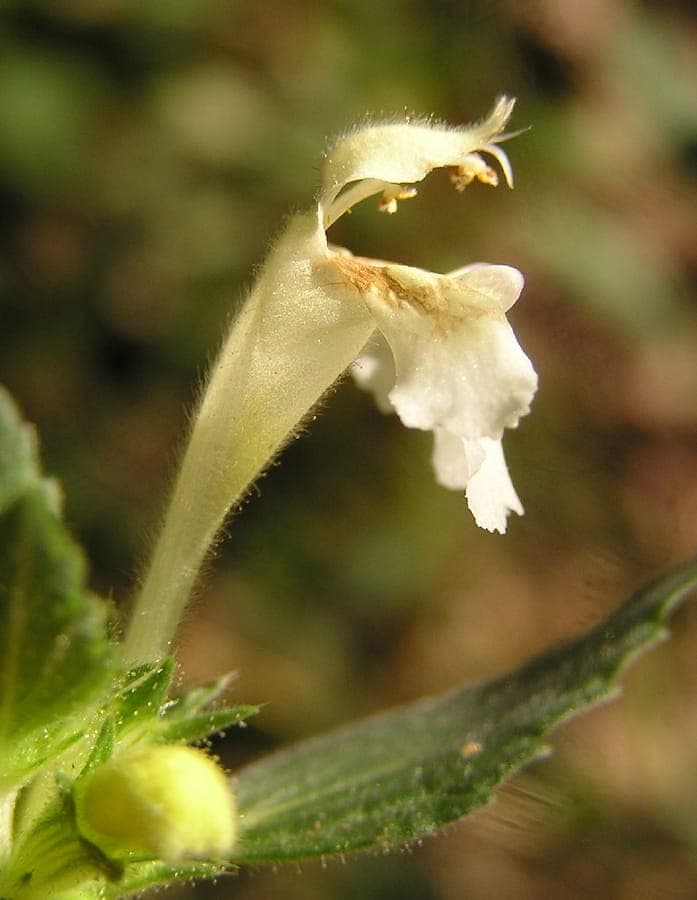
Michael Becker / CC BY-SA 3.0, via Wikimedia Commons
Downy hemp-nettle: complete guide
Galeopsis segetum
Want to see Downy hemp-nettle: complete guide in your garden?
1 minute, no credit card
Overview
Downy hemp-nettle (Galeopsis segetum) is an annual herb in the Lamiaceae family, commonly found along field margins, roadside verges, and disturbed soils. While often dismissed as a weed, this native plant plays a valuable role in supporting pollinators and increasing garden biodiversity. It thrives in the UK, Belgium, and across much of Western Europe, making it well-suited to temperate garden conditions. As a fast-growing species, it completes its life cycle within a single season, germinating in spring, flowering mid-summer, and setting seed by autumn.
On gardenworld.app, you can design a garden layout that integrates self-seeding plants like downy hemp-nettle without letting them dominate. The app helps balance wild species with cultivated plants, so your garden feels natural yet manageable.
Appearance & bloom cycle
This plant grows 30–60 cm tall with square, hairy stems typical of the mint family. The leaves are opposite, lance-shaped, and coarsely toothed, resembling true hemp – hence the name. From July to September, pale yellow, two-lipped flowers with purple spotting appear in the leaf axils. Each flower lasts a few days, but the plant produces them continuously over several weeks.
Flowering peaks in mid-summer when bees and bumblebees are active. The flowers are hermaphroditic and rely on insect pollination. After blooming, small nutlets form and disperse by wind or soil contact. The plant dies back completely by late autumn, leaving seed to germinate the following spring.
Ideal location
Choose a spot with partial shade to light sun. Full sun can work if the soil stays reliably moist, but the plant performs best with afternoon shade, especially in hot summers. Ideal locations include edges of shrub borders, beneath light-canopy trees, or near compost areas where humidity remains higher.
Downy hemp-nettle fits naturally into cottage gardens or wildlife-friendly schemes. On gardenworld.app, you can simulate how light levels and plant density affect species like this. The platform helps you place self-seeding annuals where they'll thrive without interfering with more structured plantings.
Soil requirements
It prefers fertile, moist loam or clay-loam soils with good organic content. The pH range is flexible, from slightly acidic to neutral (5.5–7.5). Avoid dry, sandy soils unless regularly irrigated. While adaptable, it struggles in compacted or waterlogged ground.
Do not add synthetic fertilizers. This plant thrives in moderately fertile conditions and may become invasive in overly enriched soils. If planting manually, loosen the top 10–15 cm of soil and remove competing weeds.
Free design
Want to see Downy hemp-nettle: complete guide in your garden? Make a free design now.
Watering
Once established, downy hemp-nettle requires little supplemental watering in average UK rainfall conditions. During prolonged dry spells in May and June, however, give young plants a weekly drink of about 5 litres per square metre. Use a watering can with a rose attachment to avoid disturbing the soil.
Overwatering can lead to root rot, especially on heavy clays. Ensure good drainage by mixing in grit or compost if the soil is dense. Mulching with leaf litter helps retain moisture without smothering emerging seedlings.
Pruning
No pruning is needed. As an annual, it completes its lifecycle each year. You may thin seedlings if they crowd out desired plants, especially in formal beds or pathways. Wear gloves when handling – the fine hairs on stems and leaves can irritate sensitive skin.
Leave some plants to set seed if you want them to return next year. In wildlife gardens, allowing seeds to persist supports overwintering insects and ground-feeding birds.
Maintenance calendar
- March–April: Watch for seedlings. Clear leaf litter to improve soil contact for germination.
- May: Thin overcrowded areas. Water during dry spells.
- June: Monitor growth and moisture levels.
- July–September: Peak flowering. Observe pollinator visits.
- October: Cut back or leave dead stems for winter habitat.
- November–February: Dormant period. No action required.
Winter hardiness
As an annual, Galeopsis segetum doesn't survive winter as a mature plant, but its seeds are highly resilient. They overwinter in the soil seed bank and germinate when temperatures rise above 10°C in spring. The species is adapted to USDA zones 7b–9a and common across Western Europe, so cold tolerance isn't a concern.
Avoid thick mulch layers in late autumn if you want natural reseeding. A light covering of compost or leaf mould is sufficient.
Companion plants
Pair with other partial-shade, moisture-loving species such as foxglove (Digitalis purpurea), yellow archangel (Lamiastrum galeobdolon), or wild angelica (Angelica sylvestris). Avoid aggressive spreaders like bindweed or mint, which can overwhelm young seedlings.
In a mixed border, downy hemp-nettle adds height and texture without demanding attention. It works well in transitional zones between lawn and woodland edge.
Closing
Downy hemp-nettle isn't a typical garden centre plant, but it's a rewarding find for gardeners embracing low-input, ecologically rich spaces. It needs no feeding, minimal watering, and supports biodiversity from June to September. With a little planning, it enhances the natural rhythm of your garden.
While rarely sold in garden centres, you might spot it as a volunteer. If you want to encourage it, source seed from ethical wildflower suppliers or leave space for it to appear. Visit gardenworld.app to explore planting combinations that welcome spontaneous species like this into your design.
Want to see Downy hemp-nettle: complete guide in your garden? Make a free design now.
Upload a photo, pick a style, and get a photorealistic design with plant list in under a minute.
No credit card required


Similar plants
Apple mint (Mentha x villosa): complete guide
Mentha x villosa
Meet apple mint (Mentha x villosa): a fruity-scented kitchen herb with woolly leaves, perfect for tea and mojitos.
Salvia peyronii: complete guide
Salvia peyronii
Discover Salvia peyronii, a rare Lebanese mountain sage. Growing tips, hardiness, and companion planting for a Mediterranean gravel garden.
Bigleaf mint (Mentha x rotundifolia): complete guide
Mentha x rotundifolia
Discover bigleaf mint: cultivation, care tips, and garden uses. Learn how to grow this aromatic herb with soft, hairy leaves.