
Wikimedia Commons / CC BY-SA 3.0, via Wikimedia Commons
Downy hemp nettle: complete guide
Galeopsis pubescens
Want to see Downy hemp nettle: complete guide in your garden?
1 minute, no credit card
Overview
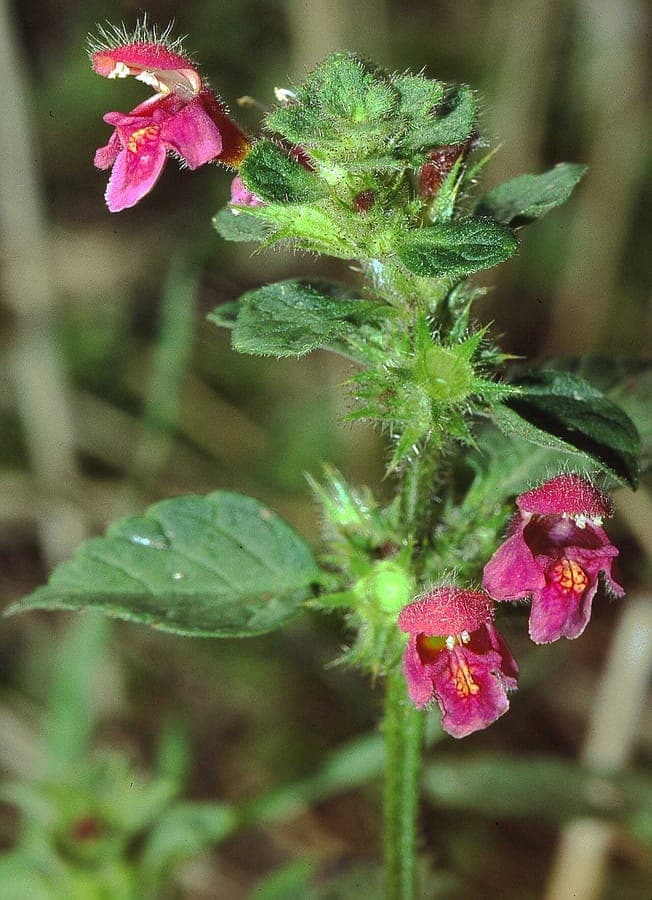
Downy hemp nettle (Galeopsis pubescens) is an annual herb in the Lamiaceae family, native to much of Central and Southern Europe. While not commonly found in UK or North American gardens, it's a natural fit for wildflower meadows, cottage-style borders, and naturalised planting schemes. Reaching 30–60 cm tall, this plant thrives in open, sunny spots and blooms from June through September. Despite its name, it's unrelated to true nettles and doesn't sting.
It's often overlooked in formal gardens, but its soft, hairy stems and two-lipped flowers make it a subtle yet charming presence. It self-seeds moderately, so it won't take over your borders but will return in suitable spots. On gardenworld.app, you can map out a garden layout that embraces natural reseeding patterns and supports spontaneous plant growth.
Appearance & bloom cycle
The plant has square, upright stems covered in fine, soft hairs - giving it a downy texture. Leaves are opposite, lance-shaped, and coarsely toothed, growing up to 6 cm long. From mid-June to late August, pale purple to white tubular flowers appear in the leaf axils along the upper stems. Each flower is about 1.5–2 cm long, with a hooded upper lip and a flared lower lip marked with darker purple spots.
These blooms are especially attractive to bumblebees, which are strong enough to pry open the flower for nectar. After pollination, small nutlets form and disperse in autumn. The plant dies back completely by early October.
Ideal location
Full sun is best - at least 6 hours of direct light per day. It can tolerate light shade, but flowering will be sparse and stems may stretch. Choose open areas with good airflow: edges of paths, disturbed soil patches, or corners of wildflower beds. Avoid dense shade or heavily competitive plantings.
Space plants 20 cm apart if sowing directly. It doesn't transplant well, so direct sowing is preferred. If starting indoors, use biodegradable pots to reduce root disturbance. Garden centres often carry similar Lamiaceae species, but G. pubescens is best sourced from specialist wildflower seed suppliers.
Soil requirements
Thrives in well-drained soils - sandy, loamy, or light clay. Avoid waterlogged areas. Prefers a pH between 6.0 and 7.5. It tolerates poor fertility and actually performs better in low-nutrient soils; rich compost can lead to leggy growth and reduced flowering.
No soil amendments needed. Ideal for neglected corners, roadside strips, or post-construction sites where soil has been disturbed. It's a pioneer species, meaning it's one of the first to colonise bare ground.
Free design
Want to see Downy hemp nettle: complete guide in your garden? Make a free design now.
Watering
Once established, downy hemp nettle is drought-tolerant. Water young seedlings only during prolonged dry spells in their first month. Check soil moisture by inserting a finger 2–3 cm deep - if dry, water at the base. Avoid overhead watering to reduce fungal risk.
Mature plants rarely need irrigation in temperate climates like USDA zones 6–8. In hotter zones (9–10), occasional watering in summer may help, but overwatering causes root rot.
Pruning
No pruning is required. The plant completes its life cycle in one season. If you want to limit self-seeding, deadhead spent flower spikes before seeds mature - around late August. Use clean snips to avoid spreading disease.
Never cut back during peak bloom (July–August) to protect pollinators. Let the last flowers go to seed to support natural reseeding.
Maintenance calendar
- March–April: Sow seeds indoors or directly when soil reaches 15°C
- May: Transplant seedlings (if started early), space 20 cm apart
- June–August: Peak bloom; monitor for drought stress
- September: Plant dies back; collect seeds or allow natural dispersal
- October–February: Dormant period; no action needed
Set seasonal reminders using the planner on gardenworld.app to stay on top of sowing and maintenance.
Winter hardiness
As an annual, Galeopsis pubescens does not survive winter. It relies on seed banks in the soil for next year's growth. Avoid deep cultivation in autumn to preserve dormant seeds. Mulching is unnecessary - in fact, a thick layer can inhibit germination.
Hardy in USDA zones 6–10 as a self-seeding annual. In colder zones, it behaves as a half-hardy annual and should be sown after frost risk has passed.
Companion plants
Pair with other light, airy wildflowers like oxeye daisy (Leucanthemum vulgare), yarrow (Achillea millefolium), and red clover (Trifolium pratense). Avoid aggressive spreaders like creeping thistle or mint, which can overwhelm young seedlings.
It works well in meadow mixes or informal borders. Combine with plants of varying heights - low daisies in front, taller stems behind. On gardenworld.app, design a layered planting plan that matches bloom times and soil needs.
Closing
Downy hemp nettle isn't a show-stopper, but it's a reliable, low-effort plant for gardeners who appreciate subtle beauty and ecological value. It asks for little and gives back in pollinator visits and natural charm. Perfect for wild corners, roadside plantings, or gardens designed to evolve over time. Skip the perfection - embrace the wild. For layout ideas that celebrate natural growth, visit gardenworld.app.
Want to see Downy hemp nettle: complete guide in your garden? Make a free design now.
Upload a photo, pick a style, and get a photorealistic design with plant list in under a minute.
No credit card required


Similar plants
Apple mint (Mentha x villosa): complete guide
Mentha x villosa
Meet apple mint (Mentha x villosa): a fruity-scented kitchen herb with woolly leaves, perfect for tea and mojitos.
Salvia peyronii: complete guide
Salvia peyronii
Discover Salvia peyronii, a rare Lebanese mountain sage. Growing tips, hardiness, and companion planting for a Mediterranean gravel garden.
Bigleaf mint (Mentha x rotundifolia): complete guide
Mentha x rotundifolia
Discover bigleaf mint: cultivation, care tips, and garden uses. Learn how to grow this aromatic herb with soft, hairy leaves.