
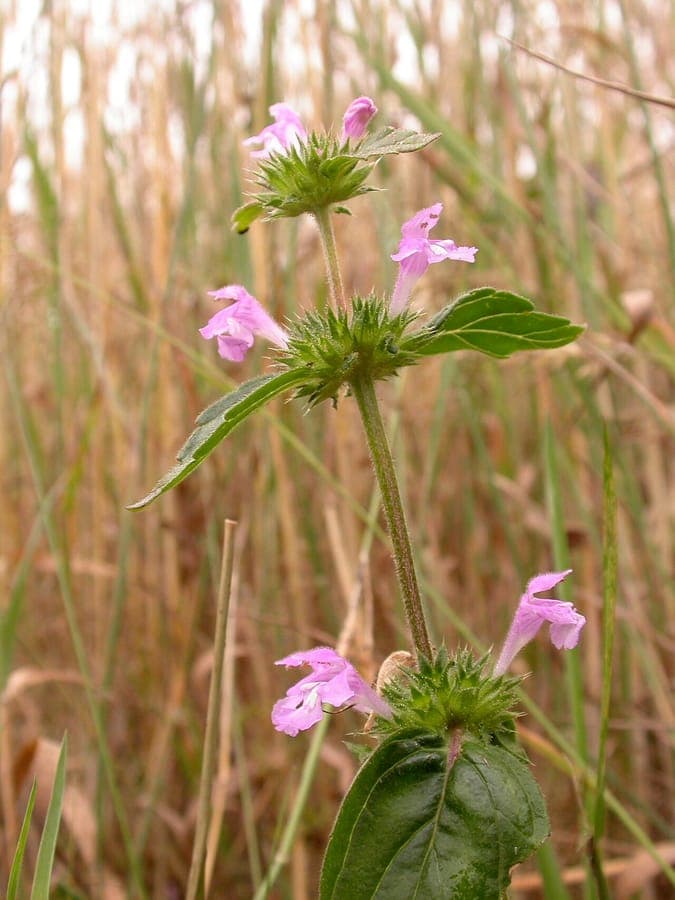
Gregor Hagedorn / CC BY-SA 3.0, via Wikimedia Commons
Hemp-nettle: complete guide
Galeopsis ladanum
Want to see Hemp-nettle: complete guide in your garden?
1 minute, no credit card
Overview
Hemp-nettle, or Galeopsis ladanum, is an annual herb in the Lamiaceae family that thrives in open, disturbed soils across Central and Eastern Europe. While often dismissed as a weed, it's a resilient and ecologically valuable plant. Native to regions like the Baltic States, Belarus, and Austria, it's increasingly appreciated in naturalistic garden designs for its late-season bloom and pollinator appeal.
This plant completes its life cycle in a single growing season, germinating in spring and flowering from July through October. It's a fast grower, reaching maturity in just 8–10 weeks. Despite its weedy reputation, it doesn't spread aggressively through roots-only by seed. If you're designing a low-maintenance, wildlife-friendly garden, Hemp-nettle deserves a spot. On gardenworld.app, you can generate a garden layout that integrates self-seeding annuals like Hemp-nettle without overcrowding your prized perennials.
Appearance & bloom cycle
Hemp-nettle grows 30 to 80 cm tall, with square, hairy stems and broad, opposite leaves that resemble hemp-hence the name. The leaves are coarsely toothed and covered in fine bristles, which can irritate sensitive skin. From July to October, it produces tubular purple flowers in clusters along the upper stem nodes. Each flower is about 1.5 cm long, with a pale lower lip marked by dark veins, acting as nectar guides for bees and hoverflies.
Flowering peaks in late summer, filling a critical gap when many other nectar sources are fading. After pollination, small nutlets form and drop to the soil, where they remain dormant until spring. The plant has a loose, upright habit, not ideal for formal beds but perfect for meadow-style plantings or wild corners of the garden.
Ideal location
Hemp-nettle loves full sun-aim for a light level of 8–10. It performs best in open, unshaded areas like field margins, dry borders, or gravel gardens. Avoid planting under trees or near tall shrubs that cast shade. It's especially effective in drought-prone zones where other plants struggle.
Because it self-seeds readily, choose a spot where its presence won't be problematic. It works well in informal designs where a little spontaneity is welcome. On gardenworld.app, you can simulate how self-sowers like Hemp-nettle interact with neighboring plants over time, helping you balance wildness with control.
Soil requirements
This plant prefers well-drained, alkaline soils with a pH between 7.5 and 8.0. It thrives in light, sandy, or calcareous loams but tolerates poor, low-nutrient conditions. Avoid rich, heavily amended soils-excess nitrogen leads to leggy growth and fewer flowers. If your soil is clay-heavy, improve drainage by mixing in sharp sand or grit.
Do not fertilize. Hemp-nettle is adapted to lean soils and will outperform in conditions where other plants falter. A thin top layer of gravel can help reduce moisture retention and mimic its natural habitat.
Free design
Want to see Hemp-nettle: complete guide in your garden? Make a free design now.
Watering
Water sparingly. Once established, it's highly drought-tolerant. Only irrigate during prolonged dry spells in the first few weeks after germination. Overwatering increases the risk of root rot and fungal diseases. In most UK and US hardiness zones (4–8), natural rainfall is sufficient.
For xeriscaping projects, this plant is a strong candidate. Just keep seedlings moist for the first 10–14 days after sowing. After that, let nature take over.
Pruning
No pruning is required. As an annual, it dies back completely after seed set. You can deadhead spent flowers to limit self-seeding, but this isn't necessary unless you're managing a tight planting scheme. Wear gloves when handling-its bristly stems can cause skin irritation.
Maintenance calendar
- March–April: Prepare soil, sow seeds directly
- May–June: Seedlings emerge; thin if overcrowded
- July–September: Peak bloom; monitor for self-seeding
- October: Flowers fade; allow seed maturation if desired
- November–February: Plant dies; leave debris for overwintering insects
Winter hardiness
Hemp-nettle is not winter-hardy-it's an annual that completes its lifecycle in one season. Frost kills the entire plant. However, seeds survive in the soil seed bank and germinate the following spring when temperatures rise above 10°C. No mulching or protection is needed.
Leaving dead stems in place provides shelter for beneficial insects like ladybugs and lacewings. This supports early-season pest control in your garden.
Companion plants
Pair Hemp-nettle with other sun-loving, drought-tolerant species such as yellow oxeye (Inula salicina), black-eyed Susan (Rudbeckia hirta), and cornflower (Centaurea cyanus). Avoid aggressive spreaders like mint or bindweed that could outcompete it.
It also blends well with ornamental grasses like blue fescue (Festuca ovina) or tufted hairgrass (Deschampsia cespitosa). Space plants 30–40 cm apart to allow airflow and prevent fungal issues.
Closing
Hemp-nettle isn't a conventional garden plant, but it's a hidden gem for ecological gardening. Its purple blooms support pollinators, its growth habit adds vertical interest, and its low demands make it ideal for challenging spots. Sow seeds in early spring directly in the ground-available at garden centres like OBI, Hornbach, Truffaut, Jardiland, or local UK independents.
If you're unsure how it'll fit in your space, check gardenworld.app for visual planting guides and compatibility suggestions tailored to your garden's light and soil conditions.
Want to see Hemp-nettle: complete guide in your garden? Make a free design now.
Upload a photo, pick a style, and get a photorealistic design with plant list in under a minute.
No credit card required


Similar plants
Apple mint (Mentha x villosa): complete guide
Mentha x villosa
Meet apple mint (Mentha x villosa): a fruity-scented kitchen herb with woolly leaves, perfect for tea and mojitos.
Salvia peyronii: complete guide
Salvia peyronii
Discover Salvia peyronii, a rare Lebanese mountain sage. Growing tips, hardiness, and companion planting for a Mediterranean gravel garden.
Bigleaf mint (Mentha x rotundifolia): complete guide
Mentha x rotundifolia
Discover bigleaf mint: cultivation, care tips, and garden uses. Learn how to grow this aromatic herb with soft, hairy leaves.