
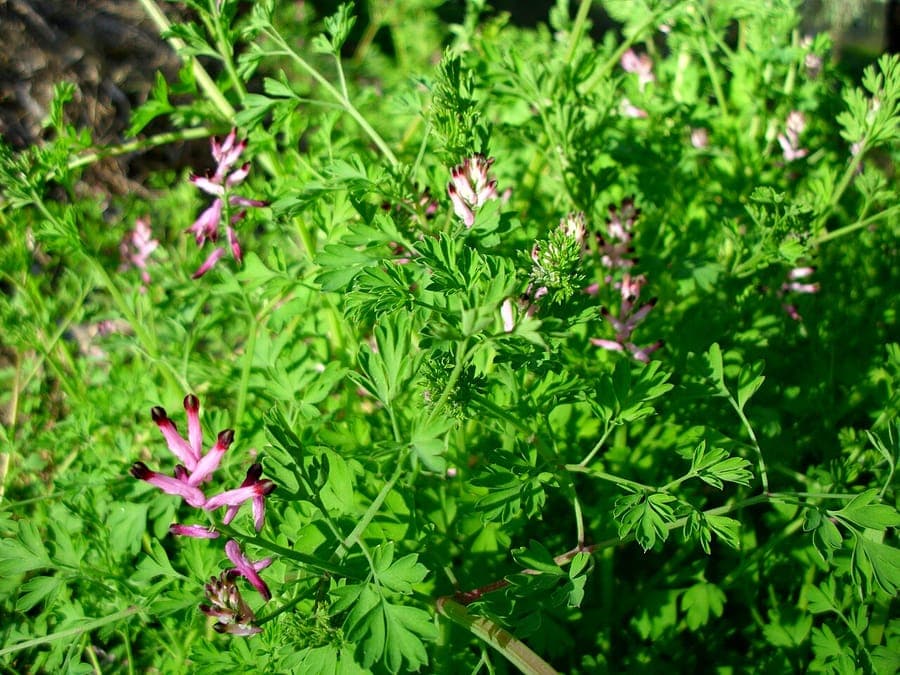
Bidgee / CC BY-SA 3.0 au, via Wikimedia Commons
Common ramping-fumitory: complete guide
Fumaria muralis
Want to see Common ramping-fumitory: complete guide in your garden?
1 minute, no credit card
Overview
Fumaria muralis, commonly known as Common ramping-fumitory, is a delicate annual herb that thrives in cracks of walls, along pathways, and in disturbed soils. Native to Western Europe and parts of North Africa, it's a familiar sight in old gardens, hedgerows, and coastal cliffs. Despite its unassuming presence, this plant brings subtle charm with its airy foliage and soft-hued blooms. It's not aggressive, but it does self-seed readily, popping up in the same spots year after year.
As a gardener, you might appreciate its ability to soften hard edges-stone steps, crumbling walls, or gravel borders-without demanding much in return. On gardenworld.app, you can design a garden layout where Fumaria muralis naturally fits into crevices and adds seasonal interest with minimal effort.
Appearance & bloom cycle
Common ramping-fumitory grows up to 30–40 cm long, with slender, branching stems that trail or scramble through surrounding vegetation. The leaves are finely divided, grey-green, and slightly hairy, giving the plant a soft, feathery texture. The flowers are the highlight: small, tubular blooms in pale pink and white, often tipped with green, arranged in loose racemes of 10–20 flowers.
Blooming begins in April and continues through August, peaking in May and June. Each flower is about 8–10 mm long and hangs gracefully from thin stalks. After flowering, seed pods form quickly and split open when mature, scattering tiny black seeds into the soil. The plant dies back in late autumn, but seeds remain dormant over winter, germinating when soil temperatures rise in spring.
Ideal location
This plant prefers partial sun to light shade, scoring a 7 on the light scale (1-10), meaning 4–6 hours of direct sunlight daily-ideally morning or late afternoon sun. Avoid intense midday sun, especially in south-facing gardens, as it can scorch the delicate foliage.
Best planted in sheltered spots: between paving stones, along retaining walls, or at the base of fences. It works well in cottage gardens, rockeries, or urban spaces where soil is thin and drainage is good. If you're unsure about light exposure in your garden, use the sun mapping tool on gardenworld.app to pinpoint the perfect microclimate for Fumaria muralis.
Soil requirements
Fumaria muralis grows best in well-drained, moderately fertile soil with a pH between 5.0 and 5.5. It tolerates poor soils and actually performs better when nutrients are limited. Heavy clay or waterlogged soils should be avoided, as they promote root rot.
The ideal mix is sandy loam with a bit of organic matter. For container growing, blend two parts multipurpose compost with one part horticultural grit or perlite. Avoid rich composts or fertilisers-excess nitrogen leads to lush leaves but fewer flowers.
Free design
Want to see Common ramping-fumitory: complete guide in your garden? Make a free design now.
Watering
Water only when the top 2–3 cm of soil feels dry. In most UK and Irish gardens, rainfall is sufficient, especially in spring. During dry spells in April or May, a light watering helps young seedlings establish. Once mature, the plant is fairly drought-tolerant.
Use rainwater when possible, as tap water can be too alkaline and raise soil pH over time. Water early in the morning to reduce evaporation and prevent fungal issues. Overwatering is a bigger risk than underwatering-this plant hates sitting in wet soil.
Pruning
Pruning isn't necessary for health, but deadheading before seeds form can limit self-seeding if you want to control spread. Clip off spent flower stems with clean snips in late July. Leave a few plants to set seed if you'd like it to return naturally next year.
If growing in containers, trim back leggy growth to encourage bushiness. Always disinfect tools after use to prevent disease transfer.
Maintenance calendar
- January: No action needed
- February: Clear debris if present
- March: Sow seeds directly in prepared soil from mid-March
- April: Seedlings emerge; protect from late frosts
- May: Start of flowering; monitor moisture
- June: Peak bloom; watch for seed development
- July: Flowers fade; cut back if self-seeding is unwanted
- August: Plants die off; collect seeds if desired
- September–December: Dormant period; soil rests
Winter hardiness
As an annual, Fumaria muralis doesn't survive winter as a mature plant. However, its seeds overwinter well in USDA hardiness zones 7–9 (down to -12°C), especially in dry, sheltered spots. The seeds germinate in spring when soil temperatures reach 10–15°C. Ensure good drainage to prevent seed rot in wet winters.
In colder zones, you can collect seeds in late summer and sow indoors in March for early transplanting.
Companion plants
Pair Common ramping-fumitory with low-growing, non-invasive plants like Wild Thyme (Thymus serpyllum), Stonecrop (Sedum acre), or Lady's Mantle (Alchemilla mollis). It blends well with ferns in shaded wall crevices or with native grasses in gravel gardens.
Avoid vigorous spreaders like Creeping Charlie or Japanese Knotweed. Instead, create soft transitions by planting alongside Pinks (Dianthus) or early bulbs like Snowdrops (Galanthus).
Closing
Fumaria muralis is a quiet achiever in the garden-unobtrusive but full of charm. It asks for little and gives back with delicate blooms and naturalised appeal. Its self-seeding habit means it can become a reliable seasonal feature without replanting.
You can find seeds or starter plants at garden centres across the UK and Ireland. For inspiration on where to place it, try the garden design tool on gardenworld.app to visualise how this plant enhances walls, paths, and cottage-style borders.
Want to see Common ramping-fumitory: complete guide in your garden? Make a free design now.
Upload a photo, pick a style, and get a photorealistic design with plant list in under a minute.
No credit card required


Similar plants
Papaver gorodkovii: complete guide
Papaver gorodkovii
Papaver gorodkovii, the arctic poppy, thrives from Alaska to Russia's Far East. Discover how to grow this rare, extremely cold-hardy rock garden treasure.
Papaver setiferum: complete guide
Papaver setiferum
Papaver setiferum is a hardy giant Caucasian poppy with fiery red blooms. Discover siting, soil, deadheading and winter hardiness.
Pale Poppy: complete guide
Papaver alboroseum
Discover pale poppy (Papaver alboroseum) - rare alpine poppy with white-pink flowers. Precious beauty from Kamchatka. Cultivation in alpine and rock gardens.