
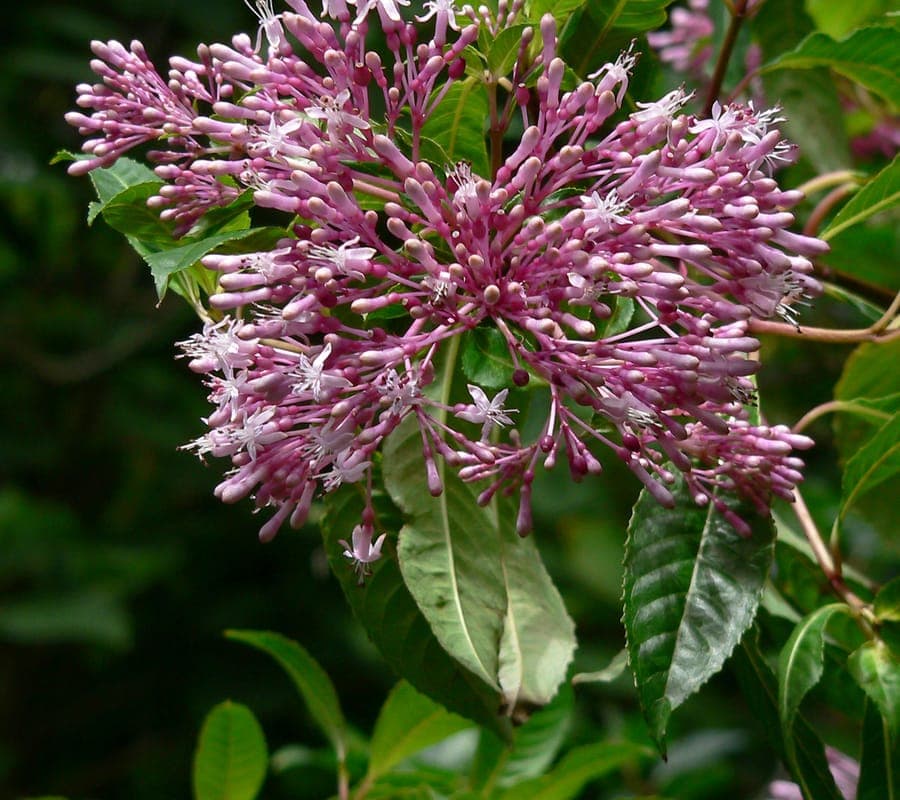
Stan Shebs / CC BY-SA 3.0, via Wikimedia Commons
Fuchsia paniculata: complete guide to the shrubby fuchsia
Fuchsia paniculata
Want to see Fuchsia paniculata: complete guide to the shrubby fuchsia in your garden?
1 minute, no credit card
Overview
The panicle fuchsia or shrubby fuchsia (Fuchsia paniculata) is a fascinating species native to Central America and Mexico. This shrub is known for its very abundant flower clusters that group themselves in characteristic panicles. What makes this species special is not only the profusion of flowers but also the bird fruits that emerge after blooming. A true feast for birds and the eye alike.
Appearance and bloom
Fuchsia paniculata grows into a well-branched shrub of 2-4 meters, depending on climate and space. The leaves are dark green and oval, remaining on the plant throughout the growing season. The flowers grow in striking panicles, which explains the plant name. The flowers are smaller than in other fuchsias, but incredibly numerous.
The color varies from purple to dark red, depending on the cultivar. After flowering, dark purple to blackish fruits appear, very attractive to birds. The blooming period extends from May to October.
Ideal location
This shrub loves full sun to light shade. In hot areas, afternoon shade is welcome. Ensure a spot with good air circulation to prevent diseases. Excessive wind can damage the flowers, so choose a somewhat sheltered location.
In northern regions, a sunny to partially shaded spot on the east side of a house works very well.
Soil
Fuchsia paniculata grows in virtually any reasonable soil as long as it drains well. Heavy clay soils can be improved with compost. The pH may range between 5.5 and 7.5.
In containers use good potting soil mixed with extra perlite for extra drainage. The plant responds well to mulching with organic matter around the base.
Watering
During the growing period water regularly, especially in warm periods. Preferably consistently moist, not waterlogged. During dry summers check the soil regularly and water when the top layer feels dry.
In autumn gradually reduce water. Winter watering depends heavily on whether the plant retains foliage or not.
Free design
Want to see Fuchsia paniculata: complete guide to the shrubby fuchsia in your garden? Make a free design now.
Pruning
Pruning is good for this shrub. In early spring you can shape it clearly, cutting branches back to about one third. This stimulates dense and bushy growth. Also remove any dead or damaged branches.
In summer you can pinch off faded flowers to stimulate more blooming.
Maintenance calendar
Spring (March-May): Pruning, heavy nitrogen fertilizer. Check for aphids.
Summer (June-August): Regular watering, weekly fertilizer at full strength. Deadhead faded flowers.
Autumn (September-October): Stop fertilizing, reduce watering. Harvest seeds if desired.
Winter (November-February): Minimal care. Plant may lose foliage.
Winter hardiness
Fuchsia paniculata is not hardy outdoors in Europe. In mild coastal areas it can sometimes survive, but in most regions it's better overwintered in a greenhouse or sheltered location. Temperatures below -3 degrees are fatal.
Potted specimens can easily overwinter in a light greenhouse at temperatures around +5 to +10 degrees.
Companion plants
Nice combinations are:
- Lantana: Similar hot tones, hopeful blooming
- Tecoma: Orange flowers, similar growth habit
- Plumbago: Sky-blue flowers, elegant counterpoint
- Salvia: Various forms and colors available
Avoid strong yellow-flowering plant species that could overpower the purple-red spectrum of Fuchsia.
Conclusion
Fuchsia paniculata is a unique and rewarding crop for those who love continuous blooming and birds in the garden. Though not hardy, it's easy to overwinter indoors. Start with a well-grown plant from a reliable specialist and enjoy tens of birds coming to the fruits. Via gardenworld.app you integrate this jewel perfectly into your front garden.
GardenWorld guides you through all stages of this beautiful shrub's life.
Want to see Fuchsia paniculata: complete guide to the shrubby fuchsia in your garden? Make a free design now.
Upload a photo, pick a style, and get a photorealistic design with plant list in under a minute.
No credit card required

