
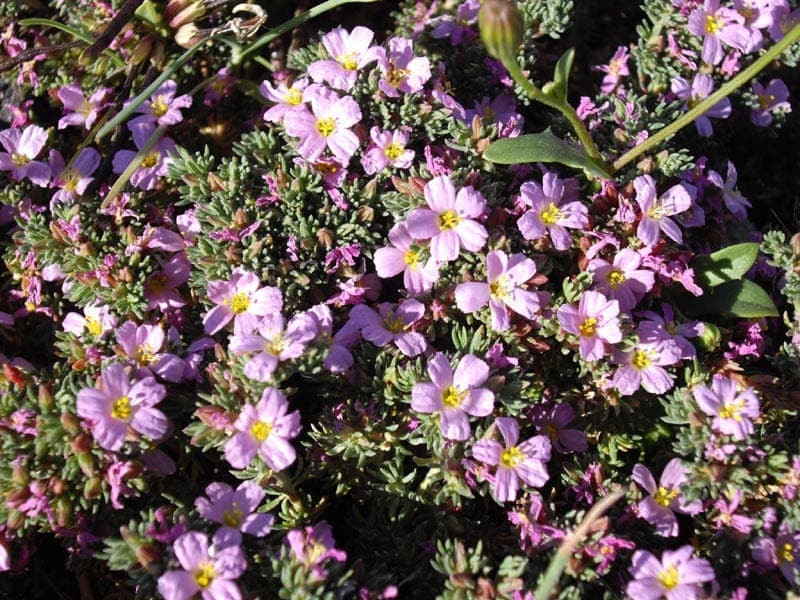
Ghislain118 http://www.fleurs-des-montagnes.net / CC BY-SA 3.0, via Wikimedia Commons
Frankenia laevis: complete guide
Frankenia laevis
Want to see Frankenia laevis: complete guide in your garden?
1 minute, no credit card
Overview
Frankenia laevis, commonly known as sea-heath or marsh myrtle, is a compact, slowly growing shrub naturally distributed along the coasts of Western and Central Europe. This remarkable plant is especially valuable for maritime gardens due to its exceptional tolerance of salt spray and drought conditions. Belonging to the Frankeniaceae family, this species has been cultivated since at least the 18th century for both aesthetic and practical merits.
Sea-heath is particularly suited to coastal gardens, rock gardens, and exposed hillsides. In coastal regions of the UK and Northern Europe, this plant is increasingly popular for contemporary garden designs featuring natural plant communities. The shrub demands minimal maintenance and thrives in poor soils where many other plants struggle.
Appearance and bloom
Frankenia laevis is a low-growing, naturally compact shrub typically reaching 15 to 30 cm in height. It features extremely fine, needle-like foliage arranged densely along the stems, giving the plant a silky, grey-green appearance. Leaves are minute, approximately 2-3 mm long, creating a decorative carpet year-round.
Flowers appear from June through August and are small yet abundant. These blooms are bright pink to purple-pink and possess remarkable elegance. Each flower measures approximately 5 mm in diameter and grows solitarily within the leaf axils. The flowers attract numerous pollinators, particularly bees and small butterflies.
The plant retains its fine leaf structure throughout the year, providing attractive winter interest. Following bloom, small seed capsules form, creating pleasant contrast against the foliage.
Ideal location
Sea-heath thrives in full sun exposure, requiring 6 to 8 hours of direct sunlight daily. The plant tolerates part shade but produces fewer flowers and develops a less compact form. Avoid completely shaded locations.
This shrub is phenomenally suited to coastal sites, windswept terrain, and maritime gardens. It tolerates strong sea winds without any problems. In inland regions without salt influence, the plant grows equally well. Plant sea-heath against warm walls, in rock gardens, or in containers on terraces. Its exceptionally compact growth makes it suitable for small gardens too.
Avoid locations where water stagnates. The plant strongly prefers well-drained sites. Never plant in frost pockets or areas where cold air concentrates.
Soil
Frankenia laevis displays remarkable tolerance towards different soil types. It thrives best in poor to moderately nutrient-rich soils. The pH should be neutral to alkaline (pH 7.5 to 8.0 is ideal). This is important because in its natural habitat, the plant grows on calcium-rich substrates.
Soil must be well-draining - this is absolutely essential. Heavy clay soils require amendment with sand, gravel, or organic material. The plant tolerates salt-rich soils better than most species and is therefore ideal for coastal regions where salt may occur in the soil.
Recommended soil mix: sand (50%), garden soil (30%), and peat substitute or leaf mold (20%). This ensures perfect drainage while maintaining nutrient availability.
Watering
Once established, Frankenia laevis is extremely drought-tolerant. In the first year after planting, water regularly, especially during dry periods. Ensure soil never completely dries but also never remains soggy.
In established gardens, the plant tolerates substantial drought without visible damage. Water only during prolonged dry spells or extreme heat. Overwatering must be avoided as it damages roots and promotes fungal diseases.
During extremely hot summers, occasional soaking may benefit young plants in containers. Use fresh water, never seawater.
Free design
Want to see Frankenia laevis: complete guide in your garden? Make a free design now.
Pruning
Frankenia laevis requires minimal pruning. The plant grows naturally compact and ball-shaped, so intensive pruning is rarely necessary. Dead or damaged branches can be removed at any time.
Optional light pruning after flowering (August-September) helps maintain shape and stimulates growth. Never cut deeply into old wood; always work carefully and selectively.
Regular maintenance pruning is unnecessary unless you wish to shape the plant for a specific purpose. For container plants on terraces, some regular pruning proves useful for maintaining compactness.
Maintenance calendar
Frankenia laevis follows a simple maintenance rhythm.
Spring (March-May): Plant newly acquired specimens. Water during dry weeks. No fertilizer needed.
Summer (June-August): Enjoy flowering. Water during drought. No pruning unless dead wood present.
Autumn (September-October): Light post-bloom pruning is optional. Water if conditions remain dry. Remove fallen surface leaf debris.
Winter (November-February): Plant withstands frost periods well. In severe winters, above-ground parts may freeze back, but the plant usually recovers from roots. Water only in frost-free periods if soil is very dry.
Winter hardiness
Frankenia laevis is fully hardy in temperate Northern Europe. The plant tolerates temperatures down to approximately -10 to -15 degrees Celsius without significant damage. In very severe winters, above-ground vegetation may die back to ground level, but the plant typically recovers from underground roots.
Along coastal regions, this plant thrives excellently, and the maritime climate actually stimulates its growth. Harsher frosts occur inland; protective measures may benefit very young plants.
Companion planting ideas
Frankenia laevis combines beautifully with other coastal shrubs and drought-tolerant perennials. Try these combinations:
- With Armeria maritima (thrift) for contrasting white flowers
- With Santolina chamaecyparissus for texture contrast and yellow blooms
- With Erica species for extended height and flowering range
- With Sedum and other succulents for modern rock garden designs
- With silver-leaved plants like Artemisia alba for visual harmony
These combinations work exceptionally well in maritime gardens and modern, minimalist-designed outdoor spaces.
Closing
Frankenia laevis is an exceptional choice for gardens where salt, wind, and drought are realities rather than exceptions. With its fine foliage, attractive pink flowers, and minimal maintenance requirements, this plant deserves greater recognition in Northern European gardens. The plant is available at major garden centers, with prices around EUR 8-12 for a container specimen.
Gardenworld.app can help you position this sea-heath optimally within your front yard design. Using our photography-based garden design tools, you can visualize how Frankenia laevis appears in your specific garden setting. Through our interactive platform, we ensure your plant choices match your soil, climate, and style preferences.
That sea-heath is actually one of the most tolerant coastal shrubs for difficult conditions makes it a happy discovery for many gardeners seeking resilient plantings.
Want to see Frankenia laevis: complete guide in your garden? Make a free design now.
Upload a photo, pick a style, and get a photorealistic design with plant list in under a minute.
No credit card required


Similar plants
Acer pycnanthum: complete guide
Acer pycnanthum
Acer pycnanthum, the Japanese swamp maple, is a fast-growing tree with early red flowers and brilliant autumn color, ideal for damp garden settings.
Freeman maple: complete guide
Acer × freemanii
Everything about the Freeman maple (Acer x freemanii): a fast-growing shade tree with spectacular autumn colour for large gardens.
Silver vine: complete guide
Actinidia polygama
Discover silver vine (Actinidia polygama): a hardy climbing plant with silvery foliage, loved by gardeners and cats alike.