
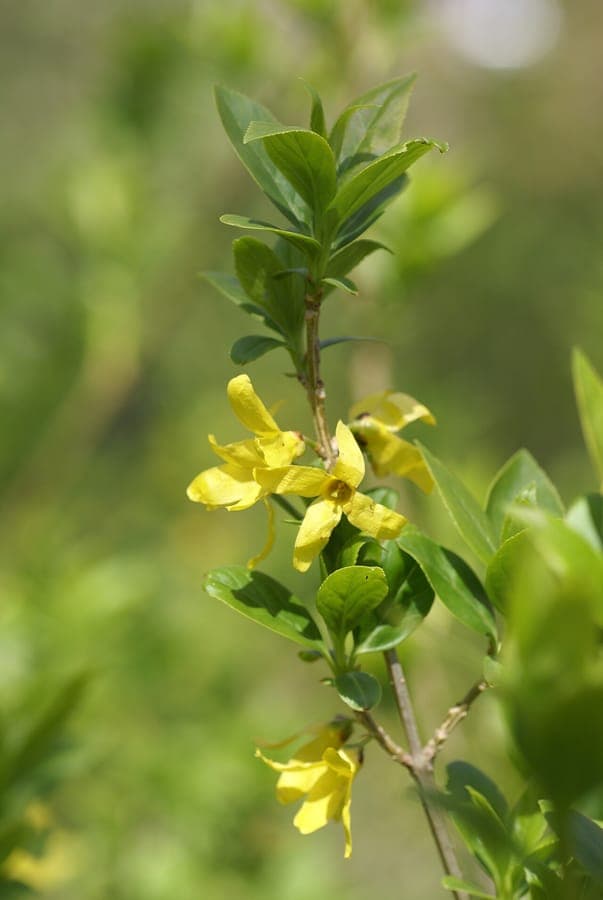
Rolf Engstrand / CC BY-SA 3.0, via Wikimedia Commons
Greenstem forsythia: complete guide
Forsythia viridissima
Want to see Greenstem forsythia: complete guide in your garden?
1 minute, no credit card
Overview
Forsythia viridissima, commonly called greenstem forsythia, is a dependable early-spring bloomer that brings a burst of cheer after winter's grey months. Native to south-central and southeast China, as well as Korea, this shrub stands out for its vibrant yellow flowers and distinctive green stems. It typically reaches 1.5 to 2 meters tall and spreads up to 1.8 meters wide, forming a dense, upright mound. With its hardiness and minimal care needs, it's a staple in many temperate gardens.
On gardenworld.app, you can create a garden layout that maximizes the visual impact of greenstem forsythia by placing it where its early bloom will stand out against evergreens or structural elements.
Appearance & bloom cycle
The most defining feature of Forsythia viridissima is its smooth, green, four-angled young stems - a trait reflected in its name viridissima, meaning 'very green'. Unlike the brown stems of Forsythia × intermedia, this species keeps its green hue through the growing season. The flowers appear before the leaves, usually from late February to mid-April, depending on climate and local conditions.
Each flower has four reflexed petals and a bright yellow colour that's hard to miss. They're borne along the length of the stems, not just at the tips, giving the whole plant a glowing effect. Leaves follow shortly after blooming, lance-shaped, 5–10 cm long, and a medium green shade. They drop in autumn, leaving the green stems exposed through winter - adding subtle interest even in dormancy.
Ideal location
Full sun is best for maximum flowering - aim for at least 6 hours of direct sunlight daily. The shrub will still bloom in partial shade, but with fewer flowers and a looser habit. Place it in front borders, near fences, or as a standalone specimen where its early-season brightness can be appreciated.
Avoid low-lying areas where cold air settles, as late frosts can damage open blooms. A site with good air circulation helps prevent fungal issues. Use gardenworld.app to simulate sun patterns in your garden and pick the perfect spot for early spring impact.
Soil requirements
This forsythia is adaptable to most soil types as long as drainage is good. It tolerates clay, loam, and sandy soils, with a pH range of 5.5 to 7.5. In heavy clay, amend with grit or compost to improve drainage. In sandy soils, mix in organic matter to retain moisture and nutrients.
Avoid overly rich soils or excessive nitrogen fertiliser - this promotes leafy growth at the expense of flowers. No feeding is needed at planting unless the soil is very poor.
Free design
Want to see Greenstem forsythia: complete guide in your garden? Make a free design now.
Watering
Water regularly during the first growing season - once a week if no rain - to establish strong roots. After that, the shrub is drought-tolerant and rarely needs supplemental watering. During prolonged dry spells in summer, especially in full sun, give a deep soak every 10–14 days.
Mature plants rarely need irrigation, but younger ones benefit from occasional watering in their second and third years.
Pruning
Prune right after flowering, by late April at the latest. Forsythia blooms on old wood, so pruning in fall or winter removes next year's flower buds. Cut back up to one-third of the oldest stems to the base to encourage renewal and maintain shape.
If the shrub becomes overgrown, you can do a gradual renovation over three years, removing a third of old stems each year. Avoid topping or shearing into bare wood, as it won't regenerate well.
Maintenance calendar
- January: Check for winter damage. No pruning.
- February: Bloom begins. Watch for late frost on open flowers.
- March: Peak bloom. Keep an eye on pests like aphids.
- April: Flowers fade. Prune immediately. Apply a thin layer of compost.
- May: Monitor for scale or fungal spots. No feeding.
- June–August: Low maintenance. Water only in drought.
- September: Stop pruning. Rake away fallen leaves.
- October: Clear debris. No fertiliser.
- November: Prepare for dormancy. No action needed.
- December: Inspect for snow load on branches.
Winter hardiness
Forsythia viridissima is hardy in USDA zones 5 to 8, tolerating temperatures down to -20°C (-4°F). While flower buds may be damaged by sudden cold snaps, the plant usually rebounds well. Young specimens in exposed sites may benefit from a light mulch in their first winter, but mature shrubs need no protection.
Companion plants
Pair with early bulbs like snowdrops, crocus, and daffodils to extend spring interest. Later, plant with catmint, yarrow, or coneflowers for contrast. Good shrub companions include boxwood, dwarf spirea, or winter jasmine.
Avoid invasive groundcovers that might compete for space and light.
Closing
Greenstem forsythia is a resilient, low-fuss shrub that delivers reliable early colour. Its green stems and sunny flowers make it a standout in any garden. You can find it at garden centres across the UK and US, typically in 3–4 litre pots starting in late winter. Give it sun, prune on time, and enjoy its annual show. For design inspiration and placement tips, visit gardenworld.app.
Want to see Greenstem forsythia: complete guide in your garden? Make a free design now.
Upload a photo, pick a style, and get a photorealistic design with plant list in under a minute.
No credit card required


Similar plants
Rough menodora: complete guide
Menodora scabra
Full guide to Menodora scabra: a drought-tolerant desert subshrub with bright yellow flowers, ideal for rock gardens and xeriscapes.
Fraxinus dipetala: complete guide
Fraxinus dipetala
California ash or two-petal ash from southwestern USA. Beautiful spring flowers, drought-tolerant. Experimental choice for warm Mediterranean front gardens.
Syringa komarowii: complete guide
Syringa komarowii
Syringa komarowii is a striking lilac from central China with elegant flower spikes and lovely foliage. Discover the complete care guide here.