
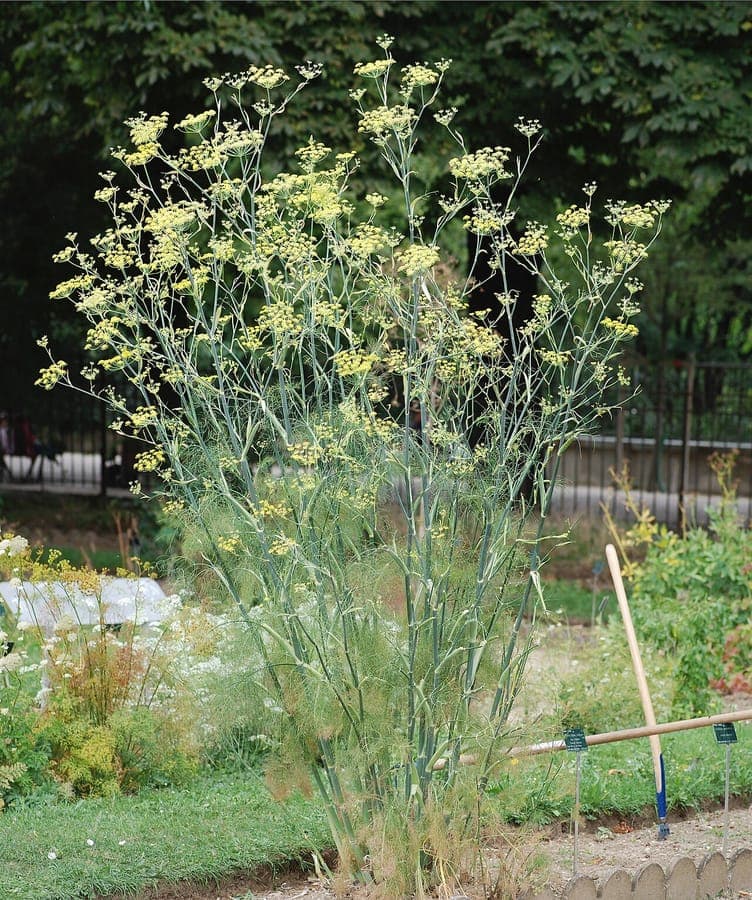
Alvesgaspar / CC BY-SA 3.0, via Wikimedia Commons
Fennel: complete guide
Foeniculum vulgare
Want to see Fennel: complete guide in your garden?
1 minute, no credit card
Overview
Fennel (Foeniculum vulgare) is a striking herb that earns its place in both the kitchen and the ornamental garden. Native to southern Europe, North Africa, and parts of the Middle East, it thrives in warm, dry conditions. As a member of the Apiaceae family, it shares traits with dill and carrots-feathery foliage, hollow stems, and umbrella-like yellow flowers that bloom from July to October. In cooler climates like the UK and northern Europe, fennel is often grown as a biennial or short-lived perennial, though it can self-seed reliably and return year after year.
This plant brings more than just anise-flavoured leaves and seeds to the table. Its airy structure and golden blooms add vertical interest to borders, while attracting beneficial insects like hoverflies, lacewings, and the swallowtail butterfly. If you're designing a wildlife-friendly garden, fennel is a no-brainer. On gardenworld.app, you can create a planting scheme that maximizes sun exposure and companion pairings for fennel.
Appearance & bloom cycle
Fennel typically reaches 100–180 cm in height, with a spread of around 40 cm. It grows upright with a single, sturdy, hollow stem that branches near the top. The foliage is finely dissected, almost fern-like, and emits a strong aniseed scent when brushed or crushed.
From July through October, fennel produces large, domed umbels of bright yellow flowers. These are highly attractive to pollinators and add a soft, glowing texture to late-summer borders. After blooming, the flowers develop into green seeds that mature to brown by September or October. These can be harvested, dried, and stored for culinary use or next year's sowing.
Ideal location
Fennel prefers full sun-aim for a light rating of 7 or higher, meaning at least 6 hours of direct sunlight daily. In partial shade, the plant becomes leggy, flops over, and produces fewer aromatic leaves and seeds.
Choose a spot with good air circulation to prevent fungal issues, especially during humid summers. Fennel works well at the back of a herb bed, as a focal point in a drought-tolerant border, or along a pathway where its scent can be released when brushed. Be aware: fennel exhibits allelopathy, meaning it can inhibit the growth of nearby plants through root exudates. Keep it at least 60 cm away from sensitive neighbours.
Use gardenworld.app to plan spacing and sunlight access so your fennel doesn't overshadow or suppress other garden plants.
Soil requirements
Fennel grows best in well-drained, moderately fertile soil with a pH between 7.5 and 8.0-slightly alkaline. Heavy clay soils should be improved with horticultural grit or sand to prevent waterlogging and root rot.
It doesn't need rich soil; in fact, overly fertile conditions lead to lush leaf growth at the expense of flowering and seed production. A light mulch of gravel or crushed stone helps retain warmth and keeps moisture off the crown, reducing rot risk.
Free design
Want to see Fennel: complete guide in your garden? Make a free design now.
Watering
Once established, fennel is drought-tolerant. During the first 4–6 weeks after planting, water regularly-about 8–10 litres per plant once a week-to encourage deep root development.
After that, it usually survives on rainfall alone. During extended dry spells (more than two weeks without rain), give a deep soak at the base. Avoid overhead watering to prevent fungal diseases. A soaker hose or watering at soil level works best.
Pruning
Pruning isn't essential, but it helps maintain shape and control self-seeding. Deadhead spent flower heads if you don't want volunteer seedlings next year. To harvest seeds, cut the umbels just below the flower head when seeds start turning brown.
You can also lightly trim young stems to encourage bushier growth and more leaf harvest. Always use clean, sharp secateurs and disinfect between cuts to prevent disease spread.
Maintenance calendar
- February–March: Start seeds indoors or in a greenhouse at 15–20°C using well-draining seed compost.
- April–May: Transplant seedlings outdoors after the last frost (mid-May in most UK zones). Space plants 60 cm apart.
- June: Monitor for aphids or slugs. Water if dry.
- July–August: Flowers open. Stake tall plants if needed.
- September: Begin seed harvest. Cut umbels on dry days.
- October: Remove dead stems. Leave some seed heads for birds or natural reseeding.
- November–January: Fennel typically dies back. In USDA zones 6–10, mulch lightly to protect crowns in mild winters.
Winter hardiness
Fennel is hardy in USDA zones 6 to 10. In zone 7 (common in the UK and parts of northern Europe), it often survives mild winters with minimal protection. Apply a dry mulch-like straw or leaf litter-around the base to insulate the root crown.
In harsh winters, fennel may not survive, so treat it as an annual or biennial. Self-seeded plants often appear in spring and can be transplanted or thinned.
Companion plants
Fennel pairs well with other sun-loving, drought-tolerant perennials like lavender, yarrow, and echinacea. Avoid planting near dill, coriander, or other Apiaceae-cross-pollination can affect flavour and seed viability.
It's best not to grow fennel near most vegetables, as it can inhibit their growth. However, tomatoes, onions, and cucumbers may tolerate it at a distance. Its real benefit lies in attracting pollinators and predatory insects that control pests.
Closing
Fennel is more than a culinary herb-it's a dynamic garden plant that brings structure, scent, and ecological value. With minimal care and the right conditions, it thrives for years. Start with quality seeds from garden centres like those stocked by OBI or Truffaut, and give it space to grow. Plan your layout wisely using gardenworld.app to ensure your fennel integrates seamlessly into your garden design.
Want to see Fennel: complete guide in your garden? Make a free design now.
Upload a photo, pick a style, and get a photorealistic design with plant list in under a minute.
No credit card required


Similar plants
Whorled carrot: complete guide
Daucus involucratus
Daucus involucratus is a Mediterranean umbellifer with white flower heads framed by lacy bracts. Growing this gravel garden gem.
Daucus muricatus: complete guide
Daucus muricatus
Daucus muricatus, the spiny wild carrot, grows wild on Mediterranean coasts. Discover sowing, June-July bloom, and wildflower meadow use.
Daucus pumilus: complete guide
Daucus pumilus
Daucus pumilus is a dwarf wild carrot relative with white lacy umbels, thriving on dunes and coastal rock in poor, fast-draining soil.