
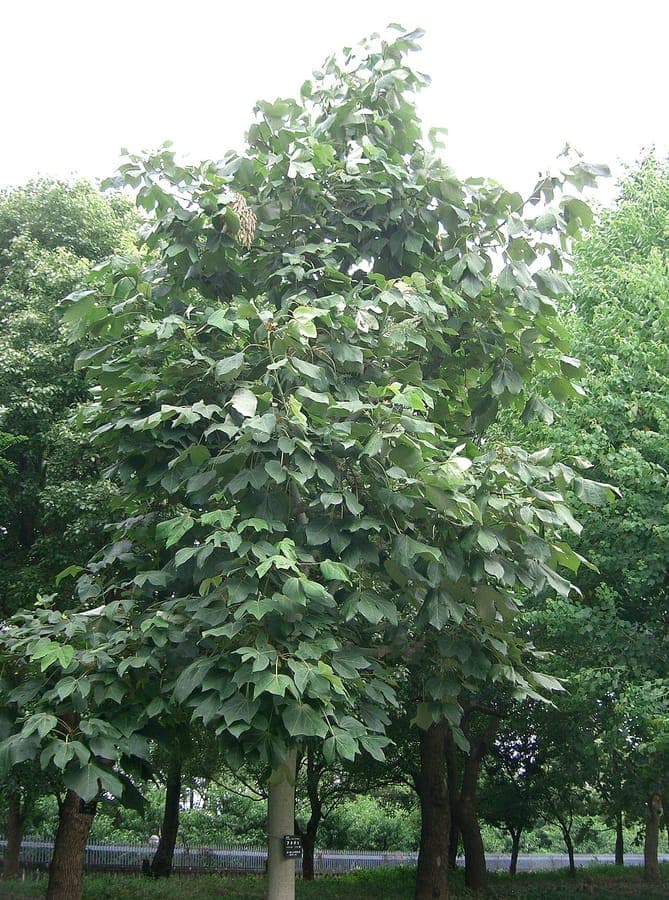
KENPEI / CC BY-SA 3.0, via Wikimedia Commons
Chinese Bottle Tree: complete guide
Firmiana simplex
Want to see Chinese Bottle Tree: complete guide in your garden?
1 minute, no credit card
Overview
The Chinese Bottle Tree (Firmiana simplex), also known as the Chinese Parasol Tree, is a striking ornamental tree from China, Taiwan, Japan and Vietnam. This member of the Malvaceae family can reach 15 meters in favorable conditions and offers an impressive, airy silhouette with its remarkable foliage. The tree is prized for both its enormous heart-shaped leaves and its distinctive papery seed capsules that add exotic appeal throughout the year.
For gardeners on gardenworld.app seeking something truly special, this tree delivers dramatic visual impact. The plant thrives in warmer regions and requires adequate space to develop its full potential. Its unique architecture makes it an excellent specimen tree for Mediterranean-style or contemporary gardens seeking bold plant choices.
Appearance and Bloom
The foliage is the star of this plant: leaves are large, heart-shaped to five-lobed, reaching 25 centimeters wide on long petioles. This creates a refined, tropical appearance with glossy green leaves against grayish-green bark. The leaves emerge sequentially, providing movement and grace to the tree's outline.
Flowers appear in late spring through summer in loose panicles. They are small but numerous, soft yellow-green with reddish tones, pleasantly fragrant. Following bloom, distinctive papery seed capsules develop that open dramatically to reveal a delicate, shell-like appearance. These remain ornamental for extended periods.
Ideal Location
Choose a sunny, warm position receiving six to eight hours of direct sunlight daily. Full sun encourages vigorous growth and maximum foliage development. The tree requires protection from strong winds, as large leaves are easily damaged by gusts.
Plant in a sheltered corner or location where surrounding vegetation breaks wind patterns. In cooler climates, placing the tree against a south-facing wall helps ensure adequate ripening of wood for improved winter hardiness.
Soil
Firmiana simplex requires loose, well-draining soil. The optimal pH range is 6.0 to 7.5 (slightly acid to neutral). Amend heavy soils with compost and sand to improve drainage and structure. Waterlogging causes root rot and related problems. In the first growing season especially, ensure nutrient-rich soil using slow-release fertilizer.
For container cultivation, use premium potting mix formulated for trees. Add perlite or coarse sand to increase drainage. Annual mulching with organic matter maintains soil quality and moisture regulation.
Free design
Want to see Chinese Bottle Tree: complete guide in your garden? Make a free design now.
Watering
During the growing season (May through September), water regularly and thoroughly. Allow the soil surface to dry slightly between waterings. Monitor leaf appearance: wilting indicates insufficient moisture. In dry periods, water twice weekly depending on conditions.
Avoid standing water, which causes root issues. Early morning watering is optimal. Reduce watering significantly in winter when growth halts. Container-grown trees require more frequent watering as pots dry faster than ground soil.
Pruning
The Chinese Bottle Tree grows vigorously and tolerates substantial pruning. Prune in early spring before growth resumes. Remove dead, damaged, or diseased branches first. Shape the tree by cutting back long shoots to encourage denser branching and more compact form.
Use sharp, clean tools to prevent tearing. The tree responds well to heading cuts that redirect growth direction. Remove crossing or rubbing branches to improve structure.
Maintenance Calendar
Spring: Prune, repot or plant, begin regular watering. Summer: Water regularly, fertilize every two weeks. Autumn: Reduce watering gradually, prepare for dormancy. Winter: Minimal water, no fertilizer, frost protection in cold zones.
Winter Hardiness
This tree tolerates only brief exposure to temperatures below -5 degrees Celsius. In mild-winter regions (southern areas), the tree can overwinter outdoors with protection. In colder zones, container cultivation with winter relocation is essential.
Use root mulch during frost periods. For northern climates, move containerized plants indoors or wrap thoroughly in frost cloth. Position against south-facing walls with wind protection.
Companion Plants
In warm gardens, combine beautifully with exotic companions: jasmine, bougainvillea, Mediterranean herbs. In cooler regions, pair with fuchsias, fatshedera, soft foliage plants. The architectural leaves contrast well with fine-textured plants like bamboo or Japanese maples.
Underplanting with shade-tolerant species that share moisture requirements creates layered interest while protecting soil.
Final Notes
The Chinese Bottle Tree offers exotic appeal to warm-climate gardens. Success depends on warm location, excellent drainage, and consistent moisture. Readers of gardenworld.app will find this tree relatively low-maintenance when basic requirements are met. Expect impressive summer displays with large foliage, fragrant flowers, and striking ornamental seed capsules. Available at specialty nurseries and garden centers, this tree repays attention with years of architectural beauty.
Want to see Chinese Bottle Tree: complete guide in your garden? Make a free design now.
Upload a photo, pick a style, and get a photorealistic design with plant list in under a minute.
No credit card required


Similar plants
Crimean linden: complete guide
Tilia × euchlora
Crimean linden is an elegant, fast-growing shade tree ideal for large gardens. Discover cultivars, spacing, maintenance tips and winter hardiness.
California flannelbush: complete guide
Fremontodendron californicum
Everything about California flannelbush (Fremontodendron californicum): sunny placement, drainage, pruning and care for this spectacular yellow-flowering shrub.
Hairy rose mallow: complete guide
Hibiscus moscheutos subsp. lasiocarpos
Full growing guide for hairy rose mallow (Hibiscus moscheutos subsp. lasiocarpos): location, soil, watering, winter hardiness and garden design tips.