
Petr Filippov / CC BY-SA 3.0, via Wikimedia Commons
Volga fescue: complete guide
Festuca valesiaca
Want to see Volga fescue: complete guide in your garden?
1 minute, no credit card
Overview
Volga fescue, or Festuca valesiaca, is a tough, long-lived perennial grass that thrives where other plants struggle. Native to alpine and steppe regions across Eastern Europe and Central Asia - including Austria, Belarus, and parts of Russia - it's built for dry, exposed conditions. In UK and North American gardens, it's gaining popularity for its resilience, fine texture, and minimal upkeep. It forms neat, evergreen to semi-evergreen clumps and belongs to the Poaceae family. If you're working with a gravel garden, slope, or tough corner that bakes in summer sun, this grass deserves a spot.
Appearance & bloom cycle
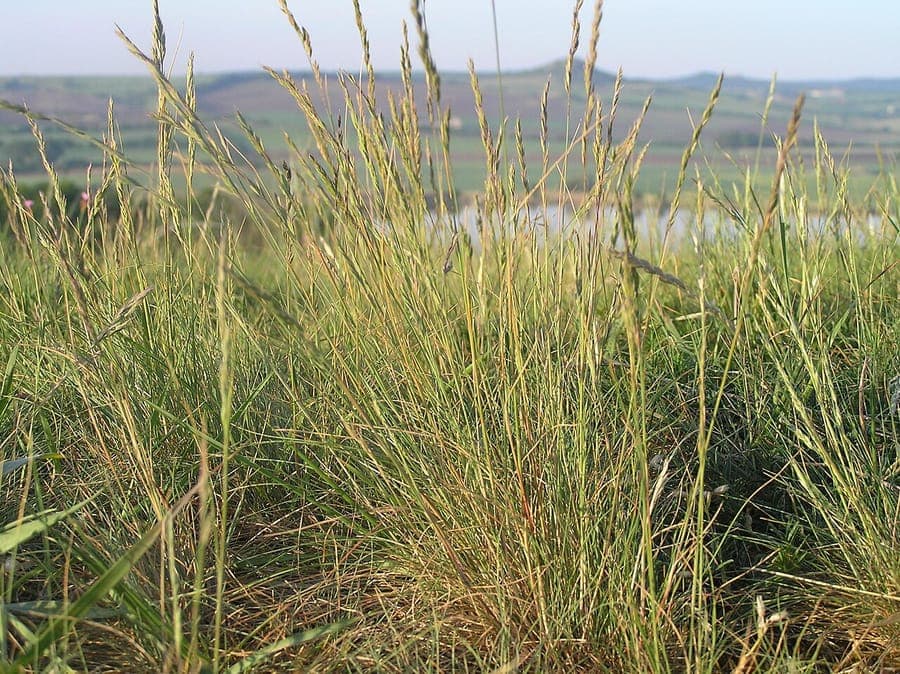
Volga fescue grows in dense mounds of narrow, grey-green foliage, reaching 30–40 cm in height and spreading to about 35 cm wide. The leaves are fine, around 1–2 mm wide, with a soft, arching habit that gives the plant a delicate, cloud-like appearance. From June to late July, airy flower panicles rise to 60 cm, bearing pale purple florets that catch the breeze. These seed heads persist into winter, adding movement and structure to the garden. Unlike some grasses that collapse after flowering, Volga fescue holds its form well, making it a reliable four-season performer.
Ideal location
Full sun is non-negotiable for this grass. It needs at least 6–8 hours of direct sunlight daily to stay compact and healthy. It performs best on slopes, rock gardens, or dry borders where drainage is excellent. Light shade leads to floppy growth and weak clumps. It's ideal for USDA zones 4–9, surviving winter lows down to -30°C. In cooler maritime climates like the UK, it still thrives as long as the soil doesn't stay waterlogged. For gardeners designing dry, naturalistic schemes, Volga fescue is a strong candidate. On gardenworld.app, you can create a garden plan that highlights its performance in xeriscaped or gravel-filled beds.
Soil requirements
This grass isn't picky about soil type. It grows in sandy, loamy, or even shallow rocky soils, provided they drain well. It tolerates poor fertility and doesn't benefit from rich compost or fertilizer - in fact, overly fertile soil encourages leggy growth and reduces hardiness. Aim for a pH between 5.5 and 7.5. If you're planting in heavy clay, amend it with sharp sand or grit to improve drainage. Avoid water-retentive soils, as they promote root rot, especially in winter.
Watering
Once established, Volga fescue is extremely drought-tolerant. Water newly planted clumps twice a week for the first four weeks, then taper off. After that, rain is usually sufficient, even during dry summers. Overwatering is a common mistake - it weakens the plant and invites fungal issues. This grass evolved in dry highlands; it doesn't need constant moisture. If you're in a drought-prone area, it's one of the few grasses that won't demand irrigation after year one.
Free design
Want to see Volga fescue: complete guide in your garden? Make a free design now.
Pruning
Pruning is simple: cut back once a year in late winter or early spring (February to March). Trim the old foliage to about 10 cm above the crown using sharp shears. Leave the flower stems through winter - they add visual interest and shelter for overwintering insects. Annual cutting keeps the plant tidy and prevents the center from dying out. Avoid cutting too late, as new growth emerges early. On gardenworld.app, you'll find visual guides that show exactly how and when to trim ornamental grasses like this.
Maintenance calendar
- January: check for winter damage, remove dead blades
- February: start cutting back if thawed
- March: complete pruning, clear debris
- April: new growth emerges, no action needed
- May: watch for flower stalks, avoid feeding
- June: blooms begin, stay dry
- July: peak flowering, inspect for pests
- August: seed heads mature, leave standing
- September: no maintenance, monitor seed spread
- October: leave intact, prepare for winter
- November: protect base with foliage, no water
- December: maintain structure, avoid disturbance
Winter hardiness
Volga fescue is reliably hardy in USDA zones 4–9. It stays semi-evergreen in milder winters and retains its shape under snow. The old foliage insulates the crown, so no mulching is required. Even in harsh continental winters, it rebounds strongly in spring. Its resilience makes it a dependable structural plant in winter gardens.
Companion plants
Pair Volga fescue with drought-tolerant perennials like Echinacea, Sedum 'Matrona', Stachys byzantina, or Nepeta. Its silver-green hue contrasts beautifully with purple, yellow, or deep red blooms. Avoid moisture-loving plants like hostas or astilbes. For texture, combine with Stipa tenuissima or Carex comans. Plant in groups of 3–5, spaced 40 cm apart, for a natural drift effect. Lavender and yarrow also make excellent neighbours.
Closing
Volga fescue is a quiet achiever in the garden - tough, graceful, and nearly carefree. It's perfect for low-water landscapes, erosion-prone slopes, or gravel gardens where style meets function. You can find it at garden centres across the UK and North America, or order online. Young plants in 9–11 cm pots establish best. With one annual trim and the right spot, it can last 10+ years. For layout ideas and planting combinations, visit gardenworld.app, where you can build a custom garden design that matches your soil, light, and climate.
Want to see Volga fescue: complete guide in your garden? Make a free design now.
Upload a photo, pick a style, and get a photorealistic design with plant list in under a minute.
No credit card required


Similar plants
Sporobolus pungens: complete guide
Sporobolus pungens
Sporobolus pungens is a stoloniferous Mediterranean coastal grass with outstanding salt and drought tolerance, perfect for seaside and dry gardens.
Mediterranean aegilops: complete guide
Aegilops biuncialis
Everything about Aegilops biuncialis, a Mediterranean annual grass with ornamental spikes and outstanding drought tolerance for dry gardens.
Silver bluestem: complete guide
Bothriochloa saccharoides
Full guide to Bothriochloa saccharoides (silver bluestem): site, soil, watering, winter hardiness, pruning, and garden companions.